Key Takeaway
Institutional capital is expanding beyond Bitcoin and Ethereum into altcoins like Solana, marking a pivotal moment for digital asset adoption. For Indian investors, this global shift signals a potential uplift for domestic crypto-related entities and highlights the growing importance of diversified digital asset exposure.
Record inflows into Solana ETFs are rewriting the institutional playbook for digital assets, moving beyond the traditional Bitcoin and Ethereum focus. This WelthWest deep dive explores the profound implications for global crypto markets, dissecting how this trend could ripple through the Indian financial ecosystem, impacting local exchanges, tech companies, and investor sentiment towards the broader digital economy.
Solana ETFs Signal Institutional Altcoin Revolution: A WelthWest Deep Dive into Indian Market Impact
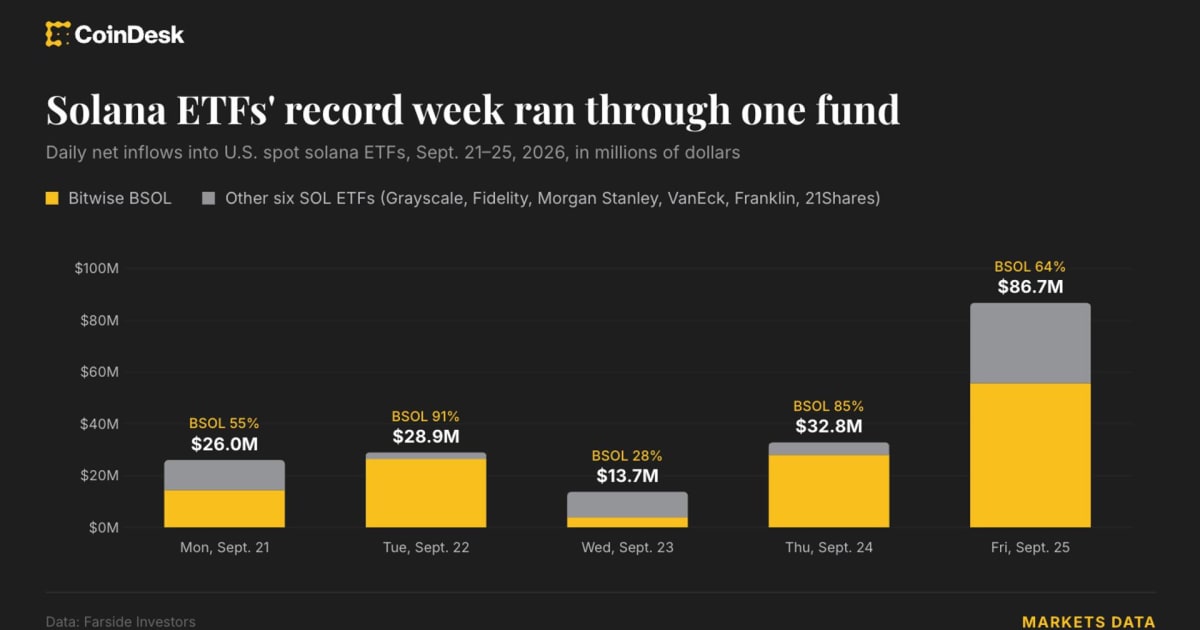
The digital asset landscape is undergoing a significant transformation, with recent data pointing to a monumental shift in institutional investor appetite. Over the past week, Solana-focused Exchange Traded Funds (ETFs) have witnessed an unprecedented influx of capital, drawing a staggering $188 million. This isn't just a fleeting trend; it represents a crucial evolution in how major financial players are engaging with cryptocurrencies, extending their reach far beyond the established confines of Bitcoin and Ethereum. For the discerning Indian investor, this development carries profound implications, signaling a potential broadening of liquidity and valuation uplift across the altcoin spectrum, with indirect but measurable effects on domestic sentiment and investment vehicles.
This surge in Solana ETF inflows, with one dominant player capturing two-thirds of the total, underscores a growing confidence in the utility and long-term potential of alternative blockchain protocols. Historically, institutional crypto exposure has been almost exclusively confined to Bitcoin, perceived as 'digital gold,' and Ethereum, the backbone of decentralized finance. The pivot towards Solana, a high-throughput blockchain known for its speed and scalability, suggests a maturation of institutional understanding and a willingness to embrace assets offering differentiated technological advantages. This shift is not merely about speculation; it's about recognizing the expanding ecosystem of Web3 applications and the foundational layers required to support them.
What Drives Institutional Interest in Solana NOW?
The timing of this significant capital allocation is crucial. Several factors converge to make Solana an attractive proposition for institutional funds at this juncture. Firstly, Solana's robust performance throughout market cycles, demonstrating resilience and significant technological advancements, has built a compelling narrative. Its ability to process thousands of transactions per second at minimal cost positions it as a strong contender for various enterprise and consumer-facing applications, from decentralized exchanges to gaming and NFTs. Secondly, the regulatory clarity surrounding spot Bitcoin ETFs in the U.S. has paved the way for a more accepting environment for other crypto-native investment products. While Solana ETFs are currently more prevalent in European and Canadian markets, their success acts as a strong precedent for potential future offerings in other jurisdictions, including the U.S.
This institutional embrace of Solana is a bellwether for the broader altcoin market. It suggests that the 'smart money' is increasingly looking for growth opportunities beyond the top two cryptocurrencies, seeking assets that offer higher beta exposure to the burgeoning digital economy. For Indian markets, while direct investment in these foreign-domiciled ETFs remains complex for retail investors, the global sentiment ripple effect is undeniable. A robust global crypto market often translates into heightened interest and trading volumes on Indian crypto exchanges, indirectly benefiting the burgeoning domestic crypto ecosystem.
Deep Market Impact Analysis: Connecting Global Crypto to Indian Equities
The institutional pivot towards Solana, while seemingly distant, has tangible implications for the Indian financial landscape, albeit largely indirect for traditional equity markets. The primary impact will be felt in the broader sentiment towards digital assets and the performance of companies with significant exposure to the crypto sector. We are witnessing a broadening of the 'digital asset investment thesis,' moving from a niche, speculative play to a more diversified institutional allocation strategy.
Historically, significant global crypto market movements have often correlated with increased trading activity on Indian exchanges. For instance, during the 2021 bull run, Indian crypto exchanges reported record user registrations and trading volumes. While the Nifty 50 or Sensex may not show a direct, immediate correlation, the underlying capital flows indicate a global appetite shift. This shift could attract more venture capital into Indian Web3 startups, fostering innovation and potentially leading to future listings or acquisitions that would directly impact the Indian stock market.
Consider the broader technology sector in India. As Web3 technologies mature and gain institutional backing, demand for skilled blockchain developers, cybersecurity solutions, and cloud infrastructure will inevitably rise. Indian IT service giants, already pivotal players in global technology, are well-positioned to capitalize on this expanding demand, offering services from blockchain development to enterprise integration. While not directly tied to Solana’s price action, the underlying trend of institutional crypto adoption creates a fertile ground for these companies to expand their service offerings and client base in the digital asset space.
The potential for traditional asset classes to lose some speculative capital to digital assets, particularly altcoins offering higher growth potential, is a nuanced consideration. While unlikely to trigger a mass exodus from Indian equities or debt markets, a marginal reallocation by global institutional investors could subtly influence capital flows. However, the Indian market's deep liquidity and diverse investment opportunities mean such an impact would be highly localized and unlikely to cause systemic shocks. Instead, it highlights the growing competition for investment capital in an increasingly globalized financial world.
Stock-by-Stock Breakdown: Indian Entities Poised for Impact
While no Indian company is directly listed on the NSE or BSE with a pure-play Solana ETF exposure, several entities stand to gain or be indirectly affected by this burgeoning institutional interest in altcoins. This analysis focuses on firms with significant crypto-related operations or strategic positioning within the broader digital economy:
- CoinDCX (Unlisted but Significant): As one of India's largest cryptocurrency exchanges, CoinDCX would be a primary beneficiary of increased crypto adoption and trading volumes. While currently unlisted, its valuation and future IPO prospects are directly tied to the health and growth of the Indian crypto market. Higher global institutional confidence in altcoins like Solana could lead to increased retail participation and professional trading desks utilizing CoinDCX, boosting its revenue from trading fees. The company's recent funding rounds reflect investor confidence in its long-term potential within the Indian digital asset space.
- WazirX (Unlisted, Part of Binance Ecosystem): Similar to CoinDCX, WazirX, despite its recent operational complexities, remains a significant player in the Indian crypto exchange landscape. Increased global altcoin momentum could indirectly spur user activity and trading volumes on the platform. Any resolution of its operational challenges, coupled with a bullish market, could significantly enhance its standing and potential for future public market consideration, though this remains speculative.
- Infosys (NSE: INFY): As a global IT services giant, Infosys is actively involved in blockchain solutions for enterprise clients. The broader institutional acceptance of altcoins and blockchain technology translates into increased demand for enterprise blockchain consulting, development, and integration services. Infosys's robust financial services client base (contributing over 30% of its revenue, roughly INR 40,000 Cr in FY23) positions it to capitalize on financial institutions exploring blockchain applications beyond traditional payment systems. While not a direct crypto play, the expanding digital asset ecosystem broadens its addressable market for next-gen IT services.
- Tata Consultancy Services (NSE: TCS): Much like Infosys, TCS (FY23 revenue: INR 225,458 Cr) is a leader in digital transformation and blockchain services. Its extensive work with global banks and financial institutions on distributed ledger technology (DLT) projects makes it a strong indirect beneficiary. As institutions become more comfortable with altcoins and the underlying technology, demand for secure, scalable blockchain solutions will grow, feeding into TCS's consulting and implementation revenue streams. Their focus on emerging technologies ensures they are well-positioned to capture this evolving market.
- Hut 8 Mining Corp (NASDAQ: HUT, Proxy for Crypto Adoption): While an international entity, Hut 8 serves as a useful proxy for broader crypto adoption and sentiment. As a major North American digital asset miner, its fortunes are tied to the overall health of the crypto market. Increased institutional interest, even in altcoins, often correlates with a stronger overall crypto market capitalization, which generally benefits miners through higher asset values and potentially more favorable mining economics. Indian investors accessing global markets may consider such proxies to gain exposure to the underlying trend.
Expert Perspective: Bulls vs. Bears on Altcoin Institutionalization
The institutional embrace of Solana sparks a lively debate among market pundits. Bulls view this as a pivotal moment, signaling the true diversification of institutional digital asset portfolios. "This isn't just about Bitcoin anymore," argues a prominent crypto fund manager. "Solana's throughput and developer ecosystem make it a compelling investment for institutions looking for growth beyond the 'store of value' narrative. It validates the multi-chain future." They contend that as regulatory clarity expands, more altcoins with strong fundamentals will attract similar institutional capital, leading to a broader market re-rating.
Conversely, bears caution against excessive exuberance. "While the inflows are notable, altcoin markets remain inherently more volatile and less liquid than Bitcoin or even Ethereum," states a veteran financial analyst. "Regulatory uncertainty, especially regarding securities classification for many altcoins, poses a significant overhang." They highlight the 'herd mentality' risk, where initial institutional interest could quickly reverse if market sentiment shifts or if regulatory bodies take adverse actions. Furthermore, they argue that the current inflows, while significant, are still a fraction of the capital deployed into traditional asset classes or even Bitcoin ETFs, suggesting a long road ahead for true mainstream institutional adoption of altcoins.
Actionable Investor Playbook: Navigating the Altcoin Wave
For Indian investors looking to capitalize on this evolving landscape, a strategic approach is essential:
- Watch for Broadening Institutional Interest: Monitor news of new altcoin ETFs or institutional funds launching, particularly those focused on high-utility blockchains beyond Solana. This signals a continued diversification trend.
- Assess Indian Crypto Exchange Performance: Keep an eye on trading volumes and user growth reported by major Indian crypto exchanges (e.g., CoinDCX, WazirX). Surges here, even without direct stock market listings, indicate increased domestic participation mirroring global sentiment.
- Evaluate Indian IT Service Providers: Consider companies like Infosys (NSE: INFY) and TCS (NSE: TCS) for indirect exposure. Look for their quarterly earnings calls and investor presentations for increased commentary on blockchain-related client wins or strategic partnerships in the Web3 space. These are long-term plays, not speculative bets on crypto prices.
- Consider Diversified Global Crypto Funds: For investors with access to international markets, exploring diversified crypto funds or ETFs that include a basket of altcoins (beyond just Solana) could offer broader exposure while mitigating single-asset risk.
- Entry Points & Time Horizons: For direct crypto exposure, dollar-cost averaging into established altcoins like Solana during market dips can be a prudent strategy, given their inherent volatility. For indirect equity plays (e.g., INFY, TCS), these are long-term growth investments (3-5+ years) based on their broader digital transformation narratives, with crypto adoption serving as an additional growth driver.
- Avoid Unregulated or Highly Speculative Assets: The institutional interest is focused on established, high-market-cap altcoins with clear use cases. Avoid chasing low-cap, meme-driven tokens, which carry significantly higher risk.
Risk Matrix: Navigating the Volatility
- Regulatory Uncertainty (High Probability, High Impact): Globally, the regulatory landscape for cryptocurrencies, especially altcoins, remains fragmented and unpredictable. A sudden adverse ruling (e.g., classifying a major altcoin as a security) could trigger significant market downturns. India's own crypto regulatory framework is still evolving, adding another layer of domestic risk.
- Market Volatility (Very High Probability, High Impact): Altcoin markets are notoriously volatile. Even institutional interest doesn't eliminate large price swings. Investors must be prepared for potential 20-30% corrections in short periods, driven by macro factors, sentiment shifts, or project-specific news.
- Technological Obsolescence/Competition (Medium Probability, Medium Impact): The blockchain space is rapidly innovating. While Solana is a leader, newer, more efficient protocols could emerge, challenging its dominance. This competitive risk is inherent in rapidly evolving tech sectors.
- Liquidity Risk for Smaller Altcoins (Medium Probability, Medium Impact): While large-cap altcoins like Solana generally have good liquidity, institutional interest might not extend to smaller projects. Investors in less liquid altcoins face higher risks of being unable to exit positions efficiently during downturns.
What to Watch Next: Catalysts on the Horizon
The narrative around institutional altcoin adoption is dynamic, with several upcoming catalysts and data points that will shape its trajectory:
- U.S. Spot Ethereum ETF Decisions (Ongoing): While not Solana, the regulatory decisions surrounding spot Ethereum ETFs in the U.S. will set a crucial precedent for other altcoin-focused investment products. A positive outcome could accelerate institutional interest across the board.
- Quarterly Earnings of Crypto-Adjacent Companies: Monitor earnings calls from global crypto miners (like Hut 8), exchanges, and tech companies heavily invested in blockchain. Their outlooks and reported revenues will provide insights into the health of the broader crypto ecosystem.
- Major Blockchain Protocol Upgrades: Keep an eye on significant technical upgrades or roadmap achievements for Solana and other major altcoins. Successful implementations can boost investor confidence and utility.
- Indian Regulatory Developments: Any concrete steps by the Indian government or RBI regarding cryptocurrency regulation will significantly impact domestic exchanges and investor sentiment. Clarity could unlock further growth, while restrictive measures could stifle it.
- Global Macroeconomic Indicators: Inflation data, interest rate decisions from central banks (RBI, Fed), and geopolitical events continue to heavily influence risk asset appetite, including cryptocurrencies. A shift towards a more dovish monetary policy globally could provide additional tailwinds for digital assets.
The institutional embrace of Solana ETFs is more than just a headline; it's a strategic realignment of capital towards a diversified digital future. Indian investors who understand these underlying currents and position themselves judiciously, whether through indirect equity exposure or careful direct crypto allocations, stand to benefit from this evolving financial frontier.
See WazirX (indirectly, if listed)'s AI Score
Our algorithmic screener scores WazirX (indirectly, if listed) on fundamentals, momentum, and risk — free to try, no card needed.
Try the AI Screener →Have questions about this story?
Ask Welth, our finance-focused AI research assistant, for a deeper breakdown — free trial included.
Chat with Welth AI →Disclaimer: This content is generated by WelthWest Research Desk based on publicly available reports and is for informational purposes only. It does not constitute financial advice, investment recommendations, or an offer to buy or sell securities. Always consult a qualified financial advisor before making investment decisions.