Key Takeaway
The migration of $19B in tokenized assets to Ethereum marks the shift from experimental RWA to institutional reality. For Indian investors, this signals a massive pivot in demand for blockchain-integrated enterprise software services.
Figure’s $19 billion asset migration to Ethereum via NUVA is a watershed moment for Real World Asset (RWA) tokenization. This analysis explores how this technological leap forces a digital transformation mandate on Indian IT service providers and the broader financial sector.
The $19B Catalyst: Why Ethereum is Becoming the Global Settlement Layer
The recent integration of $19 billion in tokenized assets from Figure onto the Ethereum network via the NUVA bridge is not merely a technical upgrade; it is the most significant validation of Real World Asset (RWA) tokenization to date. By moving nearly $20 billion of traditional financial assets—ranging from home equity lines to private credit—onto a public, decentralized ledger, the industry has effectively signaled the obsolescence of siloed, legacy settlement databases.
This development bridges the chasm between traditional finance (TradFi) and decentralized infrastructure. For the global financial markets, this represents a reduction in intermediary friction and a dramatic increase in liquidity. For the Indian markets, this isn't just a distant crypto story; it is a catalyst for a multi-billion dollar shift in IT service demand.
How will the NUVA-Ethereum integration impact Indian IT giants?
Indian IT service providers, which form the backbone of global banking and financial services technology, are now facing a 'Tokenization Mandate.' As global banks move toward blockchain-based settlement, they require massive, secure, and regulatory-compliant software integration. Historical parallels can be drawn to the 2017-2018 cloud migration wave, where Nifty IT indices saw a 25% re-rating as firms pivoted to cloud-native architectures. The current shift to RWA tokenization is the next logical layer in this stack.
The Sector-Level Breakdown: Winners and Losers
The winners are clear: firms with deep expertise in distributed ledger technology (DLT), smart contract auditing, and secure API middleware. Conversely, legacy clearing houses and manual verification-heavy BPO firms are facing a 'productivity cliff.' If a blockchain can settle an asset in seconds at a fraction of the cost, the traditional multi-day settlement process—and the companies that charge fees to manage it—will see their margins compressed significantly.
Stock-by-Stock Analysis: NSE/BSE Exposure
- Tata Consultancy Services (TCS): With its 'Quartz' blockchain solution, TCS is uniquely positioned to capture the demand for enterprise-grade tokenization platforms. As banks rush to reconcile RWA on-chain, TCS’s existing relationships with global Tier-1 banks make it the primary beneficiary for integration contracts.
- Persistent Systems: Known for its boutique, high-end engineering, Persistent is the 'pick-and-shovel' play for RWA. They have been aggressively hiring in the Web3 space; we expect their digital engineering revenue to see a 12-15% CAGR growth as institutional RWA demand scales.
- LTIMindtree: Their focus on banking, financial services, and insurance (BFSI) provides a direct pipeline to the institutions currently looking to tokenize assets. We anticipate LTIMindtree will prioritize blockchain-based settlement modules in their 2025-2026 digital transformation roadmaps.
- Zensar Technologies: A leaner, more agile player in the mid-cap space. Zensar’s focus on 'experience engineering' will be crucial as institutions move from backend ledger migration to the front-end user experience of managing tokenized portfolios.
Expert Perspective: The Bull vs. Bear Case
The Bull Argument: Institutional capital is 'sticky.' Once $19B is on-chain, it attracts liquidity, leading to a network effect that forces competitors to follow suit. This creates a permanent, recurring revenue stream for tech service providers who maintain this infrastructure.
The Bear Argument: Regulatory friction remains the primary 'black swan.' If the RBI or global regulators impose stringent, restrictive frameworks for digital asset custody, the velocity of this adoption could stall, leaving firms with high R&D costs but low immediate ROI.
Actionable Investor Playbook: Navigating the RWA Wave
Investors should view this as a 3-5 year thematic play. We recommend a 'Barbell Strategy':
- Core Holdings: Accumulate established IT leaders (TCS, LTIMindtree) during market corrections. These firms provide the underlying infrastructure for the RWA transition.
- Growth/Beta: Monitor mid-cap players like Persistent Systems for entry points following quarterly earnings reports that highlight blockchain-related deal wins.
- Risk Management: Limit exposure to legacy BPO firms that rely heavily on manual document verification, as these are the most vulnerable to the automation brought by tokenization.
Risk Matrix: What Could Go Wrong?
| Risk Factor | Impact | Probability |
|---|---|---|
| Regulatory/Legal Restrictions | High | Medium |
| Smart Contract Vulnerabilities | High | Low |
| Interoperability Failure | Medium | Medium |
What to Watch Next: Catalysts for 2025
The next 12 months will be defined by the 'Institutional Pilot Program' phase. Watch for:
- SEC/RBI Regulatory Updates: Any formal framework regarding 'digital asset custody' will act as a major green light for institutional capital inflows.
- Q3/Q4 Earnings Calls: Listen for mentions of 'DLT-based settlement' or 'RWA middleware' in the guidance of TCS and LTIMindtree.
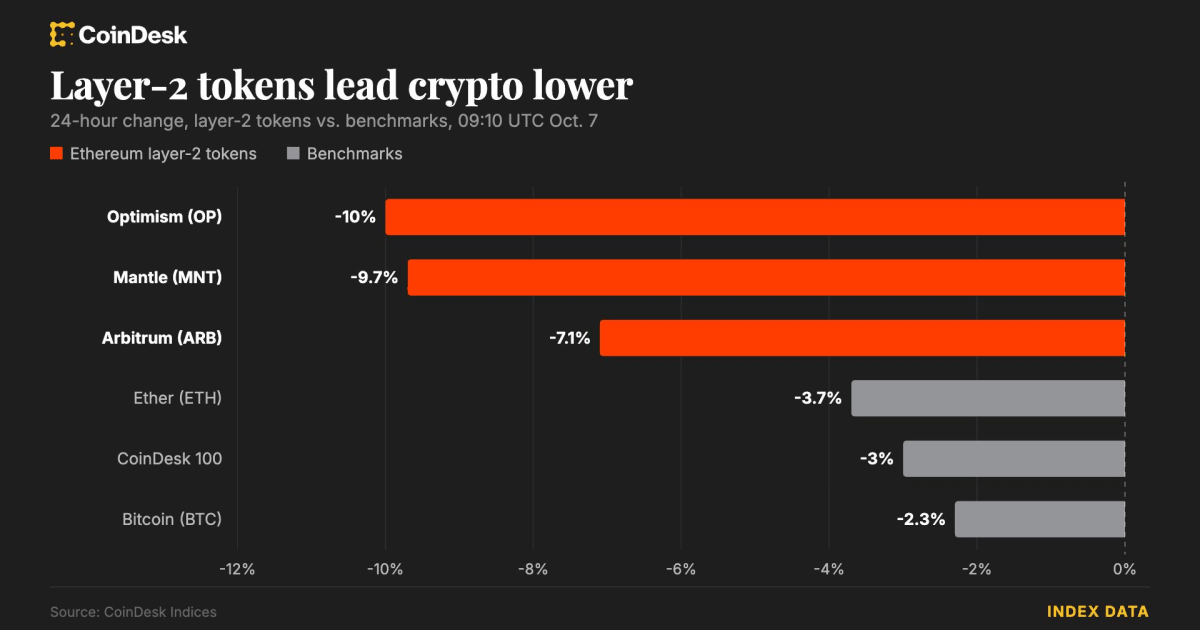
- Ethereum Network Upgrades: Continued improvements in Layer-2 scalability are essential to support the high throughput required for a $100B+ RWA ecosystem.
See Zensar Technologies's AI Score
Our algorithmic screener scores Zensar Technologies on fundamentals, momentum, and risk — free to try, no card needed.
Try the AI Screener →Have questions about this story?
Ask Welth, our finance-focused AI research assistant, for a deeper breakdown — free trial included.
Chat with Welth AI →Disclaimer: This content is generated by WelthWest Research Desk based on publicly available reports and is for informational purposes only. It does not constitute financial advice, investment recommendations, or an offer to buy or sell securities. Always consult a qualified financial advisor before making investment decisions.