Key Takeaway
Institutional adoption of tokenization marks the shift from 'crypto-speculation' to 'infrastructure-utility.' Investors should pivot toward IT firms building the plumbing of the future financial system.
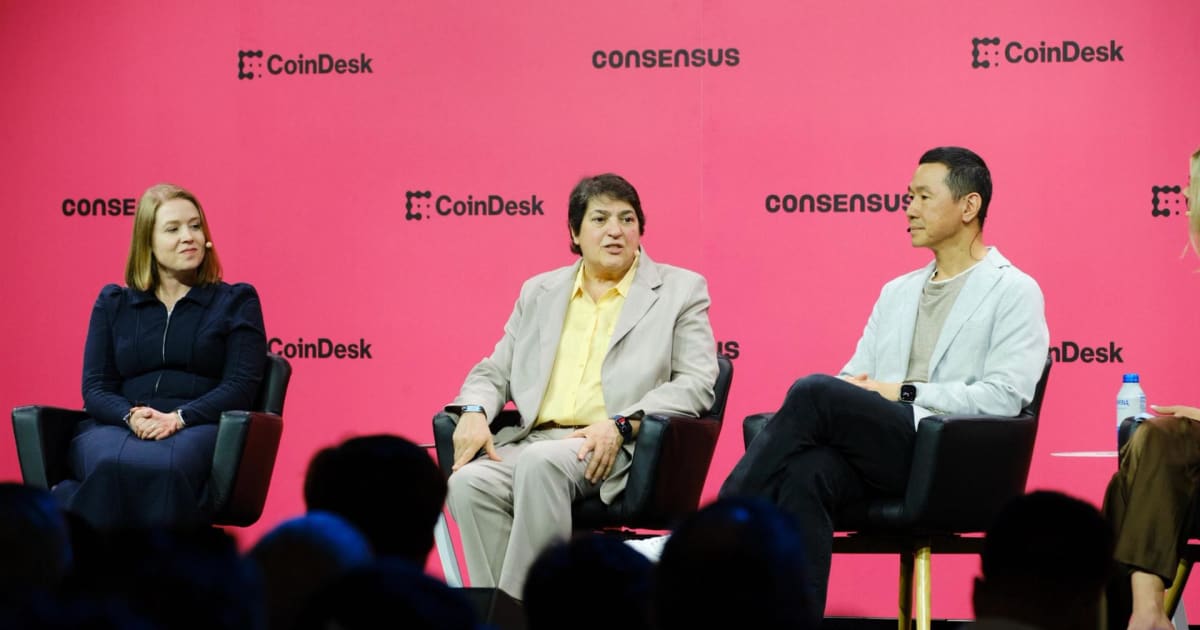
Wall Street’s pivot to blockchain-based asset tokenization is signaling a structural upgrade for global finance. For the Indian market, this represents a multi-year tailwind for top-tier IT services and private sector banks leading the digital transformation race.
The Great Institutional Shift: Why Tokenization is the New Banking Rails
For the past decade, the narrative surrounding blockchain has been dominated by the volatility of digital currencies. That era is effectively over. We are entering the age of institutional asset tokenization—the process of converting real-world assets (RWAs) like bonds, real estate, and private credit into programmable digital tokens on a distributed ledger. This is not about decentralization; it is about efficiency, liquidity, and the total re-engineering of global settlement layers.
Why does this matter now? Because the world’s largest asset managers and banking giants have moved past the pilot phase. They are no longer testing blockchain for publicity; they are integrating it to reduce the T+2 settlement cycle to near-instantaneous T+0, slashing collateral requirements and operational overhead. For the Indian financial ecosystem, this transition represents a mandatory upgrade to remain competitive in a globalized capital market.
How will blockchain tokenization affect Indian bank stocks?
The impact on Indian banking is binary: those who build the infrastructure will capture the margin, while those reliant on legacy clearinghouse models face margin compression. The Indian banking sector, currently boasting a robust credit growth rate of 15-18% YoY, is perfectly positioned to leverage tokenization to reduce its cost-to-income ratio, which for many private lenders remains stubbornly between 35% and 45%.
Historically, when Indian banks adopted Core Banking Solutions (CBS) in the early 2000s, it triggered a decade-long bull run in the financial sector. Tokenization is the next logical evolution. By eliminating intermediary friction in the issuance of commercial paper and corporate bonds, banks like HDFC Bank (HDFCBANK) and ICICI Bank (ICICIBANK) can unlock billions in trapped liquidity, effectively improving their Return on Equity (RoE) metrics by 50-100 basis points over a three-year horizon.
The IT Services Opportunity: Who is building the plumbing?
While banks are the consumers, the Indian IT services giants are the architects. The shift toward tokenized assets requires massive investments in secure cloud infrastructure, private blockchain implementation, and smart contract auditing. This is a high-margin service segment that directly benefits companies with deep domain expertise in financial services.
Stock-by-Stock Breakdown: The Winners and the Risks
- TCS (TCS): As the primary technology partner for India’s central financial infrastructure, TCS is best positioned to lead the integration of blockchain-based settlement systems. Their BaNCS platform is already evolving to support tokenized assets.
- Infosys (INFY): Through its Finacle suite, Infosys is actively embedding DLT (Distributed Ledger Technology) capabilities. They are the clear leader in digital transformation for mid-tier banks looking to leapfrog legacy constraints.
- HCL Technologies (HCLTECH): HCL’s focus on cybersecurity and cloud-native application development makes them the top pick for the 'security layer' of tokenized finance.
- HDFC Bank (HDFCBANK): Leading the charge in digital lending, HDFC is the most likely candidate to launch the first major tokenized credit product for retail and SME investors in India.
- ICICI Bank (ICICIBANK): Historically the fastest to adopt new payment protocols (e.g., UPI, IMPS), ICICI remains a frontrunner in experimenting with private blockchain networks for trade finance.
The Contrarian View: Bulls vs. Bears
The bull case is built on efficiency: tokenization reduces the need for manual reconciliation, which currently costs the global financial industry upwards of $10 billion annually. If Indian firms capture even 5% of the software implementation market for this shift, we are looking at a multi-billion dollar revenue stream for the Nifty IT index.
The bear case, however, focuses on regulatory friction. The Reserve Bank of India (RBI) has maintained a cautious stance on digital assets. If the regulatory framework for tokenized custody remains ambiguous, the cost of compliance could outweigh the efficiency gains. Furthermore, cybersecurity vulnerabilities in decentralized ledgers—specifically in smart contract code—remain a systemic risk that could lead to significant reputational damage for early adopters.
Actionable Investor Playbook
Investors should view this as a 3-5 year structural theme rather than a short-term trade.
- Accumulate IT Services Leaders: Focus on companies with >20% exposure to BFSI (Banking, Financial Services, and Insurance) revenue. Entry points should be monitored during broader market corrections, specifically when P/E ratios for TCS/Infosys dip below their 5-year historical average of 25x-28x.
- Watch the Private Banks: Monitor the 'Digital Transformation' expenditure reported in quarterly filings. A spike in R&D spend on blockchain/DLT is a leading indicator of future operational efficiency.
- Avoid: Legacy documentation and physical clearing intermediaries that lack a pivot strategy toward digital-first assets.
Risk Matrix
| Risk Factor | Probability | Impact |
|---|---|---|
| Regulatory Crackdown (Custody) | Medium | High |
| Cybersecurity Breach (Smart Contract) | Low | Critical |
| Integration Complexity/Delays | High | Medium |
What to watch next
Investors should look for two key catalysts in the next 6-12 months: First, the publication of the RBI’s updated guidelines on Digital Asset Custody. Second, the announcement of a major corporate bond issuance in India conducted entirely on a permissioned blockchain. These events will serve as the 'proof of concept' that validates the sector’s transition from experiment to enterprise utility.
See TCS's AI Score
Our algorithmic screener scores TCS on fundamentals, momentum, and risk — free to try, no card needed.
Try the AI Screener →Have questions about this story?
Ask Welth, our finance-focused AI research assistant, for a deeper breakdown — free trial included.
Chat with Welth AI →Disclaimer: This content is generated by WelthWest Research Desk based on publicly available reports and is for informational purposes only. It does not constitute financial advice, investment recommendations, or an offer to buy or sell securities. Always consult a qualified financial advisor before making investment decisions.