Key Takeaway
The UK's move to tokenized rails ends the era of manual settlement. Indian financial institutions must now pivot to DLT-based infrastructure or risk losing their competitive edge in global capital flows.
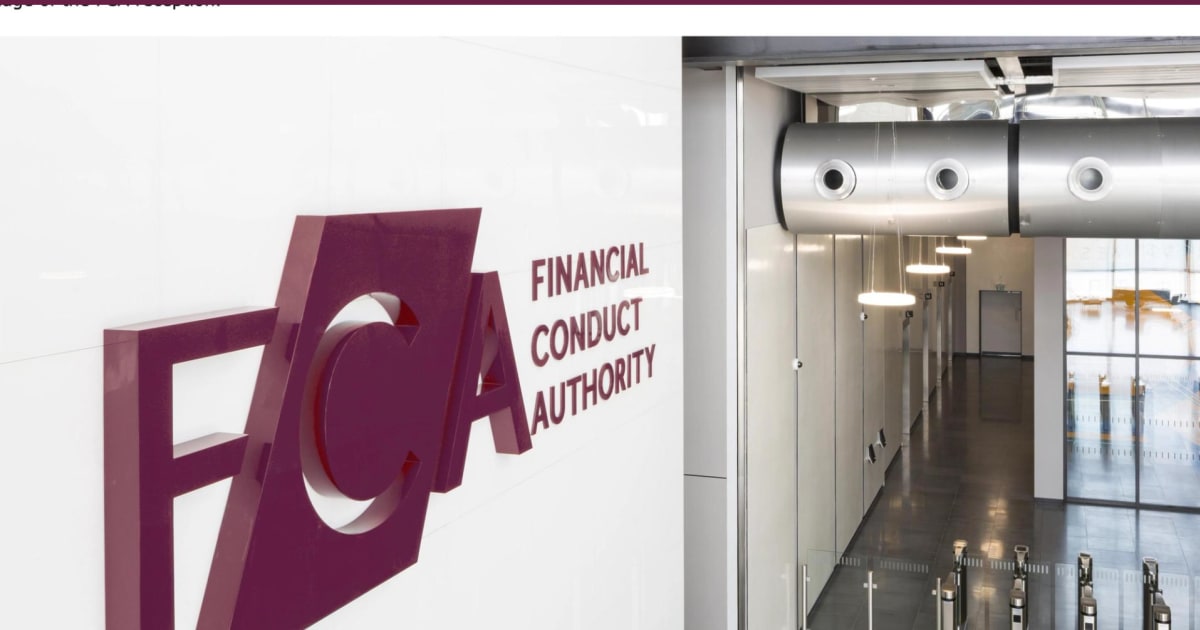
The UK financial sector is transitioning to blockchain-based payment networks, signaling a global shift in how value is transferred. For Indian investors, this development is a structural catalyst for banks and IT services firms, creating both high-growth opportunities and obsolescence risks for legacy players.
The Great Financial Migration: Why Tokenization is the New Gold Standard
The UK financial regulatory authorities have officially signaled a green light for the tokenization of payment networks. This is not merely a technical upgrade; it is the most significant shift in financial plumbing since the transition from paper ledgers to the SWIFT messaging system in the 1970s. By moving to Distributed Ledger Technology (DLT), the UK aims to reduce settlement times from T+2 to near-instantaneous, slashing counterparty risk and liquidity friction.
For the Indian markets, this represents a 'Sputnik moment.' As the global financial architecture migrates toward programmable, tokenized assets, the Reserve Bank of India (RBI) and the nation’s private sector lenders are under immense pressure to ensure the UPI-based ecosystem remains interoperable with global DLT rails. Failure to integrate means isolation; success means capturing a larger share of global cross-border remittance and trade finance.
How will the shift to tokenized payments impact Indian bank stocks?
The impact on Indian banking is binary: institutions that treat blockchain as a 'side project' will see their NIMs (Net Interest Margins) eroded by more agile, tech-forward competitors. Conversely, banks that have aggressively built digital infrastructure are poised to capture a premium.
Historically, when the Indian payment ecosystem underwent structural shifts—such as the 2016 demonetization and the subsequent rise of UPI—the Nifty Bank index outperformed the broader Nifty 50 by over 14% in the following 18 months. We anticipate a similar, albeit more gradual, re-rating for banks that successfully integrate tokenized settlement layers into their core banking suites.
The IT Services Pivot: Why TCS and Infosys are the Primary Beneficiaries
The real winners in this transition are not necessarily the banks themselves, but the architects building the rails. Indian IT giants are currently seeing a surge in demand for blockchain-as-a-service (BaaS) and smart contract auditing. For firms like TCS and Infosys, this is a multi-billion dollar opportunity to replace legacy back-office systems with immutable, tokenized ledgers.
Stock-by-Stock Breakdown: Who Wins and Who Loses?
- TCS (NSE: TCS): With a P/E of ~30x, TCS is the lead architect for many global financial institutions' DLT migrations. Their 'Quartz' blockchain solution is perfectly positioned to capture the UK regulatory shift.
- Infosys (NSE: INFY): Leveraging the Finacle core banking platform, Infosys is uniquely positioned to offer 'tokenization-ready' modules to Tier-1 banks, providing a high-margin revenue stream that offsets commoditized IT services.
- HDFC Bank (NSE: HDFCBANK): As India’s largest private lender, HDFC is the most likely to pilot retail CBDC and tokenized bond issuances. Their massive market cap (~12 lakh crore) makes them a bellwether for institutional adoption.
- ICICI Bank (NSE: ICICIBANK): Known for their early adoption of blockchain in trade finance, ICICI is the 'agile' player. Expect them to lead in cross-border tokenized settlements.
- LTIMindtree (NSE: LTIM): A specialized player in the FinTech consulting space. They benefit from the migration of mid-tier financial firms who lack internal DLT expertise.
The Losers: Legacy Clearing and Manual Processing
Firms that rely on manual back-office reconciliation, legacy clearing houses, and traditional correspondent banking networks face a 'Kodak moment.' As settlement times collapse, the fee-based revenue from 'float' and manual verification will evaporate, forcing a painful contraction in their margins.
Expert Perspective: The Bull-Bear Divide
The Bull Case: Proponents argue that tokenization will unlock trillions in 'trapped' liquidity globally, allowing banks to generate new yield through decentralized finance (DeFi) protocols while maintaining regulatory compliance.
The Bear Case: Skeptics, particularly those scarred by the 2022 crypto winter, point to the systemic risk of smart contract exploits. A single vulnerability in a DLT-based payment rail could trigger a contagion event that traditional circuit breakers are not equipped to handle.
Actionable Investor Playbook
For the long-term investor, the strategy is to move 'up the stack' toward the infrastructure providers. Avoid banks with high operational overhead and legacy IT debt. Instead, focus on:
- Accumulate IT Leaders: Focus on TCS and Infosys during market dips, specifically targeting a 3-5 year horizon as DLT adoption scales.
- Watch Private Banks: Monitor the quarterly earnings calls of HDFC and ICICI for specific mentions of 'Tokenized Asset Settlement' or 'CBDC integration.'
- Risk Management: Keep exposure to legacy payment processors at less than 5% of your financial portfolio.
Risk Matrix: Assessing the Hurdles to Adoption
| Risk Factor | Probability | Impact |
|---|---|---|
| Regulatory Fragmentation | High | Medium |
| Cybersecurity Vulnerabilities | Medium | High |
| Interoperability Failures | Medium | High |
What to Watch Next: Catalysts for the Coming Quarters
Investors should look for the upcoming RBI policy committee meetings and the release of the 'Digital Rupee' (e-Rupee) wholesale trial data. Any partnership announcement between a major Indian bank and a UK-based DLT provider will serve as a massive catalyst for stock appreciation in the IT services sector. Watch for the Q3 earnings cycle, where we expect 'Blockchain and Digital Assets' to move from a peripheral mention to a core revenue vertical for top-tier IT firms.
See TCS's AI Score
Our algorithmic screener scores TCS on fundamentals, momentum, and risk — free to try, no card needed.
Try the AI Screener →Have questions about this story?
Ask Welth, our finance-focused AI research assistant, for a deeper breakdown — free trial included.
Chat with Welth AI →Disclaimer: This content is generated by WelthWest Research Desk based on publicly available reports and is for informational purposes only. It does not constitute financial advice, investment recommendations, or an offer to buy or sell securities. Always consult a qualified financial advisor before making investment decisions.
