Key Takeaway
The global push for tokenized stocks, championed by figures like Robinhood's CEO, signals a profound shift in capital markets. For Indian investors, this isn't a distant trend but a nascent, multi-billion dollar opportunity demanding strategic positioning in technology innovators and adaptable financial institutions.
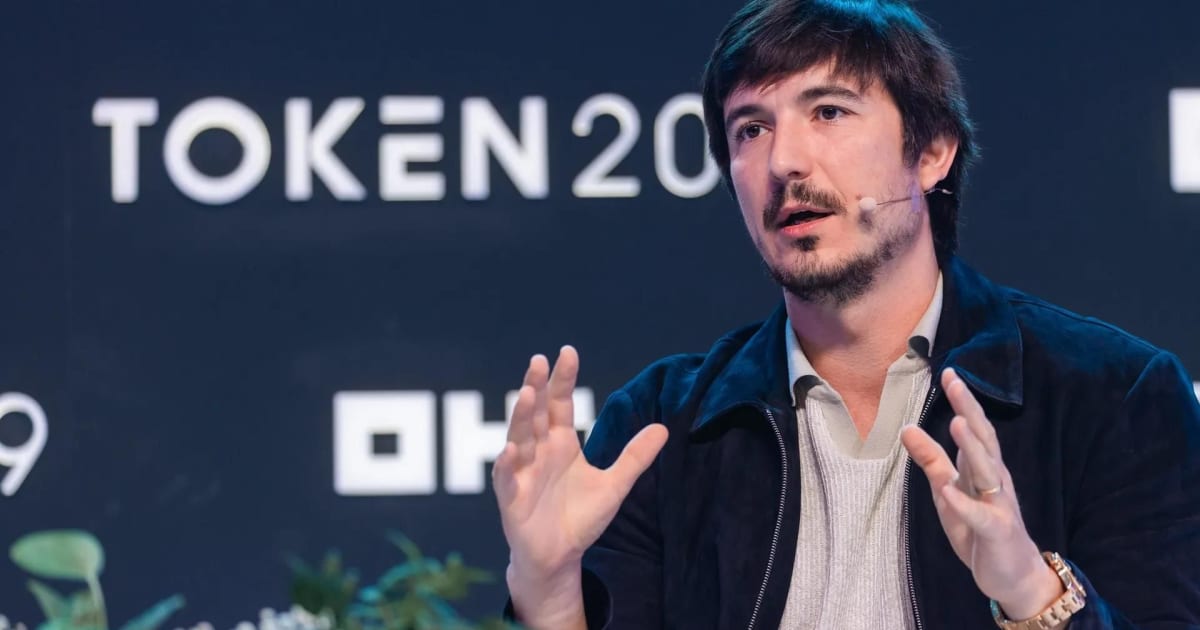
Robinhood's CEO is advocating for tokenized stocks in the U.S., a move that could redefine global financial infrastructure. This WelthWest deep dive explores the profound implications for Indian financial markets, from potential modernization of exchanges to new investment avenues. We identify specific NSE/BSE stocks poised for significant impact, offering an actionable investor playbook for this transformative shift.
Robinhood's Tokenized Stock Vision: A Blueprint for Global Capital Markets?
The financial world is abuzz with a potential paradigm shift, one championed by none other than Robinhood CEO Vlad Tenev: the widespread adoption of tokenized stocks in the United States. This isn't merely a tech-centric discussion; it's a strategic call to action that, if heeded, could fundamentally reshape how securities are issued, traded, and settled globally. While the immediate focus is on the U.S. market, the ripple effects of such a transformation would inevitably reach far corners of the financial ecosystem, including India's burgeoning capital markets, presenting both immense opportunities and significant challenges.
The urgency behind Tenev's advocacy stems from the rapid advancements in tokenization witnessed in other jurisdictions. Countries like Switzerland, Singapore, and even the UK are making strides in establishing regulatory frameworks and operational infrastructure for tokenized assets, including real-world assets (RWAs) like equity and debt. This global momentum isn't just about technological novelty; it's driven by the promise of enhanced efficiency, reduced settlement times, fractional ownership, and increased liquidity that blockchain technology offers. For India, a market currently valued at over $4.5 trillion in market capitalization across the NSE and BSE, this represents a multi-billion dollar opportunity to modernize its financial infrastructure, attract new forms of capital, and potentially unlock unprecedented investor access.
How Will Tokenized Stocks Reshape India's Financial Landscape?
The introduction of tokenized stocks on a global scale, particularly in dominant markets like the U.S., will inevitably exert pressure on Indian financial institutions and regulators to adapt. The current Indian market operates on a well-established but often cumbersome T+1 settlement cycle, which, while efficient by global standards, still pales in comparison to the near-instantaneous settlement capabilities of blockchain-based systems. A move towards tokenization could unlock significant capital efficiencies, potentially freeing up billions of dollars currently held in settlement buffers and collateral requirements across the Indian equity and debt markets.
Consider the potential impact on market liquidity. Fractional ownership, a core benefit of tokenization, would democratize access to high-value stocks or illiquid assets, allowing a broader base of retail investors to participate with smaller ticket sizes. For instance, purchasing a fractional share of a high-priced stock like MRF Ltd., currently trading around INR 130,000, would become feasible for many more investors. This could significantly deepen market participation and capital formation. Historically, technological advancements have driven similar shifts; the introduction of electronic trading in the 1990s, for example, dramatically increased trading volumes and market accessibility in India, paving the way for the Nifty 50 to grow exponentially from its inception. While direct comparisons are nuanced, the underlying principle of technology-driven market expansion remains relevant.
Furthermore, tokenization could streamline cross-border transactions and reduce foreign exchange friction, making Indian assets more attractive to international investors. The current process involves multiple intermediaries, significant costs, and delays. A tokenized framework could reduce these overheads, potentially attracting a new wave of foreign institutional investment (FII) into Indian equities and bonds. With FIIs having net bought over $20 billion into Indian equities in the last 12 months, any mechanism that further eases their participation could translate into substantial capital inflows, positively impacting the Nifty's trajectory.
NSE/BSE Stocks Poised for Impact: Winners and Watchlist
The advent of tokenized stocks will create clear winners and necessitate strategic adaptation from others in the Indian financial ecosystem. Identifying these players is crucial for investors seeking to capitalize on this long-term trend.
Technology Enablers and Innovators
- Infosys (NSE: INFY): As a global leader in IT consulting and services, Infosys is exceptionally well-positioned. The company already boasts a significant financial services client base and has been actively investing in blockchain solutions. Its 'Finacle' core banking solution, used by over 100 banks globally, could be a prime candidate for blockchain integration to facilitate tokenized asset management. With a market capitalization exceeding INR 6.1 trillion and a TTM P/E of around 25x, Infosys's ability to develop robust, scalable blockchain platforms for financial institutions—from token issuance to custody and trading—would be a major revenue driver. We anticipate an increasing demand for their expertise in building enterprise-grade blockchain infrastructure for banks and exchanges.
- Tata Consultancy Services (NSE: TCS): Similar to Infosys, TCS holds a dominant position in the financial services IT sector. Their 'Quartz Blockchain' solution suite is already geared towards capital markets, offering modules for issuance, settlement, and record-keeping. As tokenization gains traction, TCS's deep client relationships with major global banks and its extensive research and development in DLT (Distributed Ledger Technology) position it for substantial contract wins. With a market cap nearing INR 14 trillion and a P/E of approximately 30x, TCS's existing blockchain IP gives it a head start in a competitive field.
- Wipro (NSE: WIPRO): While perhaps not as overtly dominant in blockchain as its peers, Wipro has a strong financial services vertical and a growing focus on emerging technologies. The company's 'Blockchain Innovation Lab' and strategic partnerships indicate a readiness to engage with this transformative trend. Should demand for tokenization solutions surge, Wipro's agile service delivery model and competitive pricing could make it a preferred partner for mid-tier financial institutions and startups looking to adopt blockchain. Its current market cap is around INR 2.6 trillion, with a P/E of about 23x.
Financial Market Infrastructure and Potential Adopters
- BSE Ltd. (NSE: BSE): India's oldest stock exchange, BSE, has historically shown a willingness to embrace technological innovation, as evidenced by its robust electronic trading platform. While currently focused on traditional securities, the long-term strategic imperative for exchanges will be to explore and eventually integrate tokenized asset trading. BSE could potentially develop a separate tokenized asset trading platform or integrate DLT into its existing clearing and settlement systems. This would involve significant R&D investment but could secure its relevance in a future tokenized world. Its market cap is around INR 130 billion.
- National Stock Exchange of India (NSE): As the dominant exchange in India by trading volume, the NSE’s approach to tokenization will be critical. The NSE has a history of driving market modernization and efficiency. While no concrete plans for tokenized stocks are public, the long-term competitive landscape will necessitate exploration. The NSE could leverage its vast infrastructure and regulatory expertise to create a secure, compliant environment for tokenized assets, potentially partnering with technology providers like Infosys or TCS. The impact on its revenue streams could be transformative, adding new asset classes and increasing transaction volumes.
Contrarian Views: Bears vs. Bulls on Tokenization's Pace
The path to widespread tokenized stock adoption is fraught with debate. Bulls argue that the efficiency gains are too compelling to ignore. They point to the inevitable march of technology, citing historical parallels where initial skepticism gave way to widespread adoption (e.g., internet banking, mobile payments). For them, the 'network effect' of blockchain, once a critical mass is achieved, will accelerate adoption exponentially. They foresee a future where settlement risk is virtually eliminated, capital is more fluid, and new investment products proliferate, ultimately benefiting investors through lower costs and greater access.
Bears, however, highlight the formidable regulatory hurdles and the inertia of established financial institutions. They argue that incumbent players have little incentive to disrupt their highly profitable existing models, especially given the significant investment required for blockchain integration and the lack of a fully harmonized global regulatory framework. Cybersecurity risks associated with nascent blockchain technology and the potential for new forms of market manipulation are also key concerns. They contend that the slow pace of regulatory action, particularly in a complex jurisdiction like India with its cautious approach to novel financial instruments, will delay any significant impact for at least a decade, making current investments in 'tokenization plays' premature.
Actionable Investor Playbook: Navigating the Tokenization Frontier
For discerning investors, the tokenization trend presents a multi-year investment horizon. This is not a 'get rich quick' scheme but a foundational shift demanding strategic, long-term positioning.
- Buy/Accumulate (Long-Term, 5+ years): Focus on Indian IT service providers with established financial services verticals and demonstrable blockchain capabilities. Infosys (INFY) and TCS (TCS) are prime candidates. They are less exposed to regulatory uncertainty directly and will benefit from the significant spending by financial institutions globally and eventually in India to build tokenization infrastructure. Look for dips to accumulate these stocks; their current valuations are reasonable for their growth potential in this space.
- Watch/Monitor (Medium-Term, 2-5 years): Keep a close eye on Indian stock exchanges like BSE Ltd. (BSE) and the unlisted NSE. While they are direct beneficiaries in the long run, their adoption will be heavily dependent on regulatory clarity from SEBI and RBI. Any public announcements, pilot programs, or regulatory sandboxes involving DLT for securities could be significant catalysts. Entry points here would be contingent on concrete steps towards adoption.
- Avoid/Be Cautious: Companies heavily reliant on traditional, inefficient settlement processes without a clear strategy for DLT adoption. While no specific Indian stocks fit this perfectly as 'losers' yet, generic brokerage firms that fail to adapt their back-office infrastructure or embrace digital asset services could face margin compression in the long run.
Entry Points: For Infosys and TCS, consider accumulating on any market corrections, particularly if their P/E ratios approach their 5-year historical averages. For BSE, watch for regulatory signals; a clear roadmap for tokenized asset trading would be a strong buy signal, potentially leading to a significant re-rating of the stock.
Time Horizon: This is a generational shift. Investors should approach this with a 5-10 year time horizon, understanding that regulatory and technological integration will take time to mature and yield substantial returns.
Risk Matrix: Navigating the Unknowns of Tokenized Securities
While the potential benefits are immense, several critical risks could delay or derail the widespread adoption of tokenized stocks.
- Regulatory Uncertainty (High Probability, High Impact): This remains the paramount risk. A lack of clear, harmonized regulatory frameworks globally and within India (from SEBI, RBI, and the Ministry of Finance) could stifle innovation and prevent institutional adoption. Differing rules across jurisdictions could fragment liquidity. Probability: High (given the complexity). Impact: High (could delay adoption by years).
- Cybersecurity Risks (Medium Probability, High Impact): Blockchain, while inherently secure, is not immune to vulnerabilities, especially at the application layer or through smart contract exploits. A major security breach involving tokenized assets could severely erode trust and set back adoption significantly. Probability: Medium (as technology matures, but new attack vectors emerge). Impact: High (reputational damage, financial losses).
- Interoperability Challenges (Medium Probability, Medium Impact): As various blockchain networks and tokenization standards emerge, ensuring seamless interoperability between different platforms and with existing legacy systems will be crucial. A fragmented ecosystem could negate some of the efficiency gains. Probability: Medium (ongoing efforts to standardize). Impact: Medium (could limit scalability and liquidity).
- Incumbent Resistance & Adoption Pace (Medium Probability, Medium Impact): Large financial institutions, with their significant investments in existing infrastructure and complex internal processes, may be slow to adopt tokenized solutions unless there's a compelling, immediate financial incentive or regulatory mandate. This inertia could delay widespread impact. Probability: Medium (history shows incumbents often resist change). Impact: Medium (slows down market transformation).
What to Watch Next: Catalysts for the Tokenization Revolution
Investors should closely monitor several key developments that will shape the trajectory of tokenized stocks globally and in India:
- U.S. Regulatory Action: Any concrete statements, proposed legislation, or clear guidance from the SEC, CFTC, or Treasury regarding tokenized securities in the U.S. will be a major catalyst. A clear path would likely accelerate global adoption.
- Global Pilot Programs & Live Implementations: Watch for successful large-scale pilot programs or live deployments of tokenized equity or debt by major financial institutions (e.g., JPMorgan's Onyx, BlackRock's tokenized funds). These real-world examples will build confidence and demonstrate viability.
- Indian Regulatory Sandboxes & Consultations: Any announcement from SEBI or RBI inviting proposals for DLT-based financial instruments or establishing a regulatory sandbox for tokenized assets would be a significant signal for the Indian market.
- Exchange Announcements: Keep an eye on public statements or strategic partnerships from global exchanges (e.g., NYSE, Deutsche Börse) or Indian exchanges (BSE, NSE) regarding their plans for DLT integration or tokenized asset trading.
- Technology Provider Earnings Calls: Listen for specific mentions of blockchain revenue growth, new client wins in the DLT space, or strategic investments in tokenization capabilities during earnings calls of IT giants like Infosys and TCS. This provides direct insight into market demand.
The journey towards a fully tokenized capital market will be long and complex, but the foundational shifts are already underway. Astute investors, armed with deep analysis and a long-term perspective, stand to benefit significantly from this multi-billion dollar transformation.
See Infosys (potentially, if they develop blockchain solutions for financial services)'s AI Score
Our algorithmic screener scores Infosys (potentially, if they develop blockchain solutions for financial services) on fundamentals, momentum, and risk — free to try, no card needed.
Try the AI Screener →Have questions about this story?
Ask Welth, our finance-focused AI research assistant, for a deeper breakdown — free trial included.
Chat with Welth AI →Disclaimer: This content is generated by WelthWest Research Desk based on publicly available reports and is for informational purposes only. It does not constitute financial advice, investment recommendations, or an offer to buy or sell securities. Always consult a qualified financial advisor before making investment decisions.