Key Takeaway
The 2026 US Midterm Elections are not just a domestic US affair; they represent a pivotal inflection point for global trade, commodity prices, and especially Indian equity markets. Investors must prepare for potential policy shifts impacting IT services, export manufacturing, and FII flows, demanding a strategic portfolio rebalancing.
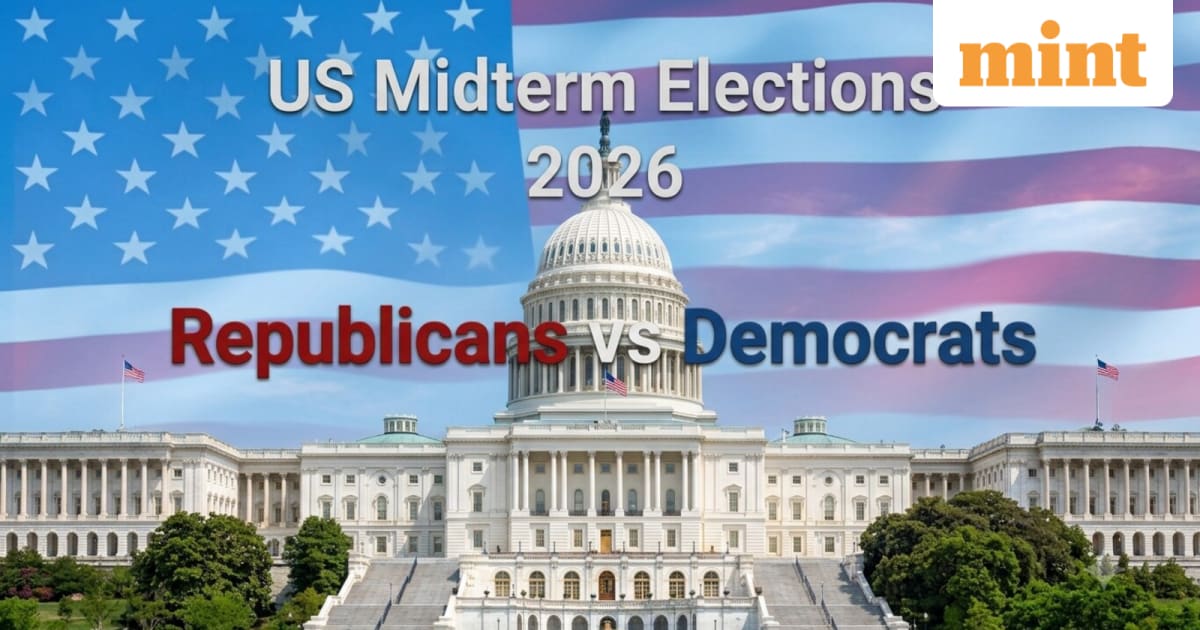
The 2026 US Midterm Elections, poised to define President Trump's remaining legislative power, present a complex web of opportunities and risks for Indian investors. This comprehensive analysis delves into how potential shifts in US trade, fiscal, and geopolitical policies could ripple through the Nifty 50, specific sectors like IT and defense, and even the Rupee's stability. Understand the 'so what' for your portfolio now.
Trump's 2026 Midterm Power Play: India Stocks at Risk? Deep Dive
The political calendar often feels distant from the daily gyrations of the stock market, yet certain events cast shadows long enough to reshape investment landscapes. The US Midterm Elections of 2026 are precisely one such seismic event, poised to determine the legislative leverage of President Donald Trump. While geographically distant, the outcomes of these elections will directly influence the trajectory of US trade policy, fiscal spending, and geopolitical stances, particularly concerning flashpoints like Iran. For Indian investors, this isn't merely a news headline; it's a critical determinant of future FII flows, commodity price stability, and the performance of key export-oriented sectors.
The stakes are extraordinarily high. A strong Republican showing could empower President Trump to push through more aggressive protectionist trade measures, potentially tightening H1B visa norms and escalating tariffs. Conversely, a shift in congressional control could lead to policy gridlock, creating an environment of uncertainty, or even a moderation of some of the more hawkish policies. The ramifications for global trade flows, the stability of commodity prices, and ultimately, investor sentiment, are profound. This deep dive by WelthWest Research Desk aims to be the definitive resource for understanding these intricate connections, offering actionable insights for the discerning investor.
How Will US Midterm Elections 2026 Impact Global Trade and Indian Equities?
The 2026 Midterm Elections serve as a critical barometer for President Trump's capacity to enact his second-term agenda. His policy framework, characterized by an 'America First' approach, has historically emphasized protectionist trade policies, significant fiscal spending, and a muscular foreign policy. The ability to push these policies through Congress hinges entirely on the electoral outcome.
Consider the historical precedent. Following the 2018 midterms, where Democrats gained control of the House, President Trump faced significant legislative hurdles, leading to a period of heightened policy uncertainty. The Nifty 50, while resilient, experienced increased volatility, with foreign institutional investors (FIIs) showing a net outflow of approximately $4 billion in the six months post-election, signaling caution. This time, with a potential second term already underway, the impact could be amplified. The market, always forward-looking, will begin pricing in these probabilities well in advance, likely starting in late 2025.
A strengthened mandate for President Trump could lead to renewed vigor in trade disputes, particularly with China, and a potential expansion of 'Buy American' clauses. This directly impacts India's export-oriented manufacturing sectors and the broader global supply chain. Escalating geopolitical tensions, particularly around Iran, could further disrupt oil supply, pushing crude prices higher. For a net oil importer like India, this would translate into increased import bills, inflationary pressures, and a depreciating Rupee. Conversely, a divided government could lead to policy paralysis, which while not ideal, might offer a degree of predictability by limiting radical policy shifts.
The rupee's stability is intrinsically linked to FII flows. In periods of global uncertainty or rising US interest rates – both potential outcomes of policy shifts – FIIs tend to repatriate capital from emerging markets. A significant outflow, similar to the ~$17 billion seen in calendar year 2022, could put substantial pressure on the INR, making imports more expensive and potentially impacting corporate profitability for companies with unhedged foreign currency exposure.
Which Indian Stocks and Sectors Face the Biggest Impact from US Policy Shifts?
The ripple effect of US policy shifts will not be uniform across the Indian market. Certain sectors are inherently more exposed due to their business models, revenue streams, or reliance on global trade dynamics.
- Indian IT Services (Losers): This sector stands as one of the most vulnerable. President Trump's historical stance on immigration and 'America First' hiring policies could lead to a further tightening of H1B visa norms. While Indian IT companies have diversified their talent pools and localized operations significantly since 2016, a renewed focus on restricting foreign workers would increase operational costs, reduce talent mobility, and potentially impact profitability. Companies like Tata Consultancy Services (TCS.NS), with over 50% of its revenue from North America, and Infosys (INFY.NS), which saw over 60% of its FY23 revenue from the region, could face headwinds. Even their current P/E multiples of ~29x and ~25x respectively, already reflecting some growth concerns, could compress further if the outlook for US-based projects deteriorates. Sector peer Wipro (WIPRO.NS), also heavily reliant on US markets, would similarly be impacted.
- Export-Oriented Manufacturing (Losers): Any escalation in global trade tensions, imposition of new tariffs, or a general slowdown in global economic growth due to US policy uncertainty, would directly hit Indian manufacturers exporting goods to the US and other major economies. Sectors like textiles, auto components, and certain engineering goods would feel the pinch. Companies like Bharat Forge (BHARATFORG.NS), a global leader in forging with significant exports to North America, could see demand softening or increased competitive pressures if trade barriers rise. Its current market capitalization of approximately INR 65,000 crores makes it susceptible to global demand fluctuations.
- Defence (Winners): A hawkish US foreign policy, particularly concerning geopolitical hotspots like Iran, often translates into increased global defense spending. While India's defense procurement is largely indigenous, a heightened global security environment can indirectly benefit Indian defense manufacturers through increased export opportunities or a renewed domestic push for modernization. Companies like Hindustan Aeronautics Ltd (HAL.NS), India's largest aerospace and defense company with a market cap exceeding INR 2.5 lakh crores, and Bharat Electronics Ltd (BEL.NS), a key supplier of defense electronics, could see sustained order inflows. Their robust order books, already reflecting India's 'Make in India' push, could be further bolstered by a more volatile global security landscape.
- Commodities (Winners): Geopolitical risks, especially those involving major oil producers like Iran, tend to drive up commodity prices. Any escalation in the Strait of Hormuz, a critical chokepoint for global oil shipments, could send crude oil prices soaring. For Indian commodity players, particularly those in metals and energy, this could be a mixed bag. While higher crude prices are generally negative for India, companies like Reliance Industries (RELIANCE.NS), with its significant refining and petrochemical operations, could see improved gross refining margins (GRMs) if crack spreads widen. Similarly, metal producers like Tata Steel (TATASTEEL.NS) or Hindalco (HINDALCO.NS) might benefit from a general 'risk-on' sentiment in commodities, though this is highly dependent on global demand dynamics.
- Pharmaceuticals (Conditional Winners): The US is a major market for Indian pharmaceutical exports. If US healthcare policy remains stable or favorable to drug pricing, Indian pharma companies could continue their growth trajectory. However, any significant shift towards price controls or increased regulatory scrutiny could pose challenges. Companies like Sun Pharmaceutical Industries (SUNPHARMA.NS), with a substantial presence in the US generics market, and Dr. Reddy's Laboratories (DRL.NS), which derives a significant portion of its revenue from North America, would be closely watching policy developments.
An Investor Playbook for the 2026 US Midterms: What to Buy, Sell, Watch?
Navigating the uncertainties surrounding the 2026 US Midterm Elections requires a nuanced and proactive investor playbook. The market's tendency to discount future events means that strategic positioning must begin well before the actual election date.
Bears' Argument: The bearish perspective centers on the potential for heightened policy uncertainty, trade protectionism, and geopolitical instability. They would argue for reducing exposure to export-oriented sectors, particularly IT services, citing the risk of visa restrictions and rising operational costs. A weakening Rupee due to FII outflows would also be a significant concern, impacting companies with unhedged foreign currency debt. Bears might advocate for increasing allocation to defensive sectors like domestic consumption staples or utilities, which are less susceptible to global trade shocks. They would also highlight the risk of a global economic slowdown, which could depress corporate earnings across the board.
Bulls' Argument: The bullish counter-argument might posit that the market has already factored in much of the 'Trump risk' from his previous term. They might point to the resilience of the Indian economy and its domestic consumption story as a buffer against external shocks. Bulls could argue that any short-term volatility related to US policy would present buying opportunities in quality growth stocks. Furthermore, they might highlight that even with protectionist rhetoric, the global interconnectedness of supply chains makes complete decoupling difficult. They might also see opportunities in sectors that benefit from increased domestic defense spending or strategic commodity plays if geopolitical tensions escalate.
Actionable Investor Playbook:
- Reduce Exposure: Consider trimming positions in IT services giants like TCS (TCS.NS) and Infosys (INFY.NS), especially if their P/E multiples remain elevated. The risk of H1B visa tightening and increased localization costs cannot be ignored. Similarly, evaluate exposure to highly export-dependent manufacturing stocks that lack significant domestic demand buffers.
- Increase Exposure: Look for opportunities in domestic-focused sectors that are less impacted by global trade winds. Consider companies in infrastructure, capital goods, and select financial services that benefit from India's structural growth story. Defense stocks like HAL (HAL.NS) and BEL (BEL.NS) could offer defensive growth, especially given India's long-term defense indigenization goals. For those with a higher risk appetite, strategic plays in commodity producers (e.g., specific segments of Reliance Industries (RELIANCE.NS)) could be considered if geopolitical risks escalate, but with careful monitoring of crude oil price trends.
- Watch List: Keep a close eye on the Rupee-Dollar exchange rate. A significant depreciation could signal broad FII outflows and impact companies with large import bills or unhedged foreign debt. Monitor US economic data, particularly inflation and employment figures, which could influence the Federal Reserve's monetary policy and, consequently, global liquidity.
- Entry Points & Time Horizons: For long-term investors (3-5 years+), any significant market correction driven by midterm uncertainty could present attractive entry points for fundamentally strong Indian businesses. Short-term traders should brace for increased volatility in the 6-12 months leading up to the elections.
- Diversification: Emphasize geographical and sectoral diversification. While India remains a compelling long-term story, a balanced portfolio helps mitigate risks stemming from specific external events.
Decoding the Risks: A Probability Assessment for Indian Investors
Understanding the potential risks is paramount for constructing a resilient portfolio. Here's a risk matrix with probability assessments:
- Policy Uncertainty & Trade Protectionism (High Probability, Medium-High Impact): A strong Republican showing could empower President Trump to implement more aggressive 'America First' policies. This includes stricter trade tariffs, increased scrutiny of foreign investments, and potentially tighter immigration policies impacting the IT sector. The impact could be a slowdown in global trade, increased costs for Indian exporters, and reduced FII interest in sectors perceived as vulnerable.
- Geopolitical Escalation (Medium Probability, High Impact): Renewed tensions concerning Iran, or other flashpoints, could lead to significant disruptions in global oil supply. This would directly impact India's import bill, fuel inflation, and put pressure on the Rupee. The last time geopolitical tensions significantly impacted oil prices (e.g., during the Russia-Ukraine conflict), Brent crude surged past $100/barrel, leading to a substantial increase in India's current account deficit.
- FII Outflows & Rupee Depreciation (Medium Probability, Medium Impact): Policy uncertainty, coupled with potentially rising US interest rates (if the Fed responds to inflation), could trigger significant FII outflows from emerging markets, including India. This would put downward pressure on the Rupee, making imports more expensive and potentially impacting corporate earnings for companies with foreign currency exposure. In 2022, FIIs pulled out a net $17 billion, contributing to the INR depreciating by over 10% against the USD.
- Global Economic Slowdown (Medium Probability, Medium Impact): Should US policies lead to a contraction in global trade or investment, it could trigger a broader global economic slowdown. This would dampen demand for Indian exports across various sectors, impacting corporate revenue and profitability.
What to Watch Next: Catalysts and Data Points for Indian Investors
The road to the 2026 Midterm Elections will be paved with numerous data points and events that will offer clues to the potential outcomes and their market implications. Astute investors must remain vigilant.
- US Economic Indicators: Keep a close watch on US GDP growth, inflation data (CPI, PCE), and employment figures (Non-Farm Payrolls). Robust economic growth in the US might give President Trump more leeway to pursue aggressive policies, while a slowdown could temper his approach. The Federal Reserve's commentary on interest rates, influenced by these metrics, will also be crucial for FII flows.
- Opinion Polls & Primary Results: As 2025 progresses, opinion polls tracking voter sentiment for congressional races will provide early indicators of the political landscape. Key primary election results will also signal the strength of various factions within the Republican and Democratic parties.
- US Trade Policy Statements: Any official statements or proposed legislation from the US government regarding tariffs, trade agreements, or immigration policies will be immediate market movers. Pay attention to rhetoric from the USTR (United States Trade Representative) and the Department of Commerce.
- Geopolitical Developments: Developments in the Middle East, particularly concerning Iran, and the ongoing relationship between the US and China, will directly influence commodity prices and broader market sentiment. Any escalation in tensions will warrant immediate attention.
- Corporate Earnings & Guidance: Quarterly earnings calls from Indian companies with significant US exposure (especially IT services, pharma, and export-oriented manufacturing) will offer real-time insights into how businesses are perceiving and adapting to the evolving US policy environment. Pay particular attention to management commentary on client spending, H1B visa costs, and global demand outlook.
The 2026 US Midterm Elections are more than just a political contest; they are a critical economic event with far-reaching implications for Indian equity markets. By understanding the potential policy shifts, identifying vulnerable and resilient sectors, and adopting a proactive investor playbook, WelthWest Research Desk believes investors can navigate this period of uncertainty and position their portfolios for long-term success. Vigilance and informed decision-making will be the ultimate determinants of portfolio performance.
Run a free AI Stock Screen
Our algorithmic screener scores any NSE/BSE stock on fundamentals, momentum, and risk — free to try, no card needed.
Try the AI Screener →Have questions about this story?
Ask Welth, our finance-focused AI research assistant, for a deeper breakdown — free trial included.
Chat with Welth AI →Disclaimer: This content is generated by WelthWest Research Desk based on publicly available reports and is for informational purposes only. It does not constitute financial advice, investment recommendations, or an offer to buy or sell securities. Always consult a qualified financial advisor before making investment decisions.