Key Takeaway
India's fiscal deficit has ballooned, exceeding 41.9% of the FY27 target by August, signaling heightened borrowing. This portends higher interest rates and reduced liquidity, posing significant headwinds for interest-sensitive sectors and highly leveraged companies, demanding a defensive portfolio stance.
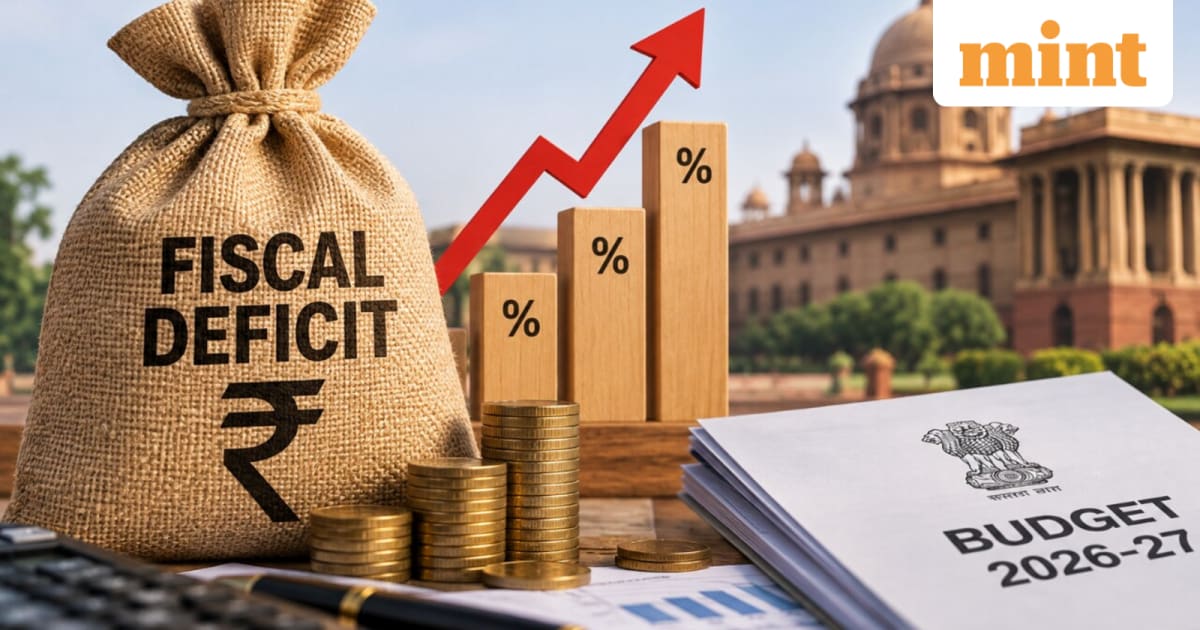
India's fiscal deficit is widening alarmingly, reaching 41.9% of the FY27 target by August. This critical development signals a dramatic increase in government borrowing, with profound implications for the Indian stock market. Investors must brace for potential interest rate hikes, tighter liquidity, and sector-specific vulnerabilities.
India's Fiscal Deficit Surge: What It Means for Your Portfolio Now
The Alarm Bells Ring: Fiscal Deficit Overshoots Expectations
India's fiscal prudence has hit a significant roadblock. Recent data reveals a startling expansion of the fiscal deficit, which has already reached a staggering 41.9% of the full fiscal year 2027 target by the end of August. This translates to a consolidated deficit of approximately ₹7.1 lakh crore, a figure that dwarfs initial projections and raises immediate concerns about the nation's financial health and its ripple effects across the equity markets. This isn't just a statistical anomaly; it's a red flag indicating a substantial increase in the government's borrowing requirements. Such a scenario typically forces the government to tap into the debt markets more aggressively, potentially crowding out private sector borrowing and driving up the cost of capital for businesses and consumers alike.
The timing of this widening deficit is particularly concerning. As the government ramps up expenditure, especially in the lead-up to upcoming economic cycles, the gap between its revenue and spending is widening at an unsustainable pace. This necessitates a deeper dive into the underlying revenue generation and expenditure patterns, which appear to be misaligned with fiscal consolidation goals. The immediate 'why it matters now' stems from the market's forward-looking nature. Investors and analysts are already recalibrating their expectations, factoring in the likelihood of tighter monetary policy and a more challenging investment landscape. This proactive adjustment is crucial for navigating the choppy waters ahead.
The Chain Reaction: How a Widening Deficit Impacts the Indian Stock Market
The direct consequence of a ballooning fiscal deficit is an increased demand for borrowed funds. The government, to finance its expenditure, will likely issue more bonds. This increased supply of government securities can lead to a rise in their yields, which in turn influences broader interest rates across the economy. For the Indian stock market, this translates into several interconnected pressures. Firstly, higher interest rates make fixed-income investments more attractive relative to equities, potentially leading to a reallocation of capital away from stocks. Secondly, the cost of borrowing for corporations escalates. Companies that rely on debt financing for their operations, expansion, or working capital will face higher interest outlays. This directly impacts their profitability, earnings per share (EPS), and ultimately, their stock valuations.
Liquidity in the financial system can also become a concern. When the government borrows heavily, it absorbs a significant portion of available funds, leaving less for other market participants. This reduced liquidity can stifle trading volumes and make it harder for companies to raise capital, further dampening investor sentiment. Historically, periods of rising government borrowing and interest rates have been correlated with subdued equity market performance. For instance, in late 2022, as global inflation concerns led to aggressive rate hikes by central banks, Indian equities experienced a period of consolidation, with the Nifty 50 seeing a drawdown of over 10% from its peak, partly driven by rising borrowing costs and a flight to safety.
The impact is not uniform across all sectors. Interest-rate sensitive industries are typically the first and most severely affected. Sectors like real estate, automobiles, and consumer durables, which often rely on consumer financing and have significant capital expenditure plans funded by debt, are particularly vulnerable. Higher EMIs due to increased interest rates can dampen consumer demand for big-ticket items, while increased borrowing costs can make new housing projects less viable. Conversely, sectors that are less dependent on debt or have strong pricing power may weather the storm more effectively.
Identifying the Winners and Losers in a High-Deficit Environment
In an environment characterized by a widening fiscal deficit and the associated rise in borrowing costs, a clear bifurcation of winners and losers emerges. The most direct losers are companies burdened with substantial existing debt. Their interest expenses will climb, eroding profit margins and potentially straining their ability to service their debt obligations. Companies with high debt-to-equity ratios, particularly those in capital-intensive industries, will be under immense pressure. This includes many infrastructure development firms, manufacturing units with significant fixed assets, and even some utilities that have undertaken large expansion projects financed through loans.
The interest-rate sensitive sectors, as mentioned, will bear the brunt. Consider the real estate sector: developers often operate on thin margins and rely heavily on project financing. An increase in interest rates can make their projects unviable, delay launches, and decrease demand from homebuyers facing higher mortgage rates. Similarly, the automotive sector, a bellwether for consumer sentiment and discretionary spending, is highly susceptible. Higher car loan interest rates can significantly reduce affordability, leading to lower sales volumes. Consumer durables, from air conditioners to refrigerators, face a similar fate as financing costs for consumers increase.
Companies that are heavily reliant on government spending or subsidies are also at risk. If the government faces fiscal constraints due to the widening deficit, it may be compelled to cut back on capital expenditure or reduce the size of its subsidy programs. This could impact sectors like construction, infrastructure services, and even certain agrochemical or fertilizer companies that benefit from government support. While specific 'winners' are harder to pinpoint in such a broad market downturn, companies with robust balance sheets, low debt, strong free cash flow generation, and dominant market positions might be considered relatively resilient. They are better equipped to absorb rising costs and may even gain market share from weaker competitors.
Sector-Specific Tremors: Where the Impact Will Be Felt Most
The financial sector, particularly banks, presents a complex picture. While higher interest rates can improve net interest margins (NIMs) for banks, this benefit is often offset by an increase in non-performing assets (NPAs) if borrowers struggle to repay loans due to higher servicing costs. Consequently, banks with a higher proportion of unsecured loans or those heavily exposed to vulnerable corporate sectors might face increased credit risk. Public sector banks, often more exposed to government lending and infrastructure projects, could see a mixed impact, with potential for higher NIMs but also increased asset quality concerns.
The manufacturing sector, especially those with high leverage and significant import/export components, will feel the pinch. Increased borrowing costs will impact their capex plans and working capital management. Currency fluctuations, often exacerbated by global interest rate differentials and capital flows driven by sovereign debt concerns, can also add another layer of complexity for manufacturers reliant on imported raw materials or exporting finished goods. Technology and IT services, while largely export-oriented and less sensitive to domestic interest rates, could be indirectly affected by a global economic slowdown that might accompany tighter monetary conditions worldwide. However, their strong cash reserves and global client base offer a degree of insulation.
Stock Spotlight: Navigating the Minefield of Specific Equities
Let's examine a few specific NSE/BSE-listed companies and their potential vulnerability:
- DLF Ltd. (NSE: DLF): As a leading real estate developer, DLF is highly sensitive to interest rate movements. A significant portion of their revenue is derived from home sales, which are financed by mortgages. Rising interest rates directly impact affordability for potential buyers, leading to slower sales velocity and potentially lower pre-sales. Furthermore, DLF's own borrowing costs for ongoing projects and land acquisition will increase, impacting profitability. Its peers like Godrej Properties (NSE: GODREJPROP) and Oberoi Realty (NSE: OBEROIRLTY) face similar challenges.
- Maruti Suzuki India Ltd. (NSE: MARUTI): The auto sector, particularly the passenger vehicle segment, is heavily reliant on consumer financing. Maruti Suzuki, India's largest carmaker, will likely see a slowdown in demand as interest rates on auto loans rise, making car purchases less attractive. While Maruti has a strong balance sheet and dominant market share, sustained higher interest rates can lead to a noticeable dip in sales volumes and profitability. Competitors like Tata Motors (NSE: TATAMOTORS) and Mahindra & Mahindra (NSE: M&M), while having diversified portfolios, are not immune to these macro headwinds.
- Larsen & Toubro Ltd. (NSE: LT): L&T, a behemoth in the infrastructure and construction space, is a complex case. While a significant portion of its order book comes from government and public sector undertakings, which might continue to see spending, the company's own reliance on debt for its capital-intensive operations means higher borrowing costs will erode margins. Furthermore, if the government is forced to curtail its own capital expenditure due to fiscal pressures, it could lead to a slowdown in new project awards, impacting L&T's future growth pipeline. Its peers in the construction and engineering space like KNR Constructions (NSE: KNRCONST) and PNC Infratech (NSE: PNCPH) might face similar pressures on project execution and financing.
- Hindustan Unilever Ltd. (NSE: HUL): As a dominant player in the Fast-Moving Consumer Goods (FMCG) sector, HUL is generally considered defensive. Its products have inelastic demand, and the company possesses strong pricing power. However, even HUL is not entirely insulated. Higher input costs driven by inflation (which can be a consequence of sustained fiscal deficits) and a significant slowdown in consumer spending due to economic contraction could impact its volume growth. While its strong balance sheet and brand equity provide resilience, a prolonged downturn could affect its growth trajectory. Competitors like Nestle India (NSE: NESTLEIND) and Britannia Industries (NSE: BRITANNIA) would face similar, albeit slightly varied, challenges.
- Reliance Industries Ltd. (NSE: RELIANCE): RIL's diversified business model offers some insulation. Its oil and gas refining and petrochemicals segments are often commodity-driven, and its telecom arm, Jio, has strong market positioning. However, its significant investments in new energy and retail could be impacted by higher borrowing costs if debt financing is substantial. While RIL has a strong cash flow generation capacity, the overall market sentiment driven by macroeconomic concerns can still weigh on its stock price.
- Axis Bank Ltd. (NSE: AXISBANK): As a major private sector bank, Axis Bank's NIMs could benefit from rising interest rates. However, this is counterbalanced by the increased risk of NPAs across its loan portfolio, especially if economic growth falters. The bank's exposure to corporate loans and its ability to manage asset quality will be critical. Its peers like ICICI Bank (NSE: ICICIBANK) and HDFC Bank (NSE: HDFCBANK) will face similar credit risk considerations.
Expert Perspectives: Bears vs. Bulls on the Fiscal Tightrope
Bears argue that the widening fiscal deficit is a symptom of structural issues within India's fiscal framework, including inefficient subsidy regimes and a persistent gap in tax buoyancy. They foresee a prolonged period of higher borrowing costs, potentially forcing the Reserve Bank of India (RBI) to maintain a hawkish stance for longer, thereby stifling economic growth. Bears would point to the risk of a sovereign credit rating downgrade if the deficit trajectory isn't corrected, which would further increase borrowing costs and deter foreign investment. They advocate for a defensive portfolio strategy, focusing on companies with strong balance sheets, low debt, and essential services.
Bulls, on the other hand, might contend that the current deficit is a temporary aberration, driven by specific expenditure needs and that the government will eventually course-correct. They might emphasize India's strong underlying economic growth potential, its large domestic market, and its demographic advantages, which could attract foreign capital despite higher borrowing costs. Bulls could argue that the market has already priced in some of this fiscal concern, and any positive news on revenue generation or expenditure control could lead to a sharp rebound. They might also highlight the government's commitment to capital expenditure as a long-term growth driver, which could benefit specific infrastructure-linked companies.
The Investor's Playbook: Navigating the Fiscal Storm
Given the bearish sentiment and high impact of the widening fiscal deficit, investors should adopt a cautious and strategic approach. The primary objective is capital preservation and seeking opportunities that offer relative safety and potential for long-term value creation.
- De-risk Your Portfolio: Reduce exposure to highly leveraged companies and interest-rate sensitive sectors like real estate, auto, and consumer durables. Consider trimming positions in companies with weak balance sheets or those heavily reliant on government spending that might be curtailed.
- Focus on Quality and Resilience: Increase allocation to companies with strong fundamentals: robust balance sheets, low debt-to-equity ratios, consistent free cash flow generation, and dominant market positions. The FMCG sector (e.g., HUL, Nestle India), select defensive IT services companies (e.g., Infosys, TCS), and pharmaceutical companies with strong R&D pipelines (e.g., Sun Pharma, Dr. Reddy's Laboratories) are potential candidates.
- Consider Fixed Income with Caution: While higher interest rates can make fixed income more attractive, be mindful of duration risk. Short-to-medium duration debt instruments or dynamic bond funds might be more suitable than long-duration bonds, which are more sensitive to further rate hikes.
- Dollar-Cost Averaging (DCA): For long-term investors, this period of market volatility presents opportunities to accumulate quality stocks at potentially lower valuations. Implement a disciplined DCA strategy to average out your purchase costs over time.
- Watch for Specific Catalysts: Keep a close eye on government announcements regarding fiscal consolidation measures, tax collection trends, and expenditure rationalization. Any positive developments on these fronts could act as a significant catalyst for market sentiment.
- Sector Rotation: While defensive sectors are preferred, monitor for potential shifts. If inflation shows signs of abating and the RBI signals a pause or pivot in its monetary policy, interest-rate sensitive sectors might become attractive again. However, this is a medium-to-long-term view.
Entry Points & Time Horizons: For defensive stock picks, consider entry points on any significant market dips. The time horizon should be medium to long-term (1-3 years) to allow the market to digest the fiscal situation and for these resilient companies to outperform. Avoid short-term speculative plays in vulnerable sectors.
The Risk Matrix: Quantifying the Downside
The current fiscal situation presents several tangible risks:
- Credit Rating Downgrade (Probability: Medium): If fiscal deficits remain persistently high and debt levels continue to escalate without a clear consolidation path, international credit rating agencies could downgrade India's sovereign rating. This would increase borrowing costs for the government and Indian corporations, and could lead to capital outflows.
- Sustained High Inflation (Probability: Medium): A large fiscal deficit can fuel demand-pull inflation. If the government continues to borrow heavily and injects liquidity without corresponding increases in productive capacity, inflation could remain elevated, forcing the RBI to keep interest rates high for an extended period, thereby exacerbating the economic slowdown.
- Austerity Measures and Growth Stagnation (Probability: High): To control the deficit, the government may resort to significant cuts in capital expenditure or social welfare programs. While necessary for fiscal health, such austerity measures can dampen economic growth, reduce job creation, and impact corporate earnings across various sectors.
- Increased Tax Burden (Probability: Medium): As a last resort, the government might consider increasing tax rates or introducing new taxes to boost revenue. This would directly impact corporate profitability and reduce disposable income for consumers, further pressuring economic activity.
What to Watch Next: Upcoming Catalysts and Data Points
The market will be keenly watching several key indicators and events in the coming months. The next set of fiscal data releases, particularly concerning revenue collections and expenditure trends, will be crucial. The Union Budget, when presented, will offer significant insights into the government's fiscal roadmap for the coming year and its commitment to consolidation. Inflation data (CPI and WPI) will dictate the RBI's monetary policy decisions, with any indication of easing inflation potentially leading to a more accommodative stance, though this seems unlikely in the immediate term given the fiscal pressures. Corporate earnings for the upcoming quarters will also be vital in assessing the real impact of higher borrowing costs and slower demand on company performance. Furthermore, global economic developments, particularly the monetary policy stances of major central banks like the US Federal Reserve, will continue to influence capital flows into India and the overall market sentiment.
Run a free AI Stock Screen
Our algorithmic screener scores any NSE/BSE stock on fundamentals, momentum, and risk — free to try, no card needed.
Try the AI Screener →Have questions about this story?
Ask Welth, our finance-focused AI research assistant, for a deeper breakdown — free trial included.
Chat with Welth AI →Disclaimer: This content is generated by WelthWest Research Desk based on publicly available reports and is for informational purposes only. It does not constitute financial advice, investment recommendations, or an offer to buy or sell securities. Always consult a qualified financial advisor before making investment decisions.