Key Takeaway
The upcoming US inflation data is a pivotal moment for Bitcoin and the broader crypto market. Investors should brace for potential volatility, as higher inflation could signal aggressive Fed rate hikes, impacting global risk appetite and indirectly influencing Indian equities and FII flows.
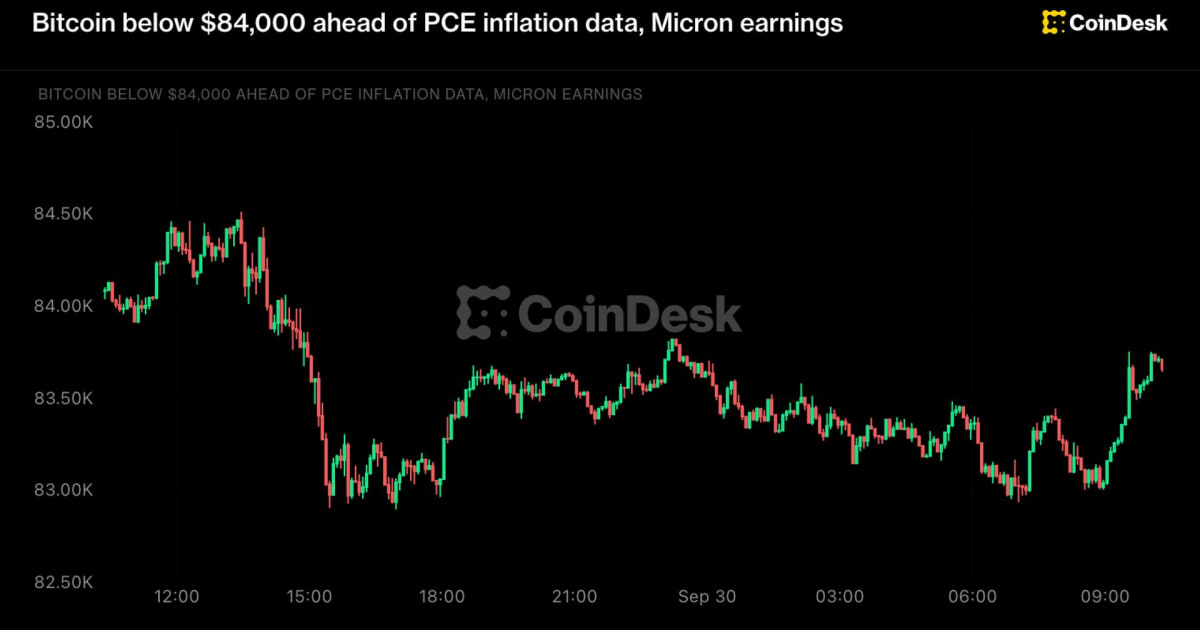
As the US gears up to release critical inflation data, global markets are holding their breath. This report is set to significantly influence the Federal Reserve's monetary policy, with direct implications for Bitcoin's price trajectory and potential ripple effects across risk assets worldwide. WelthWest Research Desk delves into how this global event could indirectly shape sentiment and investment flows in the Indian stock market, offering a comprehensive analysis for discerning investors.
Bitcoin's Inflation Crucible: Decoding the US Data's Ripple in India
The global financial stage is set for a high-stakes reveal: the latest US inflation data. While seemingly a domestic American economic indicator, its ramifications extend far beyond, particularly resonating through the volatile corridors of the cryptocurrency market and, by extension, the sentiment driving foreign institutional investment (FII) into emerging markets like India. At WelthWest Research Desk, our deep dive reveals that this data point isn't just another economic release; it's a critical inflection point for risk assets, with Bitcoin often acting as the canary in the coal mine for broader market shifts.
The core event is the anticipation of the US Consumer Price Index (CPI) and Producer Price Index (PPI) figures. These metrics are the Federal Reserve's primary compass for navigating monetary policy, especially concerning interest rate adjustments. A higher-than-expected inflation print could force the Fed's hand towards more aggressive rate hikes, a scenario that historically siphons liquidity from riskier assets. Cryptocurrencies, despite their narrative as inflation hedges, often bear the brunt of such policy shifts due to their high beta to overall market risk appetite.
Why does this matter now? Global markets have enjoyed a period of relative stability, with some optimism surrounding a potential 'soft landing' for the US economy. However, persistent inflation could shatter this narrative, signaling a prolonged period of tighter monetary conditions. For Bitcoin, which has seen substantial gains in recent months, largely on the back of institutional adoption and ETF inflows, this data presents a significant test. A sharp downturn in crypto could trigger a broader risk-off sentiment, prompting FIIs to re-evaluate their exposure to growth-sensitive emerging markets, including India. While the direct correlation to Indian equities is indirect, the sheer scale of the global crypto market, with a total market capitalization exceeding $2 trillion, means its movements cannot be ignored by sophisticated investors.
How Will US Inflation Data Impact Global Investor Sentiment and Indian Stocks?
The impact of US inflation data on global investor sentiment is profound and multifaceted. When inflation signals a more hawkish Fed, the 'risk-free rate' (US Treasury yields) rises, making lower-yielding, riskier assets less attractive. This phenomenon, often termed 'discount rate shock,' compresses valuations across the board. For the Indian stock market, the primary channel of transmission is through FII flows. In periods of heightened global uncertainty or rising risk-free rates, FIIs tend to reduce their exposure to emerging markets, repatriating capital back to safer havens. This can lead to selling pressure on Indian benchmarks like the Nifty 50 and Sensex.
Historically, significant shifts in Fed policy have often coincided with periods of FII outflows from India. For instance, during the Fed's aggressive rate hike cycle in 2022, FIIs withdrew over $14 billion from Indian equities, contributing to a period of consolidation for the Nifty 50, which saw a peak-to-trough decline of approximately 17% between January and June 2022. While the Indian economy's domestic resilience provides a strong buffer, a sharp global risk-off event triggered by inflation concerns can still induce short-term volatility.
Sector-level breakdown in India suggests that sectors heavily reliant on foreign capital or those with high growth potential, like technology and financial services, could experience increased volatility. Conversely, defensive sectors such as pharmaceuticals and consumer staples, while not immune, might exhibit greater resilience. The Indian IT sector, with its significant revenue exposure to the US market, could face a dual challenge: reduced demand from a slowing US economy and pressure on valuations from higher discount rates.
Which Indian Stocks Are Most Exposed to Crypto Market Volatility?
While India does not have publicly traded companies directly holding significant Bitcoin on their balance sheets or operating large-scale crypto mining operations like some US counterparts, the indirect impact on specific NSE/BSE stocks can still be material. The ripple effect primarily manifests through two channels: investor sentiment impacting growth stocks and financial services, and companies with significant exposure to global IT spending or cross-border payment solutions.
- Info Edge (India) Ltd. (NAUKRI): As a prominent internet conglomerate with investments in various tech startups, Info Edge is often seen as a proxy for India's digital economy growth. A global tech sector downturn, potentially exacerbated by crypto market instability and broader risk aversion, could impact valuations of its underlying investments and investor appetite for growth-oriented stocks. Its P/E ratio, often at a premium, could face pressure. Sector peers like Zomato (ZOMATO) and PB Fintech (POLICYBZAAR) could also see similar sentiment-driven impacts.
- Tata Consultancy Services (TCS): As India's largest IT services exporter, TCS generates a substantial portion of its revenue from the US market. While not directly linked to crypto, a significant global risk-off event leading to a slowdown in US corporate spending or a general flight from growth stocks could impact its order book and valuation. If global financial institutions, major clients for TCS, face stress from market instability, their IT budgets might be curtailed. Wipro (WIPRO) and Infosys (INFY) are also susceptible to similar pressures.
- Bajaj Finance Ltd. (BAJFINANCE): As a leading non-banking financial company (NBFC) with high growth rates and a premium valuation, Bajaj Finance is sensitive to shifts in domestic and global liquidity. A sharp downturn in global sentiment could lead to FII outflows, reducing liquidity in the broader Indian market and potentially increasing funding costs for NBFCs. This could also temper investor enthusiasm for high-growth financial stocks. HDFC Bank (HDFCBANK), while more resilient, could still experience indirect pressure from broader market weakness.
- Reliance Industries Ltd. (RELIANCE): While primarily an oil-to-chemicals conglomerate, Reliance's Jio Platforms and Retail ventures are massive growth engines that attract significant foreign investment. A broad risk-off shift could make investors reconsider premium valuations attached to these growth segments, even if the core business remains robust. Furthermore, a global slowdown could indirectly impact commodity prices, affecting its O2C segment.
Expert Perspectives: Bulls vs. Bears on Inflation's Crypto-Equity Nexus
The upcoming inflation data has ignited a fierce debate among market strategists. The 'bears' argue that a higher-than-expected inflation print, say exceeding the consensus 3.1% year-over-year for CPI, would be a definitive signal for the Federal Reserve to maintain its hawkish stance, potentially even hinting at further rate hikes. This scenario, they contend, would trigger a cascade of selling in risk assets. Bitcoin, given its historical volatility and recent parabolic rise, would be particularly vulnerable to profit-taking. This crypto downturn, combined with rising US Treasury yields, would then create a contagion effect, prompting FIIs to reduce exposure to emerging markets like India. Their argument rests on the principle that 'cash is king' in uncertain times, and higher risk-free returns make capital flight inevitable, particularly from assets with perceived higher risk premiums.
Conversely, the 'bulls' present a more nuanced view. They argue that much of the potential hawkishness is already priced into the market. A slight beat on inflation, they suggest, might not be enough to fundamentally alter the Fed's trajectory, especially if other economic indicators (like employment) show signs of cooling. Furthermore, some crypto proponents believe that Bitcoin's recent strength, partly fueled by institutional adoption through spot ETFs, demonstrates a maturing asset class less susceptible to every macroeconomic twitch. They might argue that any initial dip could be viewed as a buying opportunity, particularly given Bitcoin's upcoming halving event. For India, bulls would highlight the domestic consumption story, robust corporate earnings, and strong government capex as powerful counter-cyclical forces that can absorb FII volatility. They point to India's decoupling narrative, where a strong domestic economy can partially offset global headwinds, as seen in previous periods of global turbulence where Indian markets outperformed.
A contrarian perspective even suggests that if inflation comes in significantly lower than expected, it could signal a faster path to Fed rate cuts, paradoxically boosting risk assets including Bitcoin and FII flows into India. However, the probability of a sharp downside surprise in inflation is generally considered lower by most analysts at this juncture.
Actionable Investor Playbook: Navigating the Inflation Data Release
For discerning investors, the period surrounding the US inflation data release demands a well-thought-out strategy. Here's an actionable playbook:
- Watch for Defensive Rotation: If inflation comes in hot, consider rotating a portion of your portfolio towards defensive Indian sectors. Look at large-cap pharmaceutical stocks like Sun Pharmaceutical Industries (SUNPHARMA) or consumer staples like Hindustan Unilever (HINDUNILVR). These tend to be less correlated with global risk sentiment and more driven by domestic demand.
- Prune High-Beta Growth Stocks: For short to medium-term investors, consider reducing exposure to highly-valued Indian growth stocks, particularly those sensitive to FII flows or global tech sentiment, such as those in the internet and IT services space mentioned earlier (e.g., Info Edge, TCS). This isn't a call to sell long-term winners, but rather to manage short-term volatility.
- Consider Dollar-Cost Averaging into Bitcoin/Crypto ETFs: For those with a long-term conviction in Bitcoin, a potential post-inflation dip could present a strategic entry point. Instead of trying to time the bottom, consider dollar-cost averaging into regulated Bitcoin ETFs (if accessible) or directly into Bitcoin over several weeks following the data release, especially if initial reactions are negative. Set clear price targets and stop-loss levels.
- Monitor FII Activity: Keep a close eye on daily FII flow data from the NSE/BSE. Consistent outflows post-inflation data would be a strong signal of shifting global risk appetite impacting Indian markets. This data can provide an early warning for broader market weakness.
- Time Horizon Alignment: Short-term traders might look for opportunities in volatility, perhaps using options strategies. Long-term investors, however, should focus on the underlying fundamentals of Indian companies and use any market corrections as opportunities to accumulate quality assets at more attractive valuations, rather than panic selling.
Risk Matrix: Assessing Potential Market Outcomes
The upcoming US inflation data presents a spectrum of outcomes, each with varying probabilities and market implications:
-
Risk 1: Higher-than-Expected Inflation (Probability: Moderate-High)
- Description: CPI/PPI prints come in above consensus estimates, signaling persistent inflationary pressures.
- Impact: Strong sell-off in Bitcoin and other cryptocurrencies (potentially 5-15% immediate dip). Global risk-off sentiment intensifies, leading to FII outflows from Indian equities. Nifty 50 could see a 1-3% correction in the immediate aftermath, with growth and financial stocks bearing the brunt.
- Mitigation: Increase cash allocation, rotate into defensive sectors, set tight stop-losses on high-beta positions.
-
Risk 2: Inflation In-Line with Expectations (Probability: Moderate)
- Description: CPI/PPI prints largely align with market consensus.
- Impact: Muted reaction in Bitcoin and global markets, as the outcome is largely priced in. Indian equities might consolidate or show slight positive bias if other domestic cues are strong. Volatility could still be present as market participants digest the nuances.
- Mitigation: Maintain current portfolio allocation, avoid knee-jerk reactions, continue monitoring subsequent economic data.
-
Risk 3: Lower-than-Expected Inflation (Probability: Low)
- Description: CPI/PPI prints come in significantly below consensus, suggesting inflation is cooling faster than anticipated.
- Impact: Strong rally in Bitcoin and other risk assets, as this signals a potential faster path to Fed rate cuts. FII inflows into Indian equities could accelerate, boosting Nifty 50 by 1-2% or more, particularly benefiting growth and financial stocks.
- Mitigation: Be prepared for a potential upside surprise, but avoid chasing rallies without fundamental conviction.
-
Risk 4: Geopolitical Black Swan (Probability: Low-Moderate, always present)
- Description: An unforeseen geopolitical event coincides with the inflation data, overshadowing economic concerns.
- Impact: Severe market volatility across all asset classes, including Bitcoin and Indian equities. Investors flock to safe havens.
- Mitigation: Diversification across asset classes, maintaining a portion of the portfolio in gold or other traditional safe havens.
What to Watch Next: Catalysts Beyond Inflation Data
While the US inflation data is the immediate catalyst, several other factors will continue to shape this narrative and influence Bitcoin and Indian equities:
- Federal Reserve Commentary: Post-CPI, watch for any statements or speeches from Federal Reserve officials. Their interpretations of the data and forward guidance on monetary policy will be crucial. The next FOMC meeting minutes will provide further insights.
- US Employment Data: The non-farm payrolls report and unemployment rate are equally vital for the Fed's dual mandate. A weakening labor market could temper hawkish inflation responses, even if inflation remains sticky.
- Global Liquidity Trends: Monitor central bank actions beyond the Fed, particularly the European Central Bank (ECB) and Bank of England (BoE). Coordinated or divergent monetary policies will impact global liquidity and FII flows.
- Bitcoin ETF Inflows/Outflows: Daily data on Bitcoin spot ETF flows will provide real-time insights into institutional appetite and conviction, acting as a direct gauge of crypto sentiment. Significant outflows could signal broader institutional retreat.
- Indian Macroeconomic Data: Domestically, India's own inflation figures, industrial production data, and corporate earnings reports will provide crucial counter-narratives or reinforcements to global sentiment. Strong domestic performance can cushion external shocks.
The interplay of these factors will define the market trajectory in the coming weeks and months. WelthWest Research Desk will continue to provide in-depth analysis as these critical data points unfold, empowering our readers with timely, actionable insights.
Run a free AI Stock Screen
Our algorithmic screener scores any NSE/BSE stock on fundamentals, momentum, and risk — free to try, no card needed.
Try the AI Screener →Have questions about this story?
Ask Welth, our finance-focused AI research assistant, for a deeper breakdown — free trial included.
Chat with Welth AI →Disclaimer: This content is generated by WelthWest Research Desk based on publicly available reports and is for informational purposes only. It does not constitute financial advice, investment recommendations, or an offer to buy or sell securities. Always consult a qualified financial advisor before making investment decisions.