Key Takeaway
Bitcoin's recent price stagnation coupled with a sharp altcoin correction, catalyzed by institutional moves like Robinhood's perpetual futures, signals a critical juncture for crypto. This global volatility will ripple through Indian markets, particularly affecting risk appetite and the outlook for tech and fintech firms with blockchain ambitions.
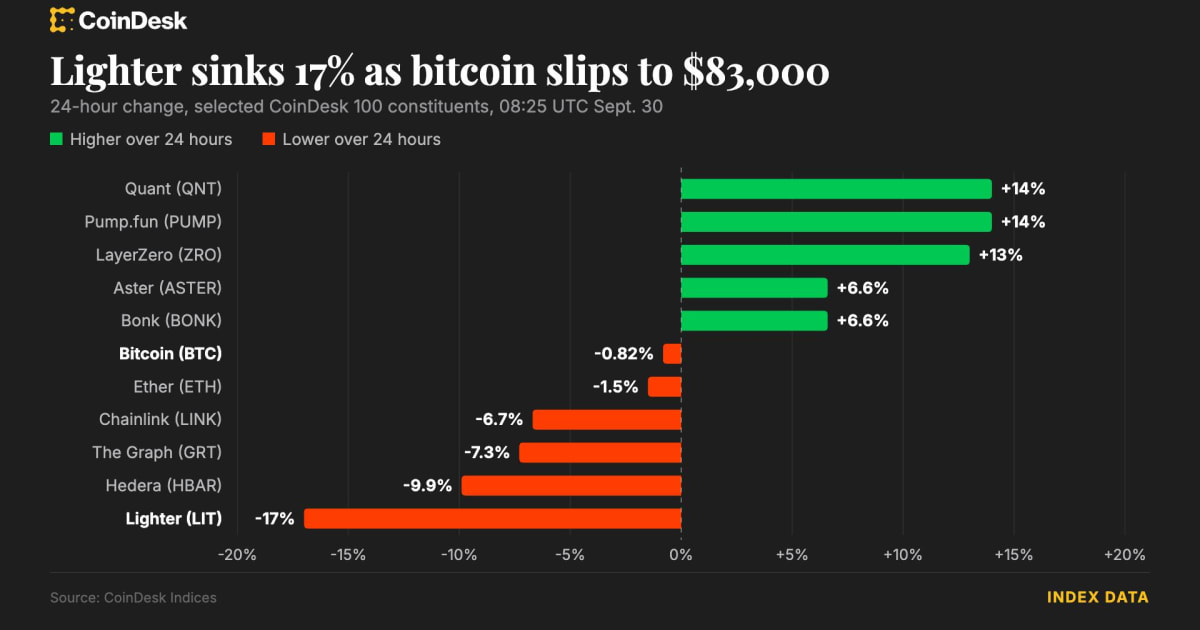
The cryptocurrency market is reeling from Bitcoin's inability to break resistance at $83,000 and significant altcoin declines, exacerbated by Robinhood's foray into perpetual futures. This dynamic intensifies regulatory scrutiny and global market volatility. For Indian investors, while direct crypto stock exposure is limited, the shifting risk sentiment and institutional interest in crypto will undeniably influence capital allocation and valuations across the broader tech and financial services sectors, demanding a re-evaluation of growth strategies and risk premiums.
Bitcoin's $83,000 Ceiling: Why Robinhood's Futures Plan Sent Altcoins Tumbling and What It Means for Indian Investors
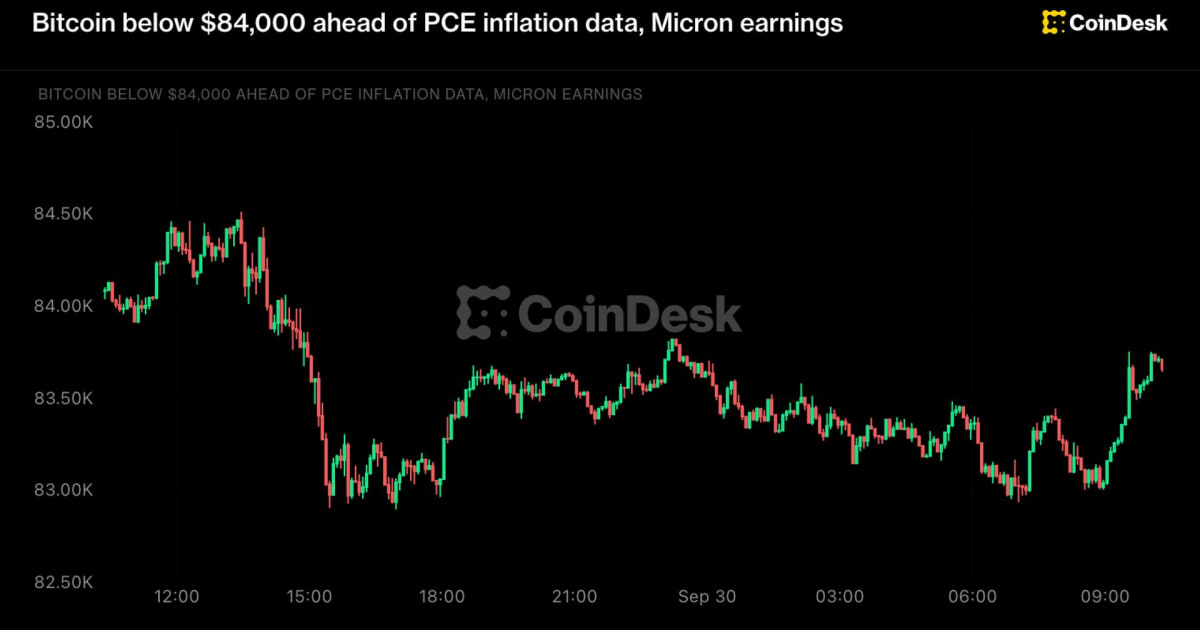
The global cryptocurrency market is at a critical inflection point, marked by Bitcoin's (BTC) persistent struggle to breach the psychological $83,000 resistance level. This consolidation, however, masks a far more turbulent reality beneath the surface: a dramatic capitulation in altcoin valuations, with some experiencing double-digit percentage drops. The catalyst? A significant market development – Robinhood's strategic move into perpetual futures trading. This confluence of events signals heightened volatility, intensified regulatory scrutiny, and a profound shift in market dynamics, with far-reaching implications for capital flows and investor sentiment, even for those primarily focused on the Indian equity market.
For months, the narrative surrounding Bitcoin has been one of steady, if sometimes dramatic, ascent. Yet, the current pause near $83,000, despite significant institutional inflows and ETF approvals, suggests underlying market apprehension. This stall, occurring simultaneously with a broad-based altcoin correction, is not merely a technical blip. It reflects a re-evaluation of risk across the crypto spectrum, particularly as traditional financial players like Robinhood introduce more sophisticated, higher-leverage products. The introduction of perpetual futures, while offering new avenues for institutional engagement and liquidity, inherently amplifies market leverage and therefore, volatility. This dynamic is a stark reminder that the crypto market, while maturing, remains highly sensitive to both macroeconomic factors and structural shifts in trading infrastructure. The 'why now' is crucial: institutional adoption is a double-edged sword, bringing capital but also the potential for more aggressive, derivatives-driven price discovery that can disproportionately impact smaller, less liquid assets.
How Will Global Crypto Volatility Impact Indian Stock Market Sentiment?
While direct crypto-linked stocks are virtually non-existent on Indian exchanges, the global crypto market's gyrations are far from irrelevant for Indian investors. The primary transmission mechanism is through investor risk appetite and capital allocation. When global risk assets, particularly those perceived as high-growth and speculative like cryptocurrencies, experience significant corrections, it tends to trigger a broader 'risk-off' sentiment. This often leads to a reallocation of capital from speculative ventures to safer havens or established, less volatile asset classes. For India, this could translate into reduced foreign institutional investor (FII) flows into certain high-growth sectors, particularly those in technology and fintech that might have tangential exposure or future ambitions in blockchain or Web3 technologies.
Historically, periods of heightened global volatility in one asset class have often spilled over into others. For instance, during the peak of the crypto bear market in 2022, while the Nifty 50's direct correlation was limited, several mid-cap and small-cap technology stocks, particularly those with aggressive growth narratives, experienced P/E multiple contractions as investors became more discerning about risk. The current situation is analogous: a significant correction in altcoins, driven partly by the leverage introduced by perpetual futures, could lead to a re-rating of growth stocks globally. Indian tech companies, despite their strong fundamentals, are not immune to these sentiment shifts. A sustained bearish sentiment in crypto could dampen enthusiasm for innovative, future-oriented projects, potentially impacting valuations of companies exploring blockchain for enterprise solutions, supply chain management, or digital identity.
Furthermore, the increased regulatory scrutiny accompanying institutional crypto adoption has direct parallels in India. The Reserve Bank of India (RBI) and the Ministry of Finance have consistently expressed caution regarding cryptocurrencies, citing financial stability concerns. As global regulators grapple with the implications of sophisticated crypto products, it provides additional impetus for Indian authorities to maintain a cautious stance or even tighten existing frameworks. This regulatory overhang could affect Indian fintech companies considering crypto-related payment solutions or asset management services, limiting their growth avenues and increasing compliance costs.
Which Indian Stocks Are Most Exposed to Crypto Market Shifts?
While no Indian company offers direct exposure to Bitcoin or altcoins as a core business, several entities are either indirectly impacted by global tech sentiment, are exploring blockchain, or could be affected by shifts in investor risk preference. Understanding these linkages is crucial for a nuanced portfolio strategy.
- Infosys Ltd. (NSE: INFY): As a global IT services giant, Infosys is heavily involved in digital transformation projects for clients worldwide. A significant portion of its revenue comes from banking, financial services, and insurance (BFSI) clients. While not directly crypto-focused, Infosys has capabilities in blockchain consulting and implementation for enterprise solutions. A slowdown in global tech spending due to broader risk aversion, potentially triggered by crypto market instability, could affect new project pipeline or pricing pressure in its digital services segment. Its P/E ratio, currently around 25x (as of latest available data), could face pressure if growth outlooks for tech services soften.
- Tata Consultancy Services Ltd. (NSE: TCS): Similar to Infosys, TCS is a bellwether for the Indian IT sector. TCS has actively invested in blockchain research and development, offering solutions for supply chain, trade finance, and digital identity. While blockchain is a distinct technology from speculative cryptocurrencies, a 'crypto winter' can create a perception drag on all 'distributed ledger technology' (DLT) initiatives, potentially slowing client adoption cycles for enterprise blockchain solutions. Any widespread 'risk-off' move globally impacts large-cap IT services stocks due to their FII ownership and sensitivity to global economic cycles.
- One 97 Communications Ltd. (Paytm) (NSE: PAYTM): As a leading fintech player, Paytm operates in a space that is often seen as adjacent to digital assets and innovative payment solutions. While Paytm has steered clear of direct crypto offerings in India due to regulatory ambiguity, a global shift away from speculative digital assets could dampen investor enthusiasm for high-growth, innovation-driven fintech companies. Furthermore, if global fintech valuations are compressed due to risk aversion, it can create a ripple effect, impacting Paytm's valuation multiples, which are already under scrutiny.
- Zomato Ltd. (NSE: ZOMATO): Though seemingly unrelated, Zomato represents the cohort of new-age, high-growth tech companies that are often valued on future potential rather than immediate profitability. These stocks are highly sensitive to investor risk appetite. A significant correction in speculative assets like altcoins can cause investors to re-evaluate their exposure to similar 'growth-at-any-cost' narratives, leading to de-rating of P/S (price-to-sales) multiples. This effect is less about direct exposure and more about a systemic shift in how investors value future growth stories in a risk-averse environment.
- HDFC Bank Ltd. (NSE: HDFCBANK): While a traditional financial institution, HDFC Bank's exposure is multifaceted. On one hand, increased global regulatory focus on crypto could lead to more stringent guidelines for banks interacting with crypto entities, potentially increasing compliance costs or limiting innovation. On the other hand, if a 'risk-off' environment drives capital towards safer, established financial institutions, it could indirectly benefit large, stable banks. However, the broader sentiment shift could impact credit growth if economic uncertainty rises.
Bear vs. Bull: Contrasting Views on Crypto's Impact on Indian Markets
The current crypto market dynamics elicit sharply diverging opinions among financial experts, particularly concerning their reverberations in India.
The Bearish Argument: Proponents of a bearish outlook emphasize the increasing correlation between global risk assets and crypto. They argue that Bitcoin's inability to break $83,000, coupled with the altcoin crash, signals a broader loss of speculative fervor. The introduction of perpetual futures by mainstream platforms like Robinhood, while a sign of institutionalization, also means increased leverage and potential for sharper downturns, which could trigger margin calls and cascading liquidations. This, they contend, will inevitably lead to a global 'flight to quality,' where capital exits riskier assets – including Indian growth stocks – and moves into safer instruments like government bonds or established blue-chip equities. They foresee FII outflows from Indian equities, particularly from sectors perceived as 'high beta' or growth-oriented, leading to P/E multiple compression. The argument often highlights that the 'digital gold' narrative for Bitcoin weakens during periods of extreme risk aversion, where it behaves more like a tech stock than a safe haven, thus failing to cushion broader market declines.
The Bullish Counterpoint: Conversely, optimists view the current correction as a healthy deleveraging event, necessary for the long-term sustainability of the crypto market. They argue that the shakeout in altcoins cleanses the market of over-speculation and weak projects, paving the way for more robust, utility-driven blockchain applications. For India, they suggest the impact will be minimal and temporary. They highlight India's relatively insulated financial system and strong domestic consumption story, which can buffer against global sentiment shifts. Furthermore, they believe that the institutionalization of crypto, even with increased volatility, validates the underlying blockchain technology. This, they argue, could eventually benefit Indian tech companies that are developing genuine enterprise blockchain solutions, distinguishing them from the speculative crypto market. They might also point to the potential for capital to flow into emerging markets like India if developed markets face greater economic headwinds, viewing India as a relatively stable growth story amidst global uncertainty. They also argue that the 'Robinhood effect' might be more about retail participation and less about systemic risk for the broader financial system, which Indian markets are largely disconnected from.
Actionable Investor Playbook: Navigating Crypto's Ripple Effect in India
Given the nuanced impact of global crypto volatility on Indian markets, a strategic approach is paramount. Investors should consider recalibrating their portfolios to account for potential shifts in risk appetite and sector performance.
- For Growth-Oriented Investors (Time Horizon: 3-5 Years):
- Watch: Companies like Infosys (INFY) and TCS (TCS). While their core business remains strong, monitor their order book growth and client spending in digital transformation, especially from BFSI clients. A sustained slowdown here could indicate broader corporate cautiousness. Look for P/E ratios dropping below their 5-year averages (e.g., INFY's 5-year average P/E is around 22-23x) as potential entry points if fundamentals remain robust.
- Buy (on dips): High-quality fintech or tech companies with clear profitability pathways and strong balance sheets, even if they face near-term sentiment headwinds. Focus on those with diversified revenue streams and less reliance on purely speculative growth narratives. Consider companies like Persistent Systems (PERSISTENT), which has a strong niche in digital engineering and could benefit from long-term enterprise blockchain adoption, distinct from crypto speculation.
- Avoid: Companies with excessive valuations based purely on future 'disruptive' narratives without clear paths to profitability or significant market share. These are most vulnerable to a 'risk-off' pivot.
- For Value-Oriented Investors (Time Horizon: 1-2 Years):
- Buy: Large-cap, fundamentally strong banking stocks like HDFC Bank (HDFCBANK) or ICICI Bank (ICICIBANK). In a 'risk-off' environment, capital tends to rotate into established financial institutions with stable earnings and strong asset quality. These can act as defensive plays.
- Watch: Companies with significant domestic consumption exposure, as India's internal demand can often cushion against global shocks. Look at consumer staples or select auto stocks.
- Sell/Reduce: Holdings in companies that are highly sensitive to FII flows or those with significant foreign currency revenue exposure if global economic uncertainty escalates rapidly.
- Entry Points: For tech stocks, look for consolidation phases where valuations retreat closer to historical averages. For banking, consider accumulating during broader market corrections, as they offer relative stability.
Risk Matrix: Navigating the Uncertainties
The current confluence of factors presents several distinct risks for Indian investors:
- Increased Regulatory Action Globally (Probability: Medium-High): The introduction of perpetual futures by mainstream platforms will inevitably draw heightened scrutiny from global financial regulators. This could lead to more restrictive policies, increased compliance burdens, or even outright bans in certain jurisdictions. Such actions could trigger further crypto price declines and dampen overall market sentiment, leading to a broader 'risk-off' environment that impacts Indian equities.
- Spillover into Broader Risk Asset Sentiment (Probability: Medium): A prolonged crypto bear market, especially one characterized by significant altcoin capitulation, could erode investor confidence in high-growth, speculative assets across the board. This 'contagion' effect could lead to a re-evaluation of risk premiums in other markets, including India, particularly for high-beta tech and innovation stocks, resulting in P/E multiple contraction.
- Capital Flight from Emerging Markets (Probability: Low-Medium): In extreme 'risk-off' scenarios, global capital tends to flow from emerging markets to safer developed market assets (e.g., US Treasuries). While India's strong domestic story offers some resilience, a severe global economic downturn, potentially exacerbated by crypto market instability, could trigger FII outflows from Indian equities, impacting market liquidity and valuations.
- Delayed Blockchain Adoption (Probability: Low): While distinct from cryptocurrencies, a prolonged 'crypto winter' can create a negative perception around all distributed ledger technologies. This could lead to a slowdown in enterprise blockchain adoption by Indian corporations or global clients, potentially impacting the long-term growth prospects for Indian IT services firms specializing in this area.
What to Watch Next: Catalysts and Market Movers
The trajectory of Bitcoin and altcoins, and their subsequent impact on Indian markets, will be shaped by several upcoming events and data releases:
- Regulatory Announcements from Major Jurisdictions (Ongoing): Keep a close eye on statements and proposed regulations from the US SEC, EU (MiCA framework updates), and UK's FCA regarding crypto derivatives and stablecoins. Any clarity or tightening could significantly move crypto markets. For example, a definitive stance on specific altcoins as securities could trigger further price volatility.
- Macroeconomic Data (Monthly/Quarterly): Global inflation reports, central bank interest rate decisions (e.g., US Federal Reserve, European Central Bank), and GDP growth figures will continue to influence overall risk appetite. Higher-than-expected inflation or hawkish central bank stances could dampen enthusiasm for risk assets, including crypto, and subsequently impact FII flows into India.
- Robinhood's Perpetual Futures Trading Volume & Impact (Ongoing): Monitor the trading volumes and open interest on Robinhood's new perpetual futures platform. High volumes could indicate increasing institutional engagement, but also potential for amplified volatility. Any significant liquidations due to margin calls could trigger broader market corrections.
- Earnings Reports of Indian Tech & Fintech Firms (Quarterly): The upcoming quarterly earnings season for Indian IT services and fintech companies will be crucial. Look for management commentary on client spending, project pipelines, and any specific mentions of blockchain or Web3 initiatives. Disappointing outlooks could reinforce the 'risk-off' sentiment.
- Indian Government & RBI Stance on Crypto (Ad-hoc): While no immediate policy changes are expected, any renewed discussions or official statements from the Indian government or RBI regarding cryptocurrency regulation will be a significant domestic catalyst, potentially affecting sentiment around digital innovation in the country.
Run a free AI Stock Screen
Our algorithmic screener scores any NSE/BSE stock on fundamentals, momentum, and risk — free to try, no card needed.
Try the AI Screener →Have questions about this story?
Ask Welth, our finance-focused AI research assistant, for a deeper breakdown — free trial included.
Chat with Welth AI →Disclaimer: This content is generated by WelthWest Research Desk based on publicly available reports and is for informational purposes only. It does not constitute financial advice, investment recommendations, or an offer to buy or sell securities. Always consult a qualified financial advisor before making investment decisions.