Key Takeaway
The public mocking of AI marketing by top-tier VCs signals a shift from 'growth at all costs' to 'substance over hype.' For Indian investors, this implies an imminent valuation reset for AI-heavy tech firms and heightened scrutiny on IT services' AI margins.
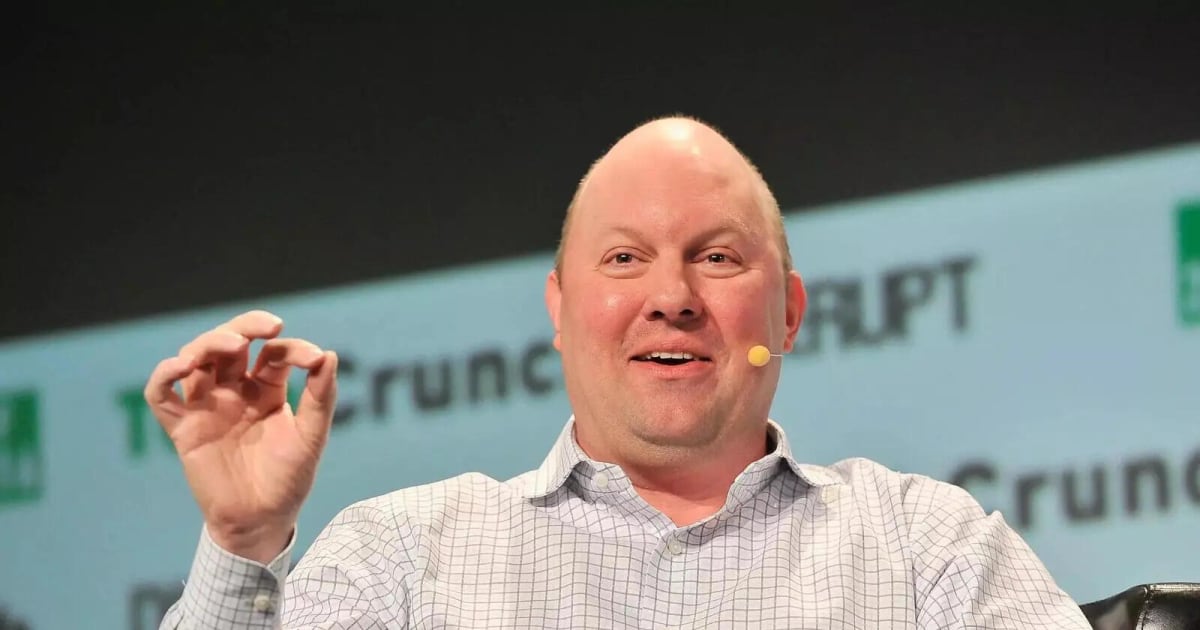
A public spat between Silicon Valley titans Marc Andreessen and General Catalyst has exposed deep-seated anxieties regarding 'AI washing.' This investigative report explores how this global shift in sentiment will pressure Indian IT giants like TCS and Infosys to move beyond marketing rhetoric into quantifiable AI revenue, potentially triggering a mid-term correction in high-multiple tech stocks.
The Boardroom Satire: When Silicon Valley’s Elite Turn on Each Other
In a move that sent shockwaves through the global venture capital ecosystem, Marc Andreessen, co-founder of Andreessen Horowitz (a16z), recently released a boardroom spoof video aimed squarely at General Catalyst’s latest AI marketing campaign. While the surface-level narrative suggests a petty rivalry between two tech titans, the underlying implications are far more clinical. This is not just a 'spat'; it is a public admission that the AI hype cycle has reached a point of satirical absurdity.
General Catalyst’s recent campaign, which leans heavily into the transformative and almost mystical power of AI, was met with Andreessen’s characteristic cynicism. By mocking the high-gloss, low-substance marketing of AI 'solutions,' Andreessen has effectively signaled the end of the 'free pass' era for AI startups. For the last 24 months, the mere mention of 'Generative AI' in an earnings call or a pitch deck was enough to secure a valuation premium. That era is ending. As global liquidity tightens and the 'Magnificent Seven' in the US face increasing scrutiny over their AI CAPEX-to-revenue ratios, this public feud serves as a leading indicator of a global sentiment shift.
Why This Matters Now: The 'AI Washing' Correction
The term 'greenwashing' defined the ESG era; 'AI washing' is the contagion of the current market. Investors are beginning to realize that many companies claiming to be 'AI-first' are simply wrapping existing APIs in expensive marketing. This matters now because the global cost of capital remains high, and the patience of institutional investors is wearing thin. When VCs—the very architects of these bubbles—start mocking the marketing of their peers, it suggests that the private markets are preparing for a 'down-round' cycle. This sentiment invariably trickles down to public markets, particularly in emerging markets like India, which serve as the back-office and innovation hub for these global tech giants.
Deep Market Impact: Connecting Silicon Valley Cynicism to Dalal Street
The Indian IT sector, represented by the Nifty IT Index, has historically traded at a premium compared to its global peers due to its high ROE and robust delivery models. However, in the last 18 months, much of the stock price appreciation in mid-cap IT (like Persistent Systems and Happiest Minds) has been driven by the 'AI Narrative.' If global VCs are calling for a reality check, Indian investors must prepare for a transition from 'Narrative-driven' to 'Numbers-driven' valuations.
Historically, when the US tech sector experiences 'hype fatigue,' the Indian markets follow with a 3-6 month lag. We saw this in 2022 when the SaaS bubble burst in San Francisco; the Nifty IT index subsequently corrected by nearly 25% as valuation multiples for companies like Wipro and Tech Mahindra were re-rated. Currently, the Nifty IT is trading at a trailing P/E of approximately 28.5x, significantly higher than its 10-year average of 22x. A shift in global sentiment—sparked by high-profile feuds like the Andreessen-GC spat—could be the catalyst for a 10-15% mean reversion in these multiples.
How will the AI marketing fatigue affect Indian IT service margins?
This is the question every retail and institutional investor should be asking. Indian IT firms are currently in a 'land grab' phase for AI talent. Companies like TCS and Infosys are spending millions on upskilling (TCS has already trained over 350,000 employees in AI). However, if the end-clients in the US—influenced by the skepticism of VCs like Andreessen—begin to scale back on 'experimental' AI projects, the ROI on this massive upskilling effort will be delayed. This creates a 'margin pincer' effect: high internal costs for AI development vs. slowing client spend on AI implementation.
Stock-by-Stock Breakdown: The Winners and the Vulnerable
1. Tata Consultancy Services (TCS) [NSE: TCS]
TCS currently boasts an AI and GenAI pipeline of over $1.5 billion. However, at a market cap of over ₹15 lakh crore and a P/E of 29x, the market has already priced in a flawless execution of these projects. The Andreessen-GC feud suggests that 'AI pipelines' are often inflated with small-scale PoCs (Proof of Concepts) that may never scale to full-production revenue. Impact: Neutral to Slightly Bearish. Watch for the 'Conversion Ratio' of the AI pipeline in the next two quarters.
2. Infosys [NSE: INFY]
With its 'Topaz' AI-first offering, Infosys is positioning itself as the primary architect for enterprise AI. Unlike the mid-caps, Infosys has the balance sheet to weather a hype-cycle correction. With a P/E around 26x, it is more reasonably valued than its peers. Impact: Neutral. Peer comparison: HCLTech (NSE: HCLTECH) may offer better value if the AI narrative cools, given its stronger focus on engineering services.
3. Happiest Minds Technologies [NSE: HAPPSTMNDS]
This is a 'pure-play' digital stock that trades at a significant premium (P/E often exceeding 50x). As a company that markets itself as 'Born Digital, Born AI,' it is highly susceptible to 'hype fatigue.' If the global VC sentiment turns toward skepticism, high-multiple stocks like Happiest Minds are the first to see a de-rating. Impact: Bearish. Investors should look for entry points near the ₹750-₹780 levels rather than chasing the current momentum.
4. Zomato [NSE: ZOMATO]
While not an IT services firm, Zomato is an 'AI-user' that has seen its stock price soar as it integrates AI into logistics and customer service. The risk here is 'high-burn marketing.' If the market begins to punish companies for excessive marketing spend—as Andreessen suggests—Zomato's marketing-to-revenue ratio will come under the microscope. Impact: Neutral. The focus remains on Blinkit's profitability, but AI-related 'fluff' in their reports will no longer be rewarded.
5. Affle (India) Limited [NSE: AFFLE]
As an AI-led mobile advertising platform, Affle is a direct beneficiary of the marketing spend that Andreessen is mocking. If VCs advise their portfolio companies to cut 'high-burn marketing,' Affle’s client base (which includes many VC-backed startups) might tighten their belts. Impact: Bearish in the short term. Current P/E of 55x leaves little room for error.
Expert Perspective: The Bull vs. Bear Case for AI Stocks
"We are seeing a classic 'Trough of Disillusionment' approaching in the Gartner Hype Cycle. The Andreessen-GC spat is merely the opening bell for a period where investors will demand to see the 'AI Dollar'—not just the 'AI Dream.'" — Senior Strategy Analyst, WelthWest Research.
The Bull Case: Bulls argue that the VC spat is just noise. They believe the structural shift toward AI is as fundamental as the shift to the internet in the 90s. For Indian IT, this means a multi-year tailwind of legacy modernization. They argue that even if 'marketing' is mocked, the underlying 'compute' requirement is real and growing.
The Bear Case: Bears point to the 'Cisco Moment' of 2000. Just because a technology is revolutionary doesn't mean every company implementing it is a good investment. They argue that the current valuations of Indian IT stocks assume 15-20% growth, while actual constant currency growth is struggling in the mid-single digits. The 'AI Narrative' is the only thing holding up these multiples.
Actionable Investor Playbook: Navigating the AI Reality Check
- The 'Quality over Narrative' Strategy: Shift allocations from high-P/E mid-caps (P/E > 40) to large-cap IT firms with strong cash flows and reasonable valuations (P/E < 28).
- Monitor the 'AI-to-Revenue' Ratio: In the upcoming Q3 and Q4 earnings, ignore the 'Pipeline' commentary. Look for specific disclosures on 'Revenue realized from GenAI projects.' If this is less than 2-3% of total revenue, the stock is overvalued.
- Entry Points: For long-term investors, the Nifty IT index has a strong support zone at the 34,000-35,000 level. Wait for a correction triggered by global sentiment before increasing exposure.
- Avoid 'AI-Washed' Small Caps: Any small-cap stock that has recently rebranded or launched an 'AI division' without a corresponding increase in CAPEX or R&D should be treated with extreme caution.
Risk Matrix: Assessing the Fallout
- Risk 1: Global Funding Winter 2.0 (Probability: High). If VCs stop funding AI startups, the flow of 'easy money' into the tech ecosystem dries up, impacting the client base of Indian mid-cap IT.
- Risk 2: Margin Erosion (Probability: Medium). The cost of AI talent remains high. If revenue growth doesn't follow, EBTIDA margins for firms like Wipro and LTIMindtree could contract by 100-150 bps.
- Risk 3: US Regulatory Crackdown (Probability: Low). Any sudden regulation on AI usage could render current 'marketing-led' AI products obsolete overnight.
What to Watch Next: The Catalysts of 2025
Investors should keep a close eye on the NVIDIA Q3 Earnings and the Federal Reserve's commentary on tech valuations. Domestically, the key date is the Nasscom Annual Technology Conference, where the industry's leaders will likely address the 'AI ROI' challenge. If the rhetoric shifts from 'innovation' to 'cost-saving,' it will confirm that the Andreessen-style skepticism has reached the C-suite of India's largest corporations. The era of the 'AI free-ride' is over; the era of 'AI accountability' has begun.
Run a free AI Stock Screen
Our algorithmic screener scores any NSE/BSE stock on fundamentals, momentum, and risk — free to try, no card needed.
Try the AI Screener →Have questions about this story?
Ask Welth, our finance-focused AI research assistant, for a deeper breakdown — free trial included.
Chat with Welth AI →Disclaimer: This content is generated by WelthWest Research Desk based on publicly available reports and is for informational purposes only. It does not constitute financial advice, investment recommendations, or an offer to buy or sell securities. Always consult a qualified financial advisor before making investment decisions.