Key Takeaway
A significant institutional bet on XRP volatility signals growing speculative interest beyond Bitcoin/Ethereum. While direct Indian market impact remains muted by regulation, this global trend could indirectly fuel demand for Indian blockchain services and influence broader risk asset sentiment, offering a nuanced opportunity for tech investors.

The crypto market is buzzing with a multi-million dollar institutional bet on XRP's price swings. This isn't just about one altcoin; it's a critical indicator of evolving institutional appetite for risk and the broadening scope of crypto speculation. Our deep dive unpacks what this means for the nascent Indian blockchain sector, investor sentiment towards tech stocks, and the subtle shifts beneath the surface of global financial markets.
XRP Volatility Bets Surge: Unpacking Institutional Risk Appetite and Its Subtle Echo in Indian Markets
A recent multi-million dollar institutional wager on the volatility of XRP has sent ripples through the global cryptocurrency landscape, signaling a critical evolution in how sophisticated capital views and engages with altcoins. This isn't merely a speculative play on a single digital asset; it represents a deepening institutional comfort with the inherent risks and potential rewards beyond the established giants of Bitcoin and Ethereum. For the discerning Indian investor, while direct exposure to such crypto derivatives remains heavily constrained by domestic regulatory ambiguities, the indirect implications for sentiment, technology adoption, and specific sectors within the Indian equity market are far more significant than immediately apparent.
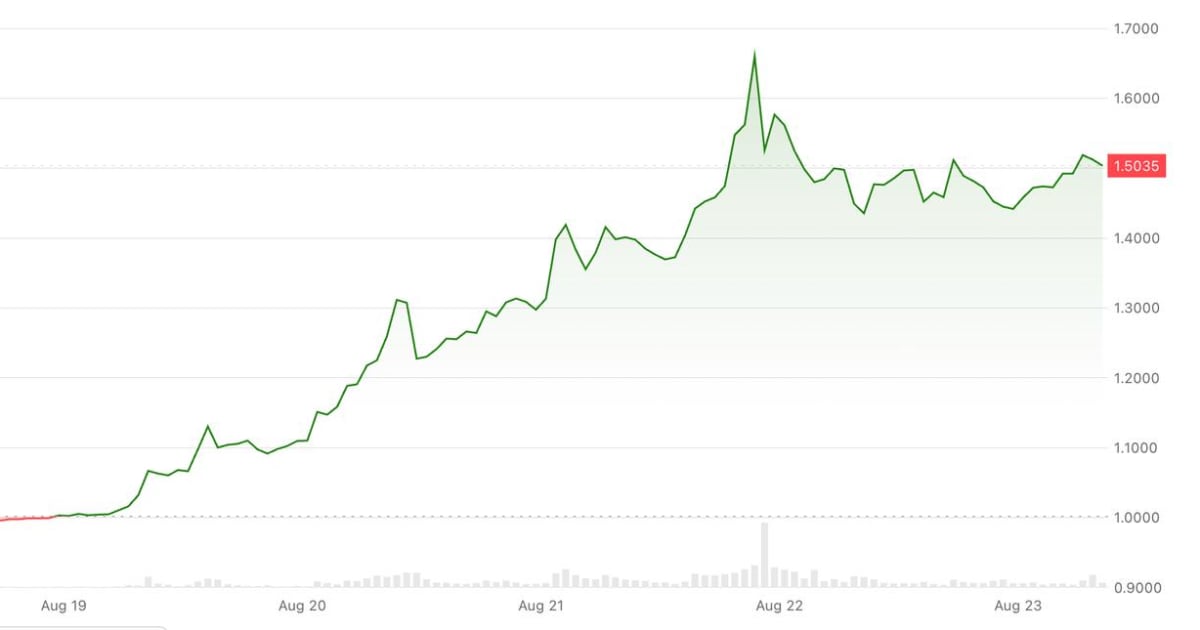
The core event — a reported $2 million bet on XRP's price fluctuations — occurred amidst a notable surge in the token's value. This type of options trading thrives on price instability, indicating that large players are not just buying XRP for directional exposure but actively positioning themselves to profit from its expected turbulence. This sophisticated risk-taking highlights a maturation of the crypto derivatives market and a growing acceptance of altcoins as legitimate, albeit highly volatile, speculative instruments within institutional portfolios. The 'why now' is crucial: increased regulatory clarity (or at least, less uncertainty) in some major jurisdictions regarding XRP's status, coupled with broader market liquidity, makes such bets more viable and attractive.
What Does XRP's Institutional Bet Mean for Indian Investors and Blockchain Adoption?
While the Indian regulatory environment for cryptocurrencies remains a labyrinth of uncertainty, effectively barring direct participation for most institutional and retail investors in instruments like XRP derivatives, the global shift in institutional sentiment is not without its domestic echoes. The increasing sophistication of crypto investment strategies abroad can indirectly influence India in several key ways. Firstly, it validates the underlying blockchain technology, potentially accelerating enterprise adoption of distributed ledger technologies (DLT) within India's financial services and supply chain sectors. Secondly, it can subtly impact the risk appetite of Indian investors towards technology stocks, particularly those with even tangential exposure to blockchain or digital transformation themes.
Historically, global financial trends, even those initially isolated by regulation, eventually find their way into the Indian market through capital flows or sentiment shifts. Consider the dot-com bubble of the late 1990s: while India's tech sector was nascent, the global frenzy still fueled a speculative boom in early Indian IT stocks. Similarly, increased global crypto volatility, driven by institutional activity, could heighten awareness and demand for blockchain-related expertise and services within India. Companies that are building blockchain infrastructure, offering consulting services, or developing Web3 applications, even if not directly dealing with cryptocurrencies, could see an uplift.
The current scenario presents a nuanced challenge for Indian policymakers. On one hand, the Reserve Bank of India (RBI) and the government maintain a cautious, often restrictive, stance on private cryptocurrencies due to concerns over financial stability and money laundering. On the other hand, the global institutional embrace of crypto technology, even its speculative aspects, underscores its growing economic relevance. India's burgeoning digital economy, with its massive talent pool in IT services, stands to gain significantly if it can find a balanced approach to engaging with this evolving technological frontier.
Which Indian Tech Stocks Could See a Ripple Effect from Global Crypto Speculation?
Despite the regulatory hurdles, several Indian listed companies, primarily in the IT services and technology sectors, could experience indirect impacts from the evolving global crypto landscape. These are not direct crypto plays, but rather companies whose business models could benefit from increased demand for blockchain solutions, digital infrastructure, or enhanced cybersecurity in a world increasingly integrating DLT.
- Tata Consultancy Services (TCS.NS): As a global IT services behemoth with a market capitalization exceeding ₹14.5 trillion, TCS is actively involved in blockchain solutions for enterprise clients, particularly in supply chain management, financial services, and identity verification. Increased global institutional validation of blockchain technology could translate into higher demand for TCS's DLT implementation services, bolstering its 'Digital' segment revenue, which already contributes significantly to its overall top line.
- Infosys (INFY.NS): With a market cap around ₹6 trillion, Infosys also has a dedicated blockchain practice, focusing on areas like trade finance, insurance, and regulatory compliance. A sustained global interest in crypto and blockchain could accelerate enterprise adoption, feeding into Infosys's consulting and implementation revenue streams. The company's P/E ratio, currently around 25x, reflects a premium for its digital transformation capabilities, which would be further enhanced by DLT growth.
- Tech Mahindra (TECHM.NS): Known for its strong telecom and enterprise solutions, Tech Mahindra has been an early mover in blockchain, developing solutions for various industries, including media and entertainment. Its focus on innovative technologies aligns well with the potential for increased enterprise blockchain spending driven by global crypto momentum. A 15-20% increase in global blockchain spending could add 1-2% to Tech Mahindra's annual revenue growth.
- Persistent Systems (PERSISTENT.NS): A mid-cap IT services firm (market cap ~₹250 billion) with a strong focus on product engineering and digital transformation, Persistent Systems could benefit from niche blockchain development projects. While smaller in scale than the giants, its agility allows it to capture specialized opportunities in emerging tech.
- Cyient (CYIENT.NS): While primarily an engineering and design services company, Cyient also offers digital solutions, including some DLT-related consulting for its industrial and aerospace clients. Any broader validation of blockchain could subtly increase demand for its adjacent digital transformation services.
These companies are not direct beneficiaries of XRP's price movements, but rather indirect beneficiaries of the broader trend towards institutional acceptance and increased enterprise investment in blockchain technology that this speculative activity underscores. Investors should look for increased commentary on blockchain project wins or expanded DLT service offerings in their quarterly earnings calls.
Expert Perspectives: Bulls vs. Bears on Crypto's Indian Market Influence
The debate over crypto's influence on the Indian market is multifaceted, attracting both ardent bulls and cautious bears.
The Bull Case: Proponents argue that the global institutional embrace of cryptocurrencies, epitomized by the XRP volatility bet, validates blockchain technology as a fundamental shift, akin to the internet's early days. They believe that India, with its vast IT talent pool and digital-first approach, cannot afford to remain isolated. "Even if direct crypto trading is restricted, the demand for underlying blockchain infrastructure, cybersecurity solutions for digital assets, and Web3 development will explode," states a senior fintech analyst from a Mumbai-based venture fund. "Indian IT services companies are perfectly positioned to capture this global enterprise spend, creating a 'picks and shovels' play on the crypto gold rush. We could see a 10-15% uplift in blockchain-related service revenue for top-tier IT firms over the next two years, independent of direct crypto price action." They point to the burgeoning startup ecosystem in India focusing on blockchain applications, which, while small, represents a future growth engine.
The Bear Case: Skeptics, particularly those aligned with regulatory bodies, emphasize the inherent volatility and speculative nature of cryptocurrencies. "The $2 million bet on XRP volatility is precisely the kind of speculative activity that poses systemic risks," warns a former RBI official. "Until global regulatory frameworks are harmonized and robust consumer protection mechanisms are in place, India's cautious approach is prudent." Bears argue that the indirect impact on Indian tech stocks is negligible, dwarfed by macroeconomic factors, global IT spending cycles, and domestic policy decisions. They contend that any 'blockchain' revenue for Indian IT firms is a small fraction of their overall business and that the enthusiasm is more hype than substance. Furthermore, the continued regulatory uncertainty in India itself acts as a significant dampener, preventing local innovation from fully capitalizing on global trends.
An Actionable Investor Playbook for Navigating Crypto's Indirect Impact
For Indian equity investors, the strategy isn't about buying XRP, but about intelligently positioning within the domestic market to indirectly benefit from or mitigate risks associated with global crypto trends.
- Watch for Enterprise Blockchain Adoption: Focus on IT services companies (e.g., TCS, Infosys, Tech Mahindra) that consistently report growth in their 'Digital' or 'Next-Gen' service lines, specifically mentioning blockchain or DLT projects. Look for partnerships with global enterprises in this space. Entry points could be during broader market corrections or when these companies announce significant blockchain project wins that translate into tangible revenue.
- Monitor Cybersecurity Providers: As digital assets become more prevalent globally, the demand for robust cybersecurity solutions will surge. While India lacks pure-play listed cybersecurity firms of significant scale, companies like Tata Elxsi (TATAELXSI.NS), which focuses on design and technology services, could see indirect benefits from increased security requirements in connected systems, including those leveraging DLT.
- Consider Niche Software Development Firms: Smaller, agile software development companies with a demonstrated track record in emerging technologies could also be on the radar. However, these carry higher individual stock risk.
- Time Horizon: This is a long-term thematic play, not a short-term trade. The real impact of global blockchain adoption on Indian equities will unfold over 3-5 years, as enterprise solutions mature and regulatory clarity (globally and potentially domestically) improves.
- Avoid Speculation: Resist the temptation to chase small-cap stocks with vague 'blockchain' claims. The risk-reward profile is often unfavorable.
Risk Matrix: Assessing the Hurdles
Investing based on the indirect impact of global crypto trends carries its own set of risks:
- Regulatory Headwinds (Probability: High): India's crypto regulatory framework remains unclear, potentially stifling domestic innovation and preventing Indian companies from fully participating in the global blockchain economy. A complete ban or highly restrictive policies could negate any indirect benefits.
- Crypto Market Volatility (Probability: High): Extreme price swings in cryptocurrencies can lead to 'crypto winters,' where institutional and enterprise interest wanes, impacting demand for blockchain services. A prolonged bear market could delay enterprise adoption and project spending.
- Limited Direct Impact (Probability: Medium): The revenue contribution from blockchain-specific services for most large Indian IT firms is still a small percentage of their total. A significant positive impact would require widespread, large-scale enterprise adoption, which is still in early stages.
- Technological Obsolescence/Competition (Probability: Medium): The blockchain space is evolving rapidly. New technologies or competing DLT solutions could emerge, diminishing the relevance of current platforms or specialized services.
What to Watch Next: Catalysts and Key Data Points
To stay ahead of this evolving narrative, investors should monitor several key indicators:
- Indian Regulatory Announcements: Any official statements from the RBI or Ministry of Finance regarding cryptocurrency regulation in India will be paramount. Clearer guidelines, even if restrictive, provide certainty.
- Global Institutional Crypto Adoption Metrics: Look for reports on institutional capital flows into crypto assets, growth in crypto derivatives markets, and the number of Fortune 500 companies implementing blockchain solutions. Data from Grayscale, CME Group, and major financial institutions will be crucial.
- Indian IT Services Earnings Calls: Pay close attention to management commentary from TCS, Infosys, and Tech Mahindra on their 'Digital' segment growth, specifically mentions of blockchain project wins, pipeline, and revenue contributions. Look for any increasing allocation of R&D budget towards DLT.
- Blockchain Industry Reports: Research from firms like Gartner, Forrester, and IDC on enterprise blockchain spending forecasts will provide insights into the overall market trajectory for DLT services.
- Major Blockchain Network Upgrades: Significant technical upgrades or ecosystem developments in prominent blockchain networks (e.g., Ethereum's ongoing upgrades, Solana's enterprise push) could signal broader technological maturation and enterprise readiness.
The institutional bet on XRP volatility is more than just a headline; it's a barometer of growing sophistication and risk appetite in the global crypto arena. For Indian investors, the challenge and opportunity lie in translating these global tremors into actionable strategies within the domestic equity market, focusing on the underlying technological shifts rather than the speculative froth.
Run a free AI Stock Screen
Our algorithmic screener scores any NSE/BSE stock on fundamentals, momentum, and risk — free to try, no card needed.
Try the AI Screener →Have questions about this story?
Ask Welth, our finance-focused AI research assistant, for a deeper breakdown — free trial included.
Chat with Welth AI →Disclaimer: This content is generated by WelthWest Research Desk based on publicly available reports and is for informational purposes only. It does not constitute financial advice, investment recommendations, or an offer to buy or sell securities. Always consult a qualified financial advisor before making investment decisions.