Key Takeaway
Bitcoin futures market is flashing a significant bearish signal, with positions nearing yearly lows. While direct Indian equity exposure is minimal, this could trigger broader risk-off sentiment, potentially impacting FII flows into Indian markets and select crypto-adjacent tech plays.
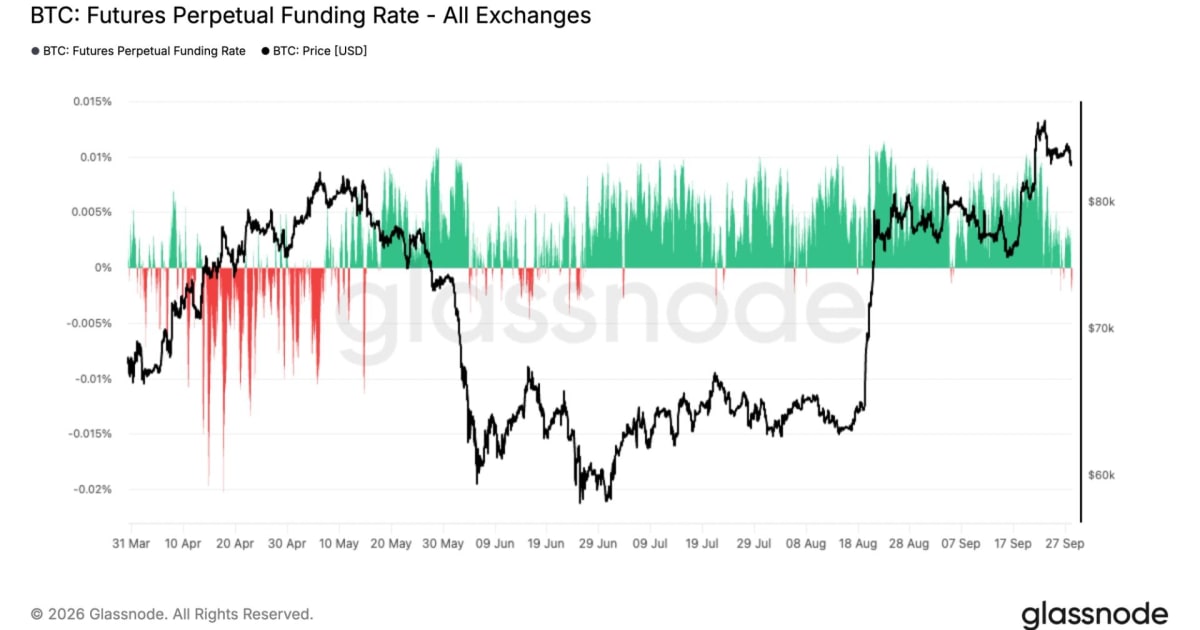
The cryptocurrency market is witnessing a notable shift in sentiment, with Bitcoin futures positions reflecting increasing bearish bets. This comprehensive analysis explores the 'why now' behind this trend, its potential indirect impact on the Indian stock market through FII sentiment, and provides an actionable playbook for investors navigating this evolving global risk landscape. We dissect specific Indian stocks and sectors that could experience ripple effects.
Bitcoin Bearish Bets Soar: What It Means for Indian Stocks & FII Flows
The global cryptocurrency landscape is currently experiencing a significant undercurrent of bearish sentiment, particularly within the Bitcoin futures market. Data reveals that futures positions betting on a decline in Bitcoin’s price are nearing their yearly lows, a development that, while seemingly confined to the digital asset realm, carries potential, albeit indirect, implications for broader risk assets, including the Indian equity market. At WelthWest Research Desk, our deep dive goes beyond the headlines to uncover the 'so what' for Indian investors, dissecting the mechanisms through which this crypto shift could influence FII flows and specific NSE/BSE listed entities.
What Happened in the Bitcoin Futures Market and Why Does it Matter Now?
Recent market intelligence indicates a notable increase in the premium paid by traders to bet on Bitcoin's price decline. This isn't just a minor fluctuation; it reflects a systemic build-up of short positions in the futures market, pushing the 'basis' — the difference between the spot price and the futures price — into negative territory for certain contracts. This phenomenon, where short-term futures trade below the spot price, signals a strong conviction among institutional players that further downside is imminent. The last time such a pronounced bearish bias was observed was during periods of significant market stress, such as the early 2022 crypto winter, which preceded broader market corrections.
Why does this matter now? The global financial ecosystem is more interconnected than ever. While direct exposure of Indian listed companies to Bitcoin or other cryptocurrencies remains limited, the psychological impact of a major downturn in a globally recognized risk asset like Bitcoin cannot be understated. Bitcoin, with a market capitalization often fluctuating around the $1.2 trillion mark, has become a bellwether for speculative appetite. A sustained decline could signal a broader risk-off environment, potentially leading to a flight to safety across asset classes. For India, this translates primarily into a potential shift in Foreign Institutional Investor (FII) sentiment. FIIs, who are significant drivers of Indian equity market movements, often reallocate capital based on global risk perceptions. If the crypto market decline is perceived as a precursor to wider financial instability or a global economic slowdown, FIIs might pare down their exposure to emerging market equities, including India.
Deep Market Impact Analysis: Connecting Crypto to Dalal Street
The direct correlation between Bitcoin’s price movements and the Nifty 50 or Sensex is historically weak. However, the indirect impact, particularly through sentiment and FII flows, is a critical consideration. During periods of heightened global risk aversion, FIIs tend to withdraw capital from emerging markets. For instance, in Q2 2022, amidst a global tech correction and rising interest rates, India witnessed FII outflows exceeding $14 billion. While not solely attributable to crypto, a concurrent crypto market downturn amplified the risk-off narrative. A significant and prolonged crypto market downturn, especially if it leads to concerns about liquidity or systemic risk in the broader financial system, could trigger similar FII outflow patterns.
Consider the broader tech sector. While Indian tech companies aren't directly holding Bitcoin on their balance sheets, a global tech slowdown, potentially exacerbated by a risk-off sentiment originating from crypto, could impact investor appetite for growth stocks. Companies involved in digital transformation, cloud services, or even those exploring blockchain applications, could see muted investor interest. The Indian IT services sector, which derives a significant portion of its revenue from global clients, is particularly sensitive to global economic sentiment. A widespread risk-off move could lead to project deferrals or budget cuts, impacting revenue growth for giants like Tata Consultancy Services (TCS) and Infosys.
How Could a Bitcoin Downturn Affect FII Inflows into Indian Equities?
FIIs often operate with a global macro perspective. Their asset allocation decisions are influenced by a complex interplay of interest rates, geopolitical stability, corporate earnings, and global risk appetite. A significant Bitcoin price correction, especially if it’s sharp and driven by fundamental concerns (e.g., regulatory crackdowns, major exchange failures), could lead to a broader reassessment of risk in their portfolios. If FIIs perceive this as a signal of reduced global liquidity or increased systemic risk, they might de-risk by selling 'risk-on' assets, which typically include emerging market equities. Even a marginal shift in FII sentiment can have a disproportionate impact on India's relatively less liquid mid-cap and small-cap segments.
Historically, during periods of heightened global volatility, such as the taper tantrum of 2013 or the initial phases of the COVID-19 pandemic, India experienced significant FII outflows. While the triggers were different, the underlying mechanism was a global flight to safety. A prolonged crypto bear market could serve as another such trigger, even if the direct financial linkages are limited. We could see a temporary but noticeable increase in the India VIX (Volatility Index), reflecting investor anxiety.
Stock-by-Stock Breakdown: Indian Equities with Indirect Exposure
While direct exposure is minimal, certain Indian companies and sectors could experience indirect impacts. Here are 4-6 specific NSE/BSE stocks to watch:
- Tata Consultancy Services (TCS): As India's largest IT services exporter (market cap ~INR 13.5 trillion, P/E ~30x), TCS is highly sensitive to global economic sentiment and client spending. A global risk-off environment, potentially triggered or amplified by crypto market stress, could lead to caution among its North American and European clients, impacting deal flows and revenue growth. Sector peers like Infosys (INFY) and Wipro (WIPRO) would face similar headwinds.
- Persistent Systems (PERSISTENT): This mid-cap IT firm (market cap ~INR 60,000 crore, P/E ~55x) has a focus on digital engineering and niche technology services. While not directly involved in crypto, its growth trajectory is tied to global tech spending. If broader tech sentiment sours due to crypto-induced risk aversion, demand for digital transformation projects could soften, affecting its order book and future earnings.
- Reliance Industries (RELIANCE): While primarily an oil-to-telecom conglomerate (market cap ~INR 19.5 trillion, P/E ~28x), Reliance has been actively exploring blockchain technology for various applications, including supply chain and digital identity. A prolonged crypto downturn could dampen enthusiasm or slow down the adoption curve for blockchain solutions, potentially impacting future venture valuations within its Jio Platforms or new energy initiatives, though the direct revenue impact would be negligible in the short term.
- Larsen & Toubro Infotech (LTIMINDTREE): This IT services firm (market cap ~INR 1.5 trillion, P/E ~38x) is a key player in financial services technology. While not directly crypto-exposed, a global financial market downturn, even if partially influenced by crypto sentiment, could lead to conservative spending by its banking and financial services clients, affecting its project pipeline and growth outlook.
- Nazara Technologies (NAZARA): As a diversified gaming and sports media platform (market cap ~INR 5,500 crore, P/E negative), Nazara has ventured into Web3 gaming and NFTs, which are intrinsically linked to the broader crypto ecosystem. A sustained crypto bear market could significantly impact the valuation and adoption of its Web3 gaming initiatives, potentially affecting its growth strategy and investor perception of its future revenue streams from these nascent segments.
Expert Perspective: Bulls vs. Bears on Bitcoin's Spillover
The Bears' Argument: Proponents of a significant spillover effect argue that the increased bearishness in Bitcoin futures is a canary in the coal mine for broader risk assets. They point to the growing institutionalization of crypto as a reason why its downturns are no longer isolated events. A major crypto deleveraging event, they contend, could force some institutions to sell other liquid assets, including equities, to cover losses or meet margin calls. This 'contagion through sentiment and balance sheets' would inevitably lead to FII outflows from emerging markets like India, particularly from growth-oriented sectors. They might cite the ~5% dip in the Nifty 50 observed in May 2021 when Bitcoin experienced a flash crash, suggesting a psychological link if not a direct one.
The Bulls' Argument: Conversely, the bulls downplay the direct impact on Indian equities. They emphasize the minimal direct exposure of Indian listed companies to cryptocurrencies. They argue that India's domestic growth drivers, strong corporate earnings, and robust regulatory framework provide a significant buffer against global crypto volatility. Furthermore, they might suggest that FII outflows, if any, would be temporary and driven by short-term sentiment rather than fundamental shifts in India's economic outlook. Some even argue that a crypto downturn could divert speculative capital back into more traditional, regulated asset classes like equities, potentially benefiting markets like India in the long run. They would highlight India's relatively resilient performance during recent global tech corrections, often outperforming developed markets.
Actionable Investor Playbook: Navigating the Crypto Ripple
For the astute Indian investor, understanding these dynamics translates into concrete actions:
- Buy/Accumulate: Consider defensive sectors and high-quality large-cap stocks with strong domestic consumption themes. Companies in FMCG (e.g., Hindustan Unilever), pharmaceuticals (e.g., Sun Pharma), or select private banks (e.g., HDFC Bank) with robust balance sheets and consistent earnings growth can provide stability during periods of global risk aversion. Look for stocks with P/E ratios below their historical averages if a broader market correction occurs.
- Sell/Reduce Exposure: Evaluate reducing exposure to highly speculative small-cap and mid-cap tech stocks that have seen significant run-ups based on growth narratives, especially those with any indirect exposure to global tech spending or nascent Web3 ventures. Review your portfolio for stocks with high P/E multiples that rely heavily on future growth projections, as these are most vulnerable in a risk-off environment.
- Watch: Closely monitor FII flow data released by NSDL. Consistent outflows for several weeks would be a strong signal of deteriorating global risk appetite. Also, watch global macroeconomic indicators like the US 10-year Treasury yield and the US Dollar Index (DXY), as these often move inversely to emerging market equities during risk-off phases. Keep an eye on the Bitcoin dominance index, as a sharp drop could signal broader altcoin market instability, amplifying overall crypto fear.
- Entry Points: For long-term investors, a significant correction in the Nifty 50 (e.g., 5-10% from current levels) driven by FII outflows could present attractive entry points for fundamentally strong companies. Consider staggered investments using a Systematic Investment Plan (SIP) approach to average costs during volatility.
- Time Horizons: For those looking to capitalize on potential short-term volatility, a bearish stance on certain global-facing IT stocks might be considered, but this carries higher risk. For most Indian investors, a medium to long-term (1-3+ years) perspective, focusing on value and quality, will likely yield better results, weathering any temporary FII-driven corrections.
Risk Matrix: Assessing the Probabilities
- Spillover to Broader Risk Assets (Probability: Medium): A sustained Bitcoin downturn could trigger broader risk aversion, leading to FII outflows from Indian equities. While not a certainty, the interconnectedness of global markets makes this a tangible risk.
- Direct Impact on Indian Companies (Probability: Low): Very few Indian listed companies have direct exposure to crypto assets or significant crypto-related revenue streams. The financial impact on their balance sheets would be negligible.
- Temporary FII Outflows & Market Volatility (Probability: Medium-High): Even without a direct financial link, negative global sentiment can cause FIIs to de-risk. This could lead to temporary but sharp corrections in the Nifty and Sensex, particularly in mid and small-cap segments.
- Amplification of Global Macro Headwinds (Probability: Medium): If the crypto downturn coincides with other global macro challenges (e.g., rising interest rates, geopolitical tensions), it could amplify the overall risk-off sentiment, making Indian markets more vulnerable.
What to Watch Next: Catalysts and Data Releases
Investors should closely monitor several key indicators and upcoming events:
- Bitcoin Futures Open Interest & Funding Rates: Continued high open interest in short positions and negative funding rates would confirm sustained bearish sentiment.
- Global Macro Data: Upcoming US CPI data (next release around mid-month) and FOMC meeting minutes will heavily influence global risk appetite. Any signs of persistent inflation or hawkish central bank stances could exacerbate risk-off sentiment.
- FII Investment Data: Daily and weekly FII flow data from NSDL will be crucial for assessing actual capital movements in and out of Indian equities.
- Major Crypto Exchange News: Any significant news regarding regulatory actions, hacks, or solvency issues at major global crypto exchanges could trigger further market instability.
- Q1 FY25 Earnings Season: The upcoming earnings season for Indian companies will provide insights into corporate health and growth outlooks, which can act as a counterweight to global sentiment. Strong domestic earnings could help absorb some of the FII-driven selling pressure.
The current bearish shift in Bitcoin futures is a potent reminder of the interconnected nature of global financial markets. While India's direct exposure to crypto remains limited, the indirect impact through sentiment and FII flows warrants careful monitoring. Investors armed with this comprehensive analysis can better position their portfolios to navigate potential volatility and identify opportunities amidst the shifting tides.
Run a free AI Stock Screen
Our algorithmic screener scores any NSE/BSE stock on fundamentals, momentum, and risk — free to try, no card needed.
Try the AI Screener →Have questions about this story?
Ask Welth, our finance-focused AI research assistant, for a deeper breakdown — free trial included.
Chat with Welth AI →Disclaimer: This content is generated by WelthWest Research Desk based on publicly available reports and is for informational purposes only. It does not constitute financial advice, investment recommendations, or an offer to buy or sell securities. Always consult a qualified financial advisor before making investment decisions.