Key Takeaway
The RBI’s persistent development of the e-Rupee signals a tectonic shift in monetary settlement. While it threatens the fee-based revenue of private payment gateways, it offers public sector banks a path to modernize liquidity management and retain sovereign control over digital rails.

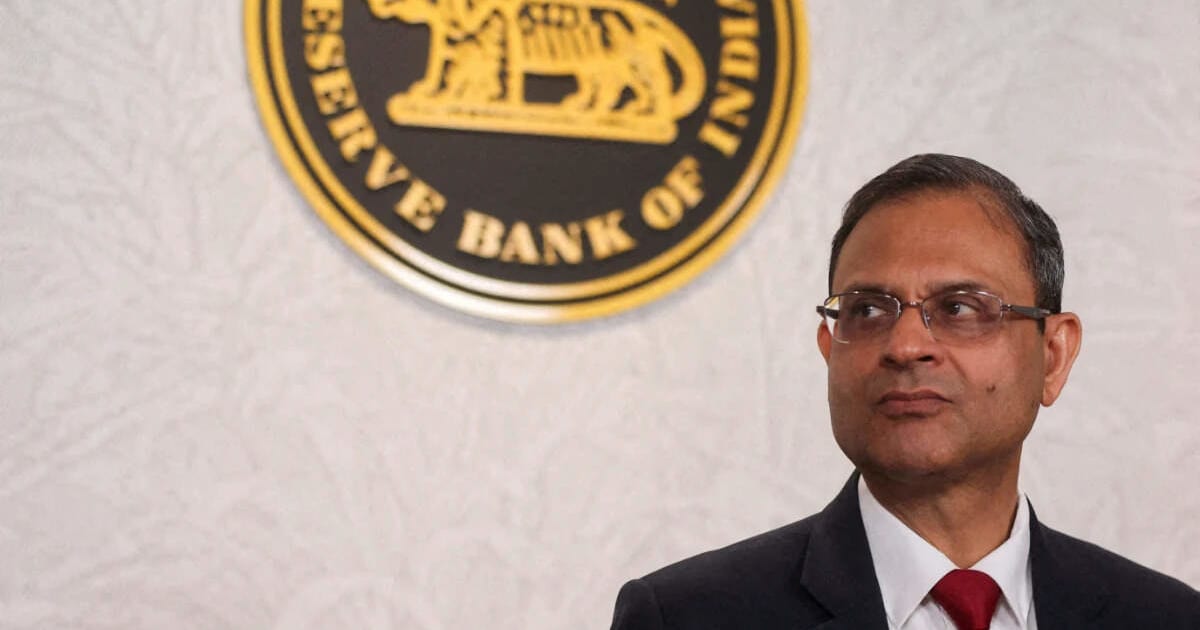
Despite global political pushback against Central Bank Digital Currencies, the RBI remains committed to the e-Rupee. This deep dive examines how state-backed digital currency will reshape India’s fintech landscape, impacting major banks and private payment providers.
The Quiet Revolution: Why the RBI is Doubling Down on the e-Rupee
While global headlines obsess over the political rhetoric surrounding digital assets, a more profound transformation is occurring in the corridors of the Reserve Bank of India (RBI). The development of the Central Bank Digital Currency (CBDC), or 'e-Rupee,' has transcended experimental pilot phases, evolving into a foundational infrastructure project. For the Indian financial ecosystem, this is not merely a technological upgrade; it is a strategic maneuver to preserve monetary sovereignty in an increasingly decentralized digital economy.
The urgency stems from the rapid proliferation of private digital payment rails. By internalizing the settlement layer, the RBI aims to reduce dependency on private intermediaries, lower transaction costs, and gain granular visibility into the velocity of money. As we observed during the 2022 pilot launch, the Nifty Bank index experienced volatility as markets grappled with the long-term implications of disintermediation. The current persistence in development suggests that the RBI views the e-Rupee as the ultimate tool for monetary policy transmission.
How will the RBI e-Rupee impact private payment gateways?
The fundamental conflict lies in the business model of private fintech. Companies like Paytm (PAYTM) and other traditional payment gateways derive significant revenue from Merchant Discount Rates (MDR) and transaction fees within the UPI and card networks. A retail CBDC, if structured to be near-instantaneous and low-cost, threatens to bypass these layers.
Historically, when the government introduces state-backed alternatives to private infrastructure, the primary risk is 'crowding out.' If the e-Rupee gains widespread adoption, the reliance on private digital wallets may diminish. For investors, this creates a bifurcation: infrastructure providers who integrate with the CBDC stand to gain, while standalone payment aggregators face a compressed margin environment.
The Sector-Level Breakdown
- Public Sector Banks (PSBs): Entities like State Bank of India (SBIN) are positioned as the primary distribution nodes for the e-Rupee. Their role as custodians of the digital ledger reinforces their systemic importance, potentially boosting their valuation multiples if they successfully monetize CBDC-based retail credit products.
- Private Banks: HDFCBANK and ICICIBANK face a balancing act. While they must participate in the e-Rupee ecosystem to remain competitive, the shift could cannibalize their existing high-margin digital payment revenue streams.
- Fintech and Digital Services: Firms like PolicyBazaar (POLICYBZR) may see indirect impacts. A highly digitized, state-monitored currency could streamline insurance premium payments and claims, but it also invites stricter regulatory oversight on data flows.
Stock-by-Stock Analysis: Navigating the CBDC Transition
SBIN (State Bank of India): With a P/E ratio hovering around 10-11x, SBIN remains the primary proxy for the government's digital agenda. The bank’s massive branch network provides the necessary 'on-ramp' for rural CBDC adoption, a segment private players struggle to penetrate profitably.
HDFCBANK: As the leader in private banking with a P/E of ~18x, HDFCBANK’s challenge is defending its digital moat. If the e-Rupee reduces transaction friction, the bank must pivot toward value-added services like AI-driven wealth management to maintain its premium valuation.
PAYTM (One97 Communications): Trading at a significant discount from its IPO price, Paytm faces an existential challenge. If the e-Rupee becomes the default 'digital cash,' the company’s core payment processing business could see a structural decline in take rates. Bulls argue that Paytm could become a primary 'wallet provider' for the e-Rupee, but the regulatory risk remains elevated.
ICICIBANK: Similar to HDFCBANK, ICICI’s strength lies in its digital banking ecosystem (iMobile). The bank is likely to integrate CBDC features faster than its peers, potentially offsetting revenue losses from traditional payment gateways through increased cross-selling of loan products.
The Contrarian View: Bulls vs. Bears on CBDC Adoption
The Bull Case: Proponents argue that the e-Rupee will expand the total addressable market for digital finance, bringing the unbanked into the formal economy and drastically reducing the cost of cross-border settlements. This efficiency gain will benefit the entire banking sector by lowering administrative overheads.
The Bear Case: Critics emphasize the risk of 'Digital Bank Runs.' In a crisis, the ability to instantly convert commercial bank deposits into central bank-backed e-Rupee could lead to rapid liquidity drains for private banks, forcing them to hold more expensive, liquid reserves and eroding their Net Interest Margins (NIMs).
Investor Playbook: Strategic Positioning
For investors, the key is to monitor the 'Interoperability Metric.' As long as the e-Rupee remains interoperable with existing UPI rails, the disruption will be gradual rather than binary.
- Accumulate: Focus on large-cap public sector banks (SBIN) that are integrated into the CBDC rollout. These stocks are likely to see re-ratings as they prove their role as digital infrastructure pillars.
- Divest/Reduce: Be cautious with pure-play payment aggregators that lack a diversified financial services moat. The margin compression from state-led competition is a long-term structural headwind.
- Watch: Monitor cybersecurity firms and cloud infrastructure providers. As the RBI increases its reliance on digital ledger technology, demand for secure, high-uptime infrastructure will spike, creating tailwinds for IT services firms.
Risk Matrix
| Risk Factor | Probability | Impact |
|---|---|---|
| Commercial Bank Disintermediation | Medium | High |
| Increased State Surveillance/Regulatory Friction | High | Medium |
| Technical Glitches/Security Breaches | Low | Critical |
| Failure of Consumer Adoption | Medium | Medium |
What to Watch Next
The next major catalyst will be the RBI’s quarterly report on CBDC transaction volumes and the expansion of the e-Rupee to wholesale inter-bank settlement. Watch for the Monetary Policy Committee (MPC) meeting minutes, where the RBI is expected to clarify the long-term roadmap for CBDC-bank deposit integration. Any shift toward incentivizing e-Rupee usage over traditional deposits will be the primary signal for a sector-wide rotation in bank stocks.
See SBIN's AI Score
Our algorithmic screener scores SBIN on fundamentals, momentum, and risk — free to try, no card needed.
Try the AI Screener →Have questions about this story?
Ask Welth, our finance-focused AI research assistant, for a deeper breakdown — free trial included.
Chat with Welth AI →Disclaimer: This content is generated by WelthWest Research Desk based on publicly available reports and is for informational purposes only. It does not constitute financial advice, investment recommendations, or an offer to buy or sell securities. Always consult a qualified financial advisor before making investment decisions.