Key Takeaway
The Federal Reserve's pivotal 25 basis point rate hike signals a global tightening, poised to siphon capital from emerging markets like India. Investors must recalibrate portfolios, anticipating increased borrowing costs and potential currency headwinds for Indian equities.
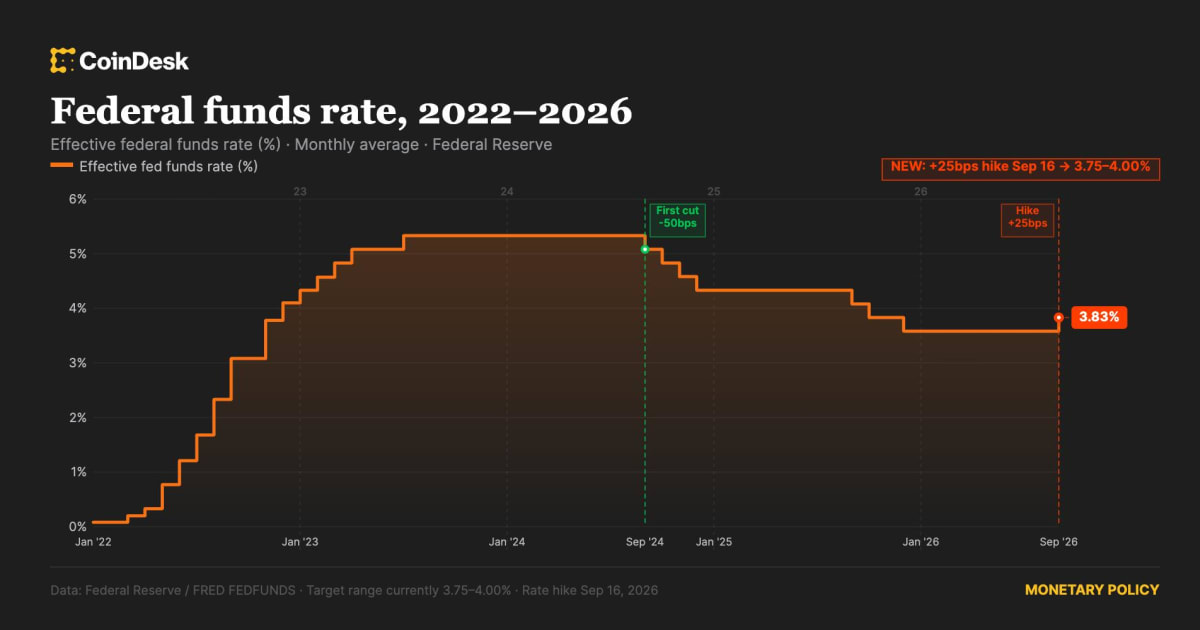
The US Federal Reserve has enacted its first interest rate hike since July 2023, a move that will reverberate through global financial markets. This analysis dissects the profound implications for India, from FII outflows to sector-specific vulnerabilities, offering a data-driven roadmap for navigating this new monetary landscape.
US Federal Reserve Delivers 25 Basis Point Rate Hike: A New Era for Global Capital Flows
In a move long anticipated by market participants, the US Federal Reserve has officially sanctioned a 25 basis point increase in its benchmark interest rate, marking the first such adjustment since July 2023. This decision, driven by persistent inflationary pressures within the American economy, signifies a definitive shift towards monetary tightening. The implications for global liquidity, investment strategies, and particularly for emerging markets such as India, are substantial and demand immediate investor attention. This comprehensive analysis from WelthWest Research Desk delves into the intricate web of consequences, providing a data-backed outlook for Indian equities and actionable insights for portfolio recalibration.
Why This Fed Rate Hike Matters Now for India
The Federal Reserve's mandate is to foster maximum employment and price stability. Recent economic data from the United States has indicated that inflation, while showing signs of moderating, remains stubbornly above the Fed's target of 2%. Consequently, the central bank has opted to employ its most potent tool: raising the cost of borrowing. This 25 basis point hike, while seemingly modest, unleashes a cascade of effects. Globally, it increases the attractiveness of dollar-denominated assets, drawing capital away from riskier, higher-yielding emerging market investments. For India, this translates directly into a higher cost of capital for domestic businesses and a heightened risk of Foreign Institutional Investor (FII) outflows as capital seeks the safety and enhanced returns offered by US Treasury bonds. The Indian Rupee, already under pressure from global economic uncertainties, faces further depreciation risks as demand for dollars rises.
Decoding the Deep Market Impact: India's Equity Landscape Under Pressure
The ripple effects of a US Federal Reserve rate hike are never confined to US shores; they are amplified across the global financial architecture, with emerging markets often bearing the brunt. Historically, periods of US monetary tightening have coincided with capital flight from countries like India, leading to significant corrections in equity markets. For instance, during the aggressive rate hike cycle of 2022, which saw the Fed raise rates by a cumulative 425 basis points, the Nifty 50 experienced a drawdown of over 15% from its peak. This current hike, while smaller in quantum, sets a precedent for further tightening, potentially exacerbating these trends. The core mechanism at play is the yield differential. As US Treasury yields climb, they become a more compelling alternative to the potentially higher, albeit riskier, returns offered by Indian equities. This can lead to substantial FII selling, depressing stock prices and increasing market volatility.
The impact is not uniform across sectors. Export-oriented sectors that are heavily reliant on US consumer spending, such as Information Technology (IT) services, are particularly vulnerable. A slowdown in the US economy, a likely consequence of higher borrowing costs, can directly translate into reduced IT spending by American corporations. Furthermore, companies with substantial foreign currency-denominated debt will face an immediate increase in their interest servicing costs as the Rupee weakens. Non-Banking Financial Companies (NBFCs) and banks with significant exposure to foreign currency borrowings are therefore on the radar. Conversely, sectors that benefit from a weaker Rupee, such as certain export-oriented manufacturing or commodity producers, might see some relief, though the overall bearish sentiment could overshadow these positives.
How Will the Fed's Rate Hike Affect Indian IT Stocks and NBFCs?
The Indian IT services sector, a bellwether for the nation's export prowess, faces a dual challenge from this Fed decision. Firstly, a tightening US monetary policy is designed to cool the American economy, which could lead to reduced discretionary spending by US corporations on technology services. Companies like Tata Consultancy Services (TCS), Infosys, and Wipro, which derive a significant portion of their revenue from North America, may experience a deceleration in deal closures and revenue growth. Secondly, the increased cost of capital in the US can make it more attractive for US companies to invest domestically rather than outsourcing, further impacting the demand for Indian IT services. The potential for FII outflows also means that these large-cap IT stocks, often favored by foreign investors for their stability and growth prospects, could see sustained selling pressure, irrespective of their underlying business performance. Analysts are already factoring in a potential 5-10% downward revision in earnings estimates for the next two fiscal years for top IT firms based on these macroeconomic shifts.
For NBFCs and banks with substantial foreign currency debt, the impact is more direct and immediate. Companies that have raised significant capital through dollar-denominated bonds will see their interest expenses rise as the Indian Rupee depreciates against the US Dollar and the cost of servicing that debt increases with higher US interest rates. For instance, if an Indian financial institution has $1 billion in dollar debt, a 5% depreciation in the Rupee could translate to an additional ₹400 crore in annual interest costs, assuming a baseline Rupee-Dollar exchange rate of 80. This increased financial burden can compress net interest margins and impact profitability. While some entities may have hedging strategies in place, a sustained period of Rupee weakness and rising global rates can erode the effectiveness of these hedges over time. Investors need to scrutinize balance sheets for foreign currency exposure and the efficacy of their hedging programs.
Stock-by-Stock Impact: Navigating the Turbulence
The broader market sentiment is likely to turn bearish, with a notable impact on specific stock categories:
- Tata Consultancy Services (TCS) Ltd. (NSE: TCS): As India's largest IT exporter, TCS is directly exposed to potential slowdowns in US tech spending. Its current P/E ratio of approximately 28x might be challenged if revenue growth forecasts are revised downwards. A significant portion of its revenue, over 60%, comes from North America.
- Infosys Ltd. (NSE: INFY): Similar to TCS, Infosys (P/E ~25x) faces headwinds from reduced US IT budgets and potential FII outflows. Its robust order book could provide some resilience, but sustained economic contraction in the US remains a key risk.
- Bajaj Finance Ltd. (NSE: BAJFINANCE): This leading NBFC, with a P/E of around 35x, could be impacted by rising borrowing costs if it relies on dollar-denominated debt for its funding. While its strong retail franchise offers some buffer, margin compression is a concern.
- HDFC Bank Ltd. (NSE: HDFCBANK): While a well-capitalized entity, HDFC Bank (P/E ~22x) could see increased funding costs if it has significant foreign currency liabilities. Its vast retail deposit base offers a competitive advantage in managing funding costs.
- Reliance Industries Ltd. (NSE: RELIANCE): While a diversified conglomerate, RIL's significant capital expenditure plans, some of which may be funded through international debt, could face higher financing costs. Its energy and retail segments might see mixed impacts from a global slowdown.
- Adani Enterprises Ltd. (NSE: ADANIENT): Companies with high leverage and significant ongoing infrastructure projects, like those within the Adani Group (Adani Enterprises P/E ~60x), are particularly sensitive to rising interest rates, which increase debt servicing burdens and can affect project viability.
Expert Perspective: Bulls vs. Bears on the Fed's Next Move
The market is currently pricing in a predominantly bearish outlook. Bears argue that this 25 basis point hike is merely the first step in a longer tightening cycle, and that the Fed may be forced to raise rates more aggressively if inflation proves more persistent than anticipated. They point to the potential for a significant global recession, which would cripple emerging market economies and lead to substantial FII outflows, driving Indian markets lower. They believe that current valuations in many Indian stocks do not adequately reflect these elevated risks.
Conversely, bulls suggest that the Fed's move is a necessary, albeit painful, step towards price stability, and that the global economy, including India, is more resilient than in previous tightening cycles. They highlight India's strong domestic consumption story, its relatively low inflation compared to some developed economies, and the potential for the Reserve Bank of India (RBI) to adopt a more accommodative stance if global conditions stabilize. Bulls might argue that the current sell-off presents buying opportunities in fundamentally sound companies at attractive valuations, especially those with strong balance sheets and limited foreign currency debt exposure. They believe that the long-term growth story of India remains intact.
An Actionable Investor Playbook for the Rate Hike Era
Navigating this period of global monetary tightening requires a strategic and defensive approach. Investors should consider the following:
- Portfolio Rebalancing: Reduce exposure to highly leveraged companies and growth stocks that are sensitive to interest rate hikes and potential economic slowdowns. Increase allocation to defensive sectors like pharmaceuticals, consumer staples, and utilities, which tend to be more resilient during economic downturns.
- Focus on Quality and Balance Sheets: Prioritize companies with strong balance sheets, low debt levels, and consistent cash flow generation. Companies with minimal foreign currency debt and robust hedging strategies should be favored.
- Dollar-Averaging Strategy: For long-term investors, consider adopting a dollar-averaging approach for select quality stocks. As FII outflows potentially depress valuations, systematically investing can lead to acquiring assets at more attractive long-term entry points.
- Fixed Income Re-evaluation: While equity markets face headwinds, rising interest rates can make fixed-income instruments more attractive. Consider short-to-medium duration debt funds or government securities, which offer improved yields with relatively lower risk.
- Currency Hedging: For investors with direct exposure to US dollar assets or significant foreign currency liabilities, exploring currency hedging strategies can mitigate potential losses from Rupee depreciation.
The Risk Matrix: Probability and Impact Assessment
Several key risks loom large in the wake of the Fed's rate hike:
- Persistent Inflation & Further Hikes (Probability: Medium-High): If US inflation remains elevated, the Fed could be compelled to implement additional rate hikes, intensifying FII outflows and exerting significant pressure on the Indian Rupee, potentially pushing it towards the 85-90 range against the dollar.
- Sharper Global Economic Slowdown (Probability: Medium): A more severe than anticipated contraction in the global economy could disproportionately impact India's export-oriented sectors, including IT, manufacturing, and textiles, leading to a broader economic slowdown.
- Geopolitical Instability (Probability: Medium): Existing geopolitical tensions could be exacerbated by economic stress, leading to supply chain disruptions, energy price volatility, and further dampening investor sentiment globally.
- Domestic Inflationary Pressures (Probability: Low-Medium): While the Fed's actions aim to control global inflation, domestic factors like monsoon performance, commodity prices, and supply-side issues could still fuel inflation in India, complicating the RBI's monetary policy decisions.
What to Watch Next: Upcoming Catalysts and Data
The market's reaction will be closely tied to forthcoming economic data and policy pronouncements. Investors should monitor:
- US Inflation Data (CPI, PPI): These releases will be critical in signaling whether the Fed's actions are effectively taming inflation and influencing the trajectory of future rate hikes.
- US Employment Data (Non-Farm Payrolls): A strong labor market could give the Fed room for further tightening, while signs of weakness might suggest a pause.
- RBI Monetary Policy Committee (MPC) Meetings: The RBI's stance on interest rates and its assessment of the domestic economic outlook will be crucial for managing the impact of global monetary policy shifts.
- FII Investment Flows: Daily and weekly FII investment data will provide a direct gauge of capital movement out of or into Indian markets.
- Corporate Earnings Reports: Upcoming quarterly earnings will reveal how companies are coping with rising costs and potential demand slowdowns, offering granular insights into sector-specific resilience.
The Federal Reserve's decision to raise interest rates by 25 basis points marks a significant turning point. For India, it necessitates a period of cautious navigation, characterized by a focus on quality, robust balance sheets, and a strategic approach to capital allocation. By understanding the intricate interplay of global monetary policy and domestic market dynamics, investors can better position themselves to weather the impending turbulence and identify opportunities amidst the evolving financial landscape.
See IT Services (e.g., TCS, Infosys, Wipro) - due to potential slowdown in US tech spending and FII outflows's AI Score
Our algorithmic screener scores IT Services (e.g., TCS, Infosys, Wipro) - due to potential slowdown in US tech spending and FII outflows on fundamentals, momentum, and risk — free to try, no card needed.
Try the AI Screener →Have questions about this story?
Ask Welth, our finance-focused AI research assistant, for a deeper breakdown — free trial included.
Chat with Welth AI →Disclaimer: This content is generated by WelthWest Research Desk based on publicly available reports and is for informational purposes only. It does not constitute financial advice, investment recommendations, or an offer to buy or sell securities. Always consult a qualified financial advisor before making investment decisions.