Key Takeaway
The Federal Reserve's impending interest rate hike, coupled with a sharp decline in global oil prices, is creating a potent cocktail of headwinds for Indian equities. Investors must prepare for potential capital outflows and sector-specific dislocations.
As the US Federal Reserve signals further interest rate hikes to curb inflation, and crude oil prices tumble, the Indian stock market faces significant crosscurrents. This analysis dissects the implications for foreign institutional investor flows, currency stability, and the performance of key Indian sectors and companies.
Fed Rate Hikes and Oil Plunge: Decoding the Dual Threat to Indian Equities
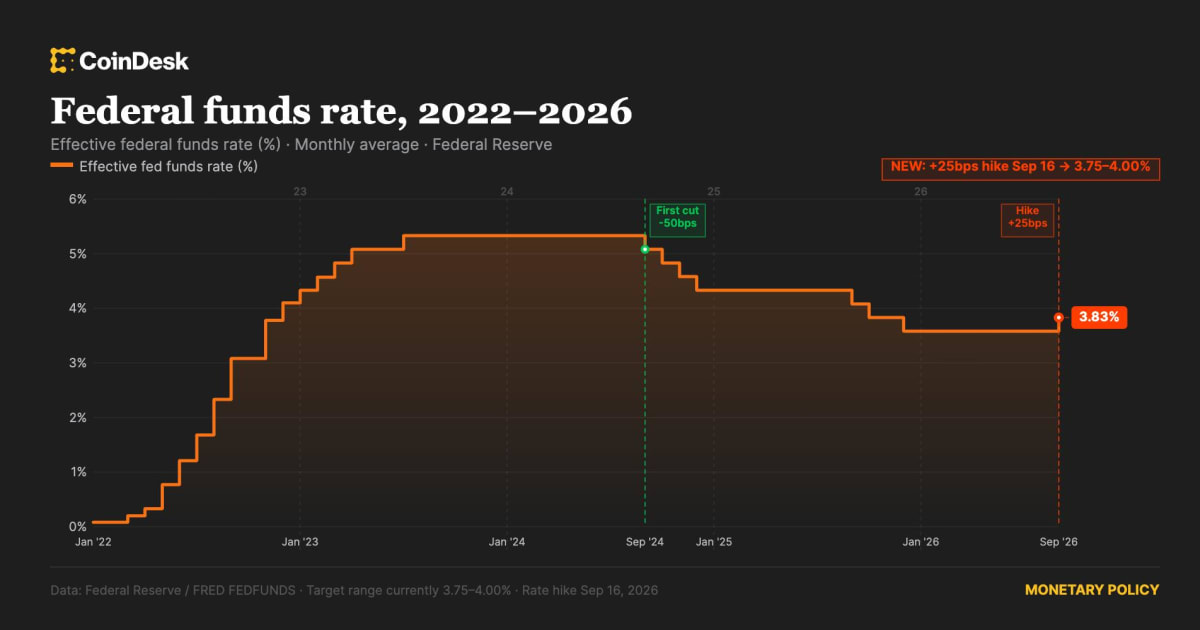
The global financial landscape is currently dominated by two seismic forces: the resolute stance of the US Federal Reserve in its battle against persistent inflation and a dramatic downturn in global crude oil prices. For the Indian stock market, this confluence presents a complex and potentially volatile environment, demanding a nuanced understanding of the underlying dynamics and their far-reaching implications for domestic investors. The anticipation of a further increase in the US Federal Funds Rate, a cornerstone of global monetary policy, directly influences the cost of capital worldwide and the attractiveness of risk assets, particularly for emerging economies.
Why This Dual Shockwave Matters for India Now
The US Federal Reserve's monetary tightening cycle is not merely a domestic policy decision; it acts as a powerful global liquidity governor. As US interest rates ascend, the allure of dollar-denominated assets, perceived as safer havens, intensifies. This often triggers capital outflows from riskier emerging markets, including India, as foreign institutional investors (FIIs) reallocate their portfolios to higher-yielding, lower-risk US Treasury bonds and other dollar-denominated instruments. The immediate consequence for India can be a depreciation of the Indian Rupee against the US Dollar, making imports more expensive and potentially reigniting inflationary pressures domestically, even as global commodity prices ease.
Simultaneously, the precipitous fall in crude oil prices, a significant component of global inflation and a major input cost for numerous industries, presents a paradoxical situation. While lower oil prices are generally a boon for net oil-importing nations like India, helping to reduce the import bill and ease headline inflation, they also cast a shadow over the global energy sector. This can lead to reduced revenues and profitability for oil producers, impacting investment decisions and, in some cases, leading to a slowdown in economic activity in energy-exporting nations, which can have ripple effects across global supply chains.
The Interplay: How Fed Hikes and Falling Oil Create a Bearish Tide
The core of the current market sentiment is a bearish outlook, driven by the dual pressures of rising borrowing costs in the US and concerns about global growth prospects, partly exacerbated by the energy sector's struggles. For India, the primary concern is the potential for sustained FII outflows. In periods of global risk aversion and rising US yields, Indian equities, which have often been a beneficiary of FII inflows, can experience significant selling pressure. This was evident in early 2022, when aggressive Fed rate hikes led to substantial FII withdrawals, contributing to a correction in the Nifty 50 index, which saw declines of over 15% from its peak.
The impact extends beyond mere capital flows. Higher US interest rates translate into a higher cost of capital globally. Indian companies that rely on foreign currency borrowings, particularly those denominated in US Dollars, will face increased interest expenses. This can erode profit margins and reduce the overall attractiveness of Indian equities for global investors seeking yield. Furthermore, growth-oriented companies, whose valuations are often premised on future earnings potential, become more vulnerable as the discount rate applied to those future earnings increases with higher interest rates.
Sector-Specific Tremors: Navigating the Ripples in Indian Markets
The general bearish sentiment is not uniformly distributed across all sectors. Certain segments of the Indian stock market are more exposed to the direct and indirect consequences of these global events. Technology services firms, for instance, are often at the forefront of FII portfolio adjustments. Companies like Tata Consultancy Services (TCS), Infosys, and Wipro, which derive a substantial portion of their revenue from North America and Europe, could see their order books and revenue growth moderate if global IT spending decelerates due to economic uncertainties or a tightening of corporate budgets. Moreover, their valuations, often commanding premium Price-to-Earnings (P/E) multiples (e.g., Infosys often trading above 25x TTM P/E), make them susceptible to re-rating in a higher interest rate environment.
Conversely, sectors heavily reliant on commodity prices or with significant USD-denominated debt are also in the crosshairs. Oil Marketing Companies (OMCs) such as Indian Oil Corporation, Bharat Petroleum Corporation, and Hindustan Petroleum Corporation, while potentially benefiting from lower crude acquisition costs, face a complex interplay of factors. A significant dip in crude prices could impact their refining margins and inventory valuations. However, the actual impact is also contingent on their ability to pass on lower costs to consumers and the prevailing demand dynamics within India. Companies with substantial USD-denominated debt, such as those in the infrastructure or manufacturing sectors with large capital expenditures financed by foreign debt, will see their debt servicing costs rise, directly impacting their profitability and cash flow generation.
Will the US Dollar Reign Supreme as a Safe Haven?
In this environment, the US Dollar is poised to be a significant beneficiary. As global investors seek refuge from volatility, capital typically flows into US Treasury bonds, increasing demand for the Dollar. This strengthens the Dollar against most major currencies, including the Indian Rupee. For Indian investors, a stronger Dollar means that the value of their foreign investments, when converted back into Rupees, might increase, but it also implies a weaker Rupee, making imported goods and services more expensive.
Who are the Likely Winners and Losers in the Indian Market?
Winners: Companies with robust balance sheets, minimal debt, and strong, predictable cash flows are best positioned to weather the storm. These businesses are less sensitive to rising borrowing costs and can continue to operate and grow even amidst global economic uncertainty. Furthermore, sectors catering to domestic demand and less exposed to global trade cycles might exhibit relative resilience. The US Dollar itself, as an asset class, is a clear winner in this risk-off scenario.
Losers: Emerging market equities, including a broad swathe of Indian stocks, are likely to be under pressure due to FII outflows. Growth stocks, particularly those with high valuations and a significant portion of their earnings expected in the distant future, are highly sensitive to increases in the discount rate. The energy sector, globally, faces headwinds from falling oil prices, though the specific impact on Indian OMCs is nuanced, as discussed.
Stock-by-Stock Breakdown: Identifying the Frontline Warriors and Vulnerable Targets
Examining specific companies provides a clearer picture of the differential impact:
- Tata Consultancy Services (TCS) and Infosys Ltd.: As giants in the Indian IT services sector, these companies are highly sensitive to FII sentiment and global IT spending. A sustained period of FII outflows and potential budget tightening by US and European clients could lead to slower revenue growth and potentially pressure their high P/E multiples (Infosys often hovers around 28-30x TTM P/E, TCS around 25-28x TTM P/E). Their large market capitalization (TCS: ~₹14 lakh crore, Infosys: ~₹6.5 lakh crore) means any significant sell-off can impact broader market indices.
- Wipro Ltd.: Similar to TCS and Infosys, Wipro faces the same headwinds from FII sentiment and global demand. While its valuation might be slightly lower than its larger peers (often around 20-22x TTM P/E), the sector-wide pressure will likely be felt.
- Reliance Industries Ltd. (RIL): RIL's diverse business model presents a mixed bag. Its refining and petrochemicals business could be impacted by lower crude prices, potentially affecting margins. However, its retail and telecom (Jio) segments, driven by domestic consumption, might offer some resilience. The company's significant debt levels, though managed, will be a factor to monitor in a rising interest rate environment.
- Oil Marketing Companies (OMCs) - e.g., Indian Oil Corporation (IOCL), Bharat Petroleum Corporation (BPCL): While lower crude prices are theoretically beneficial, OMCs' profitability is complex. Their margins are influenced by government policies on fuel pricing, inventory valuation, and the global refining crack spreads. A sharp and sustained fall in crude could lead to inventory losses and impact their reported profitability, even if the cost of product sold decreases.
- Companies with Significant USD Denominated Debt (e.g., select infrastructure and manufacturing firms): While specific tickers vary widely, any company with a substantial portion of its debt in USD will see its interest burden rise as the Rupee depreciates against the Dollar. This is a critical factor for companies undertaking large capital expenditure projects financed by foreign debt.
Expert Perspectives: Bulls vs. Bears on the Fed's Tightrope Walk
Bulls argue that the market has already priced in a significant portion of the Fed's anticipated rate hikes. They believe that falling oil prices will ultimately lead to lower inflation, allowing the Fed to adopt a less hawkish stance sooner than expected, potentially leading to a 'soft landing' for the US economy. Bulls also point to the inherent strength of the Indian economy, driven by robust domestic demand and government reforms, which can cushion the impact of global headwinds. They might highlight that strong Indian companies with solid fundamentals can still deliver value, irrespective of short-term FII flows.
Bears, conversely, emphasize the historical tendency for the Fed to overtighten, leading to recessions. They warn that the current inflation battle might be more protracted than anticipated, requiring prolonged higher interest rates. The risk of a sharp increase in US yields, triggering a significant flight to safety and deeper capital outflows from India, remains a primary concern. Bears also point to the potential for a global growth slowdown, which would inevitably impact export-oriented sectors like IT services and reduce overall corporate earnings growth in India.
An Investor's Playbook: Navigating the Currents of Uncertainty
Given the bearish sentiment and high impact nature of these events, a cautious yet strategic approach is warranted for Indian investors:
- Focus on Quality and Resilience: Prioritize companies with strong balance sheets, low debt-to-equity ratios, consistent profitability, and robust cash flow generation. Look for businesses with pricing power that can pass on costs and those less exposed to global economic cycles.
- Sectoral Rotation: Consider reducing exposure to highly interest-rate sensitive growth stocks and sectors heavily reliant on FII inflows. Conversely, explore sectors that benefit from domestic demand, such as consumer staples, healthcare, and select financial services companies with strong retail deposit franchises and manageable asset quality.
- Currency Hedging and USD Exposure: For investors with significant foreign currency exposure or those concerned about Rupee depreciation, exploring currency hedging strategies or maintaining some allocation to USD-denominated assets could be prudent.
- Dollar-Cost Averaging (DCA): Instead of timing the market, consider implementing a Dollar-Cost Averaging strategy. Investing a fixed amount at regular intervals can help mitigate the risk of buying at market peaks and average out the purchase cost over time, especially during periods of volatility.
- Time Horizon: For long-term investors with a horizon of 5-10 years or more, temporary dislocations caused by global events can present attractive entry points into fundamentally sound companies at lower valuations. Short-term traders, however, face heightened risks and should exercise extreme caution.
- Watch Key Levels: For the Nifty 50, watch support levels around 17,500-17,800 and resistance around 18,500-18,800. For the Nifty Bank, support around 40,000-41,000 and resistance around 43,000-44,000 will be crucial to monitor.
The Risk Matrix: Quantifying the Potential Pitfalls
The primary risks associated with this unfolding scenario include:
- Probability: High. Risk: Greater than expected Fed hawkishness. The Fed's forward guidance could signal more aggressive rate hikes or a longer period of elevated rates than currently priced in by markets. This would intensify capital outflows and increase borrowing costs significantly.
- Probability: Medium. Risk: Deeper global recession. A sharper-than-anticipated slowdown in the US and European economies, exacerbated by the energy sector slump, could lead to a significant reduction in global demand, severely impacting Indian export-oriented sectors.
- Probability: Medium. Risk: Geopolitical Escalation. Any unforeseen geopolitical events could trigger a flight to safety, further strengthening the US Dollar and exacerbating outflows from emerging markets, irrespective of the Fed's immediate actions.
What to Watch Next: Upcoming Catalysts and Data Points
Investors should closely monitor the following:
- Federal Reserve Meeting Minutes and Speeches: Any nuances in language or sentiment from Fed officials regarding future rate hikes and inflation outlook will be critical.
- US Inflation Data (CPI and PPI): These reports will be key determinants of the Fed's future policy path. A sustained downtrend in inflation could signal a pause or pivot.
- US Non-Farm Payrolls and Unemployment Rate: Strong labor market data can support further Fed tightening, while weakness could signal an economic slowdown.
- Crude Oil Price Movements: Continued volatility or a sharp rebound/decline in oil prices will impact inflation expectations and energy sector profitability.
- FII Investment Flows: Daily and weekly tracking of FII inflows and outflows into Indian equities and debt will provide a real-time gauge of global investor sentiment towards India.
The current market environment is characterized by significant uncertainty, driven by the Federal Reserve's aggressive monetary tightening and the volatile trajectory of global oil prices. While these factors present considerable headwinds for Indian equities, a discerning approach focused on quality, resilience, and long-term strategic allocation can help investors navigate these challenging times and potentially identify opportunities amidst the volatility.
See IT Services (e.g., TCS, Infosys, Wipro) - due to potential FII outflows and higher cost of capital's AI Score
Our algorithmic screener scores IT Services (e.g., TCS, Infosys, Wipro) - due to potential FII outflows and higher cost of capital on fundamentals, momentum, and risk — free to try, no card needed.
Try the AI Screener →Have questions about this story?
Ask Welth, our finance-focused AI research assistant, for a deeper breakdown — free trial included.
Chat with Welth AI →Disclaimer: This content is generated by WelthWest Research Desk based on publicly available reports and is for informational purposes only. It does not constitute financial advice, investment recommendations, or an offer to buy or sell securities. Always consult a qualified financial advisor before making investment decisions.