Key Takeaway
The US Federal Reserve's imminent interest rate hike signals a global liquidity squeeze, poised to exert significant downward pressure on Indian equities and the Rupee. Investors must recalibrate portfolios for a risk-off environment, favoring defensives and quality assets.

As the US Federal Reserve nears a critical interest rate decision, global financial markets are on edge. This analysis delves into the anticipated impact of a US rate hike on India, detailing potential fallout for the stock market, currency, and specific sectors. We provide a comprehensive playbook for navigating this challenging period.
US Fed Rate Hike Anticipation: A Seismic Shift for Global and Indian Markets
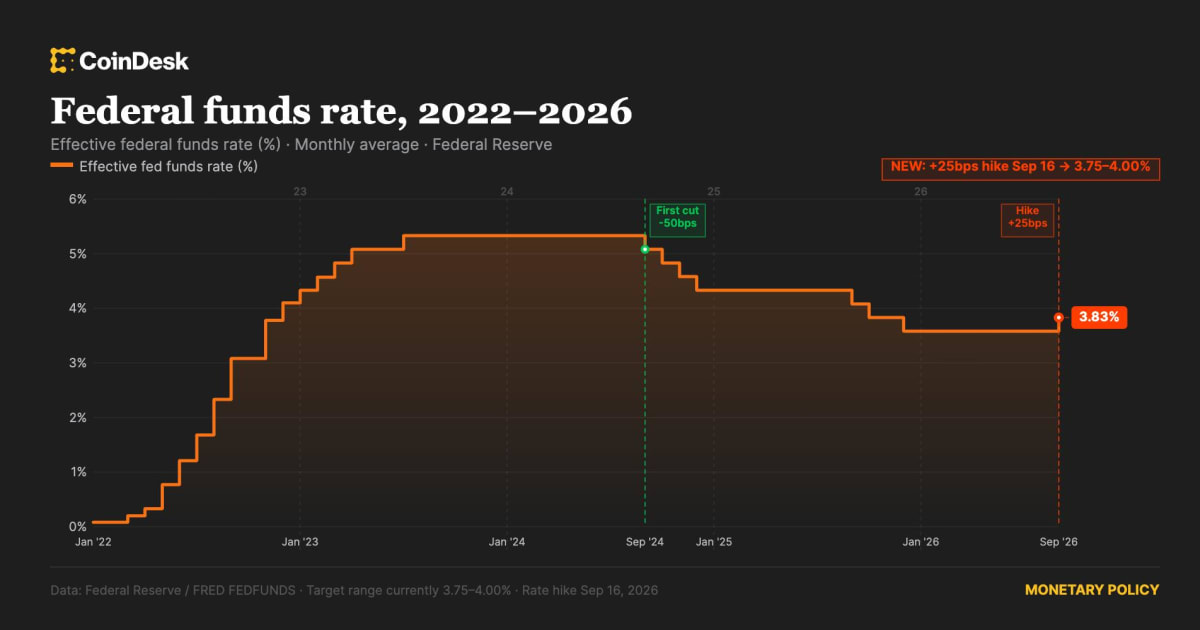
The financial world is holding its breath, fixated on the impending pronouncements from the US Federal Reserve. The anticipation of a significant interest rate hike by the Fed is not merely an academic exercise; it represents a pivotal moment with profound, far-reaching consequences for global capital flows, and particularly for emerging economies like India. This isn't just about American monetary policy; it's about a fundamental recalibration of risk appetite and yield-seeking behavior across the planet.
Why This Matters Now: The Liquidity Tap Tightens
The Federal Reserve, as the steward of the world's reserve currency, wields immense influence. When it adjusts its benchmark interest rate, the cost of borrowing money globally shifts. A hike signifies a deliberate move to curb inflation by making credit more expensive, thereby cooling demand. For India, this translates directly into a potential drying up of foreign capital. Foreign Institutional Investors (FIIs), who have been instrumental in driving Indian market performance, are incentivized to repatriate funds from riskier emerging markets to safer havens offering higher yields, such as US Treasury bonds. This outflow can trigger a dual assault: a depreciation of the Indian Rupee as demand for dollars rises, and a sell-off in Indian equities as liquidity tightens and risk premiums increase.
Historically, periods of aggressive Fed tightening have often correlated with sharp corrections in emerging market assets. For instance, during the Fed's tightening cycle in 2022, the Nifty 50 experienced a significant drawdown of over 15% from its peak, mirroring global trends as investors fled riskier assets. The current juncture, characterized by persistent inflation and a Fed signaling a determined stance, echoes these past vulnerabilities.
Deep Market Impact Analysis: India's Vulnerabilities Exposed
The immediate fallout from a Fed rate hike on the Indian market is typically bearish. The primary transmission mechanism is through capital flows. As US interest rates climb, the 'risk-free' return offered by US Treasury bonds becomes more attractive, drawing capital away from assets like Indian equities and corporate bonds. This reduces demand for Indian assets, leading to price declines.
The Indian Rupee is particularly susceptible. A widening interest rate differential in favor of the US dollar makes holding dollars more profitable, leading to increased demand for the greenback and a corresponding weakening of the Rupee. A depreciating Rupee has a cascading effect, increasing the cost of imports, potentially stoking domestic inflation, and making dollar-denominated debt more expensive for Indian companies.
The Winners and Losers in a Tightening Cycle
In this environment, traditional safe-haven assets tend to perform well. US Treasury Bonds, offering guaranteed returns and backed by the US government, become prime destinations for fleeing capital. Conversely, Growth Stocks, which often rely on future earnings potential and are valued based on discounted cash flows, suffer disproportionately. Higher discount rates (driven by rising interest rates) significantly reduce their present value. Emerging Market Equities, including those in India, face headwinds from reduced foreign investment and increased risk aversion. The Indian Rupee, as previously discussed, is directly in the line of fire.
Historical Parallels: Lessons from Past Tightening Cycles
Looking back at periods of Fed tightening, such as 2004-2006 and 2015-2018, we observed similar patterns. During these phases, emerging markets, including India, experienced periods of capital outflow and currency depreciation. For example, in 2018, a series of Fed rate hikes, coupled with trade tensions, led to a significant sell-off in Indian equities and a sharp fall in the Rupee, which touched record lows against the dollar. The current macroeconomic backdrop, with elevated inflation and geopolitical uncertainties, amplifies these historical risks.
Sector-Specific Tremors: Which Indian Industries Feel the Pinch Most?
The impact of a Fed rate hike is not uniform across all sectors. Certain industries are inherently more exposed due to their business models, debt structures, or reliance on foreign capital.
- Information Technology (IT) Services: Indian IT giants, often beneficiaries of global technology spending, face a dual threat. Firstly, a global economic slowdown, exacerbated by higher interest rates, could reduce IT budgets of their US and European clients. Secondly, their valuations, typically high due to growth prospects, are sensitive to rising discount rates. A slowdown in revenue growth and higher discount rates can lead to significant de-rating.
- Fast-Moving Consumer Goods (FMCG): While seemingly insulated, FMCG stocks can be indirectly affected. A depreciating Rupee increases the cost of imported raw materials for many FMCG companies, squeezing margins. Furthermore, if the economic slowdown becomes pronounced, discretionary spending by Indian consumers may decline, impacting sales volumes for non-essential goods.
- Companies with Significant USD Debt: Businesses that have borrowed in US dollars will see their debt servicing costs rise significantly as the Rupee weakens. This can strain cash flows and impact profitability. Companies with large foreign currency liabilities are particularly vulnerable.
- Financials: Banks with significant exposure to corporate lending might face increased non-performing assets (NPAs) if companies struggle with higher debt servicing costs or a slowdown in their businesses. However, banks with strong retail deposit bases and robust asset-liability management might show resilience.
The overall sentiment across the Indian market is decidedly bearish in the immediate aftermath of such a hawkish signal from the Fed. The impact is considered high, given the interconnectedness of global financial systems and India's reliance on foreign capital.
Stock-by-Stock Breakdown: Navigating the Minefield
Let's examine how specific Indian companies might be affected by the anticipated Fed action:
- Tata Consultancy Services (TCS) [NSE: TCS]: As India's largest IT services exporter, TCS faces headwinds from potential slowdowns in US tech spending and higher discount rates impacting its growth valuation. With a market capitalization of over ₹13 lakh crore and a trailing P/E of around 28x, its premium valuation makes it susceptible to de-rating if growth forecasts are revised downwards. A 10% drop in its stock price, for instance, would represent a significant loss in market cap.
- Infosys Ltd. [NSE: INFY]: Similar to TCS, Infosys, with a market cap of over ₹6 lakh crore and a P/E of approximately 25x, is exposed to similar risks. Its substantial revenue from North America makes it directly sensitive to US economic conditions and corporate IT budgets.
- Wipro Ltd. [NSE: WIPRO]: Wipro, with a market cap around ₹2.5 lakh crore and a P/E of about 22x, also falls into the IT services category. While its valuation is slightly lower, the fundamental risks of reduced client spending and valuation compression remain.
- Hindustan Unilever Ltd. [NSE: HUL]: A bellwether in the FMCG sector, HUL (market cap ~₹5.5 lakh crore, P/E ~55x) might see some margin pressure from imported raw material costs if the Rupee depreciates significantly. However, its strong domestic demand, diverse product portfolio, and pricing power offer some resilience against a direct demand slowdown compared to discretionary goods. Its high P/E suggests it is priced for growth, which could be challenged.
- Reliance Industries Ltd. [NSE: RELIANCE]: Reliance, a conglomerate with diverse interests including petrochemicals, retail, and telecom, has significant foreign currency debt. A weaker Rupee would increase its interest servicing costs. However, its strong cash flows from certain segments and its dominant market positions provide a degree of insulation. Its market cap of over ₹15 lakh crore makes it a significant indicator of market sentiment.
- Larsen & Toubro Ltd. [NSE: LT]: The infrastructure and engineering giant, with a market cap of around ₹3 lakh crore and P/E of ~20x, is more domestically driven but can be indirectly impacted by a slower economy which might reduce government or private capex spending. However, its long-term order book provides some visibility.
Expert Perspectives: Bulls vs. Bears on the Fed's Next Move
The market is a battleground of opposing views. Bulls might argue that the Fed's actions are already priced in, and that the US economy is resilient enough to withstand higher rates without a severe recession. They may point to strong employment figures as evidence of underlying strength. Furthermore, they might suggest that any immediate sell-off presents a buying opportunity for long-term investors, particularly in fundamentally strong Indian companies that are trading at attractive valuations.
Bears, on the other hand, emphasize the historical tendency for aggressive Fed tightening to precede economic downturns and market corrections. They highlight the persistence of inflation, which may force the Fed to remain hawkish for longer than anticipated, leading to a more significant liquidity crunch. They would caution against catching a falling knife and advocate for a defensive stance, focusing on capital preservation rather than aggressive growth plays.
The Investor's Playbook: Actionable Strategies in Volatile Times
Navigating this period of uncertainty requires a strategic, data-driven approach. Investors should consider the following:
- De-risk Portfolios: Reduce exposure to highly speculative growth stocks and companies with significant foreign currency debt. Increase allocation to defensive sectors and high-quality companies with strong balance sheets and predictable earnings.
- Focus on Quality and Value: Prioritize companies with robust cash flows, sustainable competitive advantages, and attractive valuations. Look for businesses that can weather an economic slowdown and currency depreciation.
- Consider Gold: As a traditional safe-haven asset, gold can act as a hedge against inflation and geopolitical uncertainty. A small allocation to gold ETFs or physical gold might be prudent.
- Dollar-Cost Averaging (DCA): For long-term investors, periods of market correction can present opportunities to accumulate quality assets at lower prices through systematic investment plans (SIPs).
- Monitor USD/INR: Keep a close watch on the Rupee's movement. A sustained weakening beyond ₹83-₹84 to the dollar could signal deeper economic concerns and further pressure on equities.
- Time Horizon is Key: Short-term volatility is almost guaranteed. Investors with a longer time horizon (3-5 years or more) are better positioned to ride out the storm and benefit from the eventual recovery. For those with shorter horizons, capital preservation should be paramount.
Risk Matrix: Quantifying Potential Pitfalls
The path forward is fraught with potential risks that investors must acknowledge:
- Risk 1: Unexpectedly Hawkish Fed Forward Guidance (Probability: Medium-High): If the Fed signals a more aggressive pace of rate hikes or a higher terminal rate than currently priced in, it could trigger a sharper sell-off in risk assets and a steeper depreciation of the Rupee.
- Risk 2: Persistent Global Inflation (Probability: Medium): If inflation proves more stubborn than anticipated, forcing the Fed to maintain a hawkish stance for an extended period, the global liquidity squeeze will intensify, prolonging the bearish sentiment.
- Risk 3: Geopolitical Escalation (Probability: Low-Medium): Any significant escalation of geopolitical tensions could lead to a flight to safety, further benefiting US Treasuries and dollar-denominated assets, while exacerbating weakness in emerging markets.
- Risk 4: Domestic Economic Slowdown (Probability: Medium): A sharp deceleration in India's own economic growth, triggered or amplified by global headwinds, would compound the negative impact of external factors on corporate earnings and market sentiment.
What to Watch Next: Upcoming Catalysts and Data Points
The narrative will continue to evolve based on several key factors:
- Federal Reserve Meeting Minutes: These will provide deeper insights into the Fed's deliberations and the nuances of their policy decisions.
- US Inflation Data (CPI, PPI): Crucial for assessing whether inflation is moderating, which will influence the Fed's future policy path.
- US Employment Data (Non-Farm Payrolls): Strong data could reinforce the Fed's resolve to tighten, while weak data might signal economic fragility.
- Indian Inflation Data (CPI): To understand if domestic inflation dynamics require a response from the Reserve Bank of India (RBI), which could impact local interest rate expectations.
- FII Flows Data: A consistent outflow of foreign capital will be a key indicator of ongoing risk aversion and its impact on Indian markets.
In conclusion, the US Federal Reserve's interest rate decisions are a powerful force shaping global financial landscapes. For Indian investors, understanding these dynamics, anticipating the ripple effects, and adopting a prudent, risk-aware strategy are paramount to navigating the forthcoming period of market volatility and preserving capital while seeking opportunities.
See IT Stocks (e.g., TCS, Infosys, Wipro)'s AI Score
Our algorithmic screener scores IT Stocks (e.g., TCS, Infosys, Wipro) on fundamentals, momentum, and risk — free to try, no card needed.
Try the AI Screener →Have questions about this story?
Ask Welth, our finance-focused AI research assistant, for a deeper breakdown — free trial included.
Chat with Welth AI →Disclaimer: This content is generated by WelthWest Research Desk based on publicly available reports and is for informational purposes only. It does not constitute financial advice, investment recommendations, or an offer to buy or sell securities. Always consult a qualified financial advisor before making investment decisions.