Key Takeaway
Prominent investor Nikhil Kamath's stark warning about 2027 startup funding scarcity signals a potential seismic shift for India's tech ecosystem. Investors must brace for a recalibration of risk appetite, impacting valuations and growth prospects across the board.
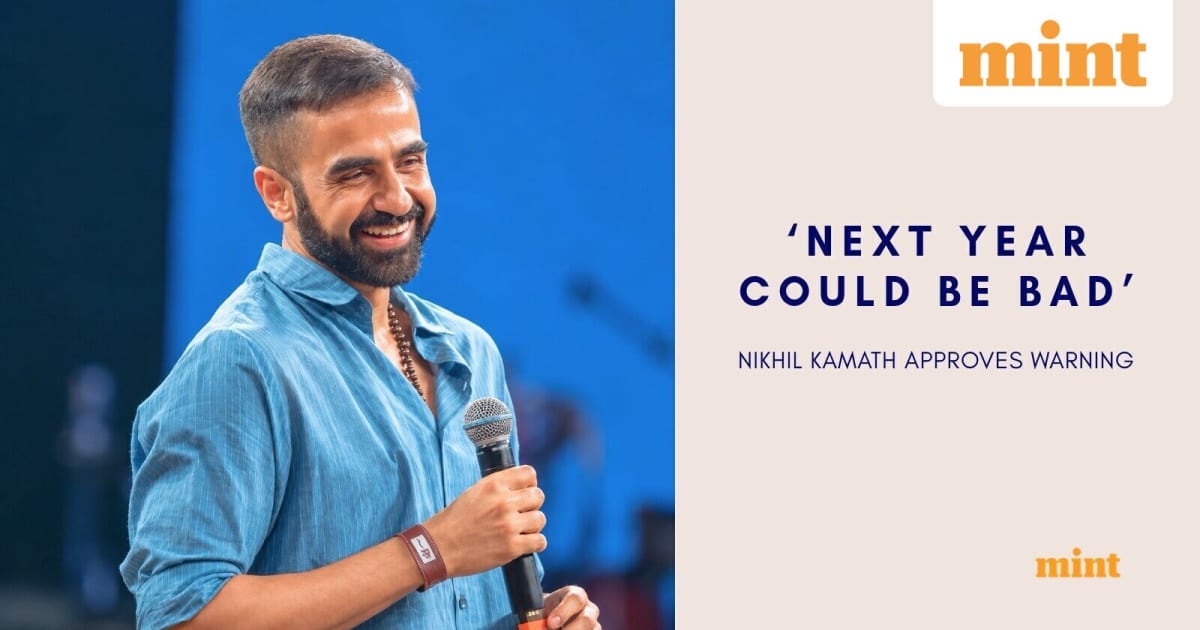
Zerodha co-founder Nikhil Kamath has sounded an alarm bell for the Indian startup landscape, forecasting a challenging funding environment in 2027. This deep dive dissects the implications for venture capital, private equity, and the broader Indian stock market, offering actionable insights for navigating this impending 'startup winter'.
Nikhil Kamath's 2027 Funding Fear: Startup Winter Looms for Indian Tech?
The Indian startup ecosystem, a vibrant engine of innovation and economic growth, is facing a potential inflection point. Nikhil Kamath, the astute co-founder of Zerodha and a significant voice in the Indian investment community, has issued a sobering prediction: 2027 could witness a severe contraction in startup funding. This isn't just another cyclical downturn; Kamath's pronouncement, rooted in his deep understanding of market dynamics, suggests a fundamental recalibration of investor sentiment and capital allocation strategies. For the legions of founders seeking growth capital and the institutional investors who fuel them, this warning demands immediate and thorough analysis.
Why This Matters Now: A Looming Capital Crunch
Kamath's foresight arrives at a critical juncture. India has emerged as a global startup hub, attracting unprecedented levels of venture capital (VC) and private equity (PE) investment in recent years. This influx of capital has powered rapid expansion, fostered disruptive business models, and created a perception of perpetual growth. However, the underlying macroeconomic realities, coupled with evolving investor expectations, are beginning to assert themselves. A potential funding slowdown in 2027, as predicted, would directly impact the growth trajectory of numerous new-age companies, potentially forcing them to temper expansion plans, re-evaluate valuations, and even consider consolidation or survival strategies. This sentiment from a figure as influential as Kamath acts as an early warning system, prompting a proactive assessment of risks and opportunities within the Indian investment landscape.
Deep Market Impact Analysis: Beyond the Startup Bubble
The ramifications of a significant funding crunch extend far beyond the startup realm, permeating the listed Indian equity markets. Historically, periods of robust startup funding have often coincided with broader market optimism and increased appetite for growth stocks. Conversely, a contraction in VC/PE activity can trigger a ripple effect, leading to a more risk-averse investment climate. We need to examine how this potential shift might influence sectors that have benefited from startup innovation and the broader flow of capital.
Connecting the Dots: How Startup Funding Affects the NSE/BSE
The correlation between startup funding cycles and public market sentiment is undeniable. During boom times, readily available capital for startups often translates into higher valuations for publicly listed companies in related sectors, as investors anticipate future growth and potential acquisition targets. Conversely, when funding dries up, the perceived risk premium for growth-oriented, less profitable companies increases. This can lead to valuation compression across the board, even for established players. Consider the period of 2022, when global interest rate hikes began to bite, leading to a significant correction in tech and growth stocks. The Nifty IT index, for instance, saw substantial drawdowns as the cost of capital rose and forward-looking revenue multiples contracted. A similar, albeit potentially more focused on early-stage capital, dynamic could unfold if Kamath's prediction materializes.
The Indian stock market, particularly the benchmark indices like the Nifty 50 and the BSE Sensex, often reflects the broader economic sentiment. A sustained period of reduced startup funding could signal a more cautious economic outlook, potentially dampening investor enthusiasm for riskier assets. This might lead to a flight towards more defensive sectors or established blue-chip companies with stable earnings. The impact on sectors like technology services, e-commerce, fintech, and even consumer discretionary goods, which have seen significant innovation fueled by startup capital, will be particularly pronounced. The overall market capitalization of these segments could face headwinds as the availability of growth capital dwindles.
Sector-Level Breakdown: Where the Tremors Will Be Felt
The impact will not be uniform. Several sectors are inherently more exposed to the vagaries of startup funding:
- Fintech: This sector has been a major beneficiary of VC funding, with numerous digital payment platforms, lending startups, and wealth management apps mushrooming. A funding slowdown could hinder their ability to scale customer acquisition, invest in technology, and compete aggressively.
- E-commerce & Deep Tech: Companies reliant on aggressive customer acquisition through discounts or significant R&D investment in deep technology will feel the pinch. Their path to profitability is often longer, making them more susceptible to capital constraints.
- Edtech: The pandemic-fueled boom in Edtech startups, many of which relied on substantial funding for expansion, could face a harsh reality check if capital becomes scarce, potentially leading to consolidation or a focus on more sustainable, profitable models.
- New-Age Technology Companies (Listed): Even publicly listed companies with significant operations in areas like SaaS, AI, and cloud computing, which often IPO at high valuations with a promise of future growth fueled by innovation, could see their stock prices pressured if the broader funding environment deteriorates.
The sentiment is undeniably bearish, suggesting a period of consolidation and a greater emphasis on capital efficiency and profitability over hyper-growth. The impact is likely to be medium-term, affecting the growth phase of many companies and potentially leading to a more discerning investment approach from institutional players.
Stock-by-Stock Breakdown: Navigating the Potential Fallout
While the warning is general, certain listed companies, particularly those with exposure to or that operate in ecosystems heavily reliant on venture capital, could face direct or indirect impacts. Here are a few potential candidates:
- Zomato Limited (NSE: ZOMATO): As a prominent player in the food delivery and quick-commerce space, Zomato has historically relied on significant capital infusions for expansion and market share acquisition. While it has achieved profitability, a broader slowdown in funding could temper investor expectations for aggressive future growth and potentially impact its valuation multiples, especially if competitors struggle to raise capital and Zomato is seen as a more stable, albeit still growth-oriented, player. Its current market cap is approximately ₹1.3 lakh crore, with a P/E ratio that reflects significant growth expectations.
- Paytm (NSE: PAYTM): This digital payments and financial services company has been a poster child for India's fintech revolution, funded by substantial VC rounds before its IPO. Despite efforts to achieve profitability, its stock performance has been volatile. A tougher funding environment for its ecosystem peers could indirectly affect investor confidence in the broader fintech space, potentially pressuring Paytm's valuation and its ability to fund new initiatives without diluting equity significantly at potentially unfavorable prices. Its market cap hovers around ₹19,000 crore, with a negative P/E due to ongoing profitability efforts.
- Nykaa (NSE: NYKAA): The online beauty and lifestyle retailer, another successful IPO from the new-age tech cohort, operates in a competitive market where customer acquisition costs can be high. If the broader ecosystem faces funding challenges, it could lead to increased competition for marketing spend and a more cautious consumer sentiment. While Nykaa has demonstrated profitability, a sustained bearish sentiment could impact its growth premium. Its market cap is around ₹40,000 crore, with a P/E that indicates strong future growth expectations.
- Delhivery Limited (NSE: DELHIVRY): A leading integrated logistics provider, Delhivery has been crucial in enabling e-commerce growth. While it operates in a more infrastructure-heavy and essential service sector, its growth trajectory is closely tied to the health of the e-commerce and broader startup ecosystem. A slowdown in startup funding could mean reduced volumes and a more cautious approach from its e-commerce clients, impacting its revenue growth and thus its valuation. Its market cap is approximately ₹15,000 crore, with a negative P/E as it continues to invest in expansion.
- Policybazaar (NSE: POLICYB): This online insurance aggregator, similar to Paytm, has leveraged technology and funding to disrupt the traditional insurance distribution model. Its path to sustained profitability is still unfolding, making it sensitive to shifts in investor appetite for growth capital. A less favorable funding climate could slow its expansion into new product lines or geographical areas. Its market cap is around ₹7,000 crore, with a negative P/E.
These companies, while listed and potentially more mature than early-stage startups, are still viewed through the lens of growth potential, which is directly influenced by the availability of capital in the broader ecosystem. Sector peers within fintech, e-commerce, and logistics will face similar pressures.
Expert Perspective: Bears vs. Bulls on the 2027 Prediction
Nikhil Kamath's warning, while influential, is a prediction, and like all predictions, it invites debate. The investment world is rarely monolithic in its views.
Bears would argue: Kamath's assessment is not only accurate but potentially conservative. They point to rising global interest rates, a more discerning investor base focused on profitability, and the sheer irrational exuberance that characterized some funding rounds in recent years. This 'startup winter' is a necessary correction, pruning weaker business models and forcing a return to fundamentals. They believe that valuations for many new-age companies are still unsustainable and further downward revisions are inevitable. The scarcity of capital will expose companies with flawed unit economics and weak competitive moats. This bearish outlook suggests a prolonged period of subdued investment and potential distress for many startups.
Bulls, however, would counter: While acknowledging potential headwinds, they believe the underlying strengths of the Indian economy and its burgeoning digital adoption remain intact. They argue that the prediction might be overly pessimistic, failing to account for the resilience and adaptability of Indian entrepreneurs. Moreover, they highlight that while early-stage funding might tighten, later-stage growth capital and strategic investments from established corporations could still flow. They also believe that India's demographic dividend and its position as a manufacturing and services hub will continue to attract long-term capital, even if the pace slows. The focus will simply shift to more sustainable, profitable growth. Bulls see this as an opportunity for strong companies to gain market share and for investors to acquire quality assets at more reasonable valuations.
The truth likely lies somewhere in between, with specific outcomes varying significantly by sector and individual company execution.
Actionable Investor Playbook: Navigating the Approaching Storm
For investors looking to position themselves ahead of a potential funding slowdown, a strategic approach is paramount. The key is to differentiate between genuine innovation and speculative ventures, and to focus on companies with strong fundamentals and a clear path to profitability.
- What to Watch: Focus on companies demonstrating robust unit economics, healthy cash flow generation, and sustainable competitive advantages. Look for strong management teams with a proven track record of capital allocation and operational efficiency.
- What to Buy (with caution): Consider established players in essential sectors that are less reliant on venture capital for their core operations but may benefit from the broader ecosystem's consolidation or distress. Companies with strong balance sheets and pricing power are attractive. Examples could include well-managed infrastructure companies, established consumer staples, or even select IT services firms that are less dependent on bleeding-edge innovation funding.
- What to Sell/Avoid: Companies with high cash burn, unproven business models, or those heavily reliant on continuous funding rounds should be approached with extreme caution. High-valuation, loss-making startups, even if publicly listed, might be particularly vulnerable.
- Entry Points: A phased entry strategy is advisable. Instead of deploying lump sums, consider dollar-cost averaging into fundamentally sound assets. Look for dips in the market driven by broader sentiment rather than company-specific issues.
- Time Horizons: This is not a short-term trade. The effects of a funding slowdown could play out over 18-36 months. Investors with a long-term horizon (5+ years) will be better positioned to ride out the volatility and benefit from eventual recovery and the emergence of stronger players.
The focus should shift from 'growth at all costs' to 'profitable growth'. This might mean lower revenue growth rates but with improved margins and a clearer path to sustainable cash generation.
Risk Matrix: What Could Go Wrong (or Right)?
While Kamath's prediction is a significant signal, several factors could influence its accuracy and impact:
- Risk 1: Overly Pessimistic Prognosis (Probability: 30%) - The prediction could be too bearish. Global economic conditions might improve faster than expected, or new pools of capital (e.g., sovereign wealth funds, strategic corporate investors) might emerge, mitigating the funding crunch. If this happens, the market might overreact, leading to a buying opportunity in fundamentally strong companies that were unfairly punished.
- Risk 2: Exaggerated Impact (Probability: 40%) - While a slowdown is likely, the 'winter' might be milder than feared. Many successful startups have already raised significant capital and are focusing on profitability. The Indian market's inherent growth story might prove resilient enough to absorb a moderate funding dip without a catastrophic impact on listed equities.
- Risk 3: Accurate Prediction, Severe Impact (Probability: 30%) - Kamath's warning could be spot on, leading to a significant and prolonged funding drought. This would force a painful but necessary restructuring of the startup ecosystem, leading to widespread consolidation, closures, and a significant deleveraging of valuations across the board, impacting listed tech and growth stocks more severely than anticipated. This scenario would also likely coincide with broader economic headwinds.
What to Watch Next: Upcoming Catalysts
Several key indicators and events will shape the narrative around startup funding and its market impact:
- Q4 2024 & Q1 2025 Funding Rounds: Monitor the volume, value, and valuation trends of major funding announcements in late 2024 and early 2025. A sustained decline would validate Kamath's prediction.
- VC/PE Fund Deployment Rates: Track how quickly major VC and PE funds are deploying their capital. A slowdown in deployment could signal increased caution.
- IPO Market Activity: The health of the IPO market for new-age tech companies will be a crucial barometer. A dry spell or a series of underperforming IPOs would indicate investor hesitancy.
- RBI Monetary Policy Stance: While not directly linked to startup funding, the Reserve Bank of India's stance on interest rates and liquidity will influence the overall cost of capital and risk appetite in the broader economy, indirectly affecting investment in startups and listed companies.
- Global Macroeconomic Indicators: Inflation rates, geopolitical stability, and the trajectory of major economies like the US and China will continue to influence global capital flows and investor sentiment towards emerging markets like India.
Nikhil Kamath's warning serves as a crucial reminder that the era of easy money might be drawing to a close. For investors, this presents an opportunity to refine their strategies, focus on quality, and prepare for a more discerning investment landscape in the years ahead.
Run a free AI Stock Screen
Our algorithmic screener scores any NSE/BSE stock on fundamentals, momentum, and risk — free to try, no card needed.
Try the AI Screener →Have questions about this story?
Ask Welth, our finance-focused AI research assistant, for a deeper breakdown — free trial included.
Chat with Welth AI →Disclaimer: This content is generated by WelthWest Research Desk based on publicly available reports and is for informational purposes only. It does not constitute financial advice, investment recommendations, or an offer to buy or sell securities. Always consult a qualified financial advisor before making investment decisions.