Key Takeaway
The SEBI approval for NSE's colossal ₹30,000 crore IPO marks a pivotal moment for Indian capital markets, unlocking significant liquidity and offering direct exposure to the nation's premier exchange. Investors should prepare for potential shifts in financial sector valuations and heightened trading activity, with a keen eye on existing exchange and depository stocks.
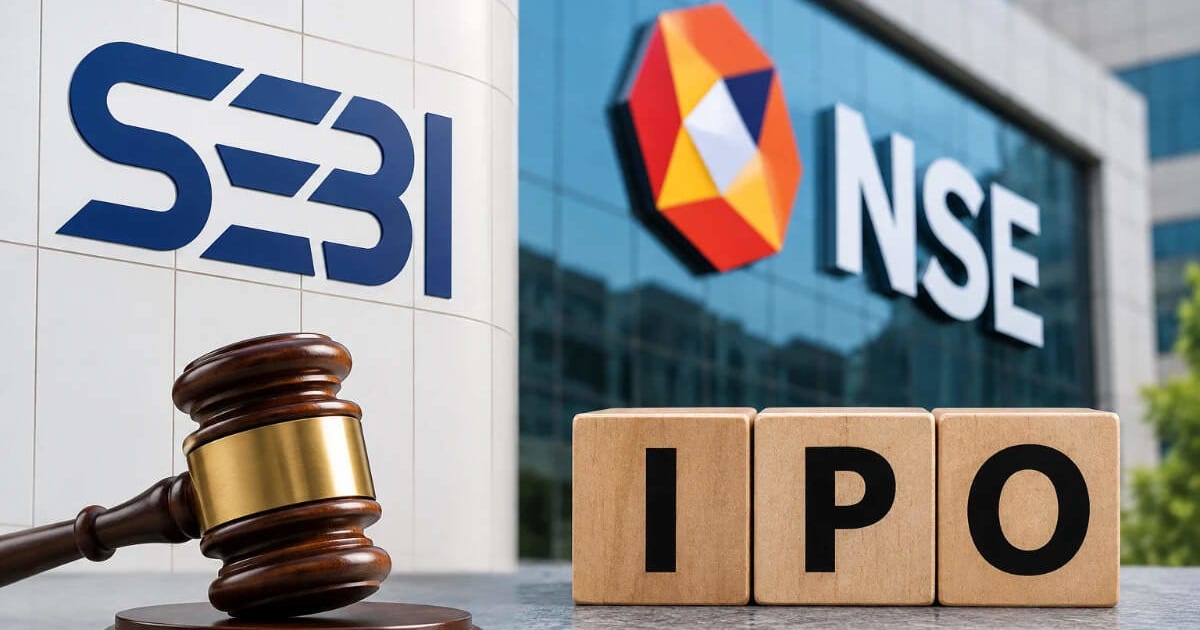
India's financial landscape is poised for a significant transformation following SEBI's approval of the National Stock Exchange's (NSE) much-anticipated ₹30,000 crore IPO. This mega public offering is not just a liquidity event; it's a barometer of confidence in India's growth trajectory and a potential re-rating catalyst for the broader financial services sector. Our deep dive uncovers the winners, losers, and an actionable strategy for investors.
NSE IPO Approved: India's ₹30,000 Cr Market Game Changer & Stock Impact
The regulatory gates have officially opened for one of India's most anticipated public offerings: the National Stock Exchange's (NSE) colossal Initial Public Offering (IPO), reportedly valued at a staggering ₹30,000 crore. This green light from the Securities and Exchange Board of India (SEBI) is far more than just a procedural announcement; it signals a tectonic shift in the Indian capital markets, promising to inject unprecedented liquidity, recalibrate sector valuations, and offer retail and institutional investors a direct stake in the very infrastructure powering India’s economic ascent.
For years, the NSE's public listing has been a subject of intense speculation and strategic maneuvering. Its approval now, amidst a buoyant market sentiment and robust domestic inflows, amplifies its significance. This isn't merely another large IPO; it represents an opportunity to invest in the engine room of India's capital formation, a unique proposition that could redefine benchmarks for future mega-listings and solidify India's position on the global financial map. The timing is particularly crucial, aligning with India's projected trajectory as a leading global economy, where capital markets are expected to play an increasingly central role in funding growth and facilitating wealth creation.
What Does the NSE IPO Approval Mean for Indian Stock Market Investors?
The impending NSE IPO is set to ripple through the Indian stock market, impacting everything from sector sentiment to individual stock valuations. At its core, the IPO offers a rare chance to own a piece of a market utility with a near-monopoly in several key segments, including derivatives trading, which accounts for a significant portion of daily turnover. The sheer size of the offering, at ₹30,000 crore, places it among India's largest ever, comparable to the LIC IPO in terms of scale and market attention. Such a substantial capital raise will test the market's absorption capacity, but given the underlying strength of domestic institutional and retail investor participation, demand is expected to be robust.
Historically, large-scale IPOs of market infrastructure institutions (MIIs) tend to generate significant interest due to their stable, fee-based revenue models and strong competitive moats. When BSE went public in 2017, its listing generated considerable excitement, though its market dynamics differ significantly from NSE's dominant position. The NSE's listing could potentially unlock substantial value for existing shareholders, including prominent financial institutions and global investors who have held stakes for years, providing them with a much-awaited exit opportunity. This liquidity event could, in turn, free up capital that might seek deployment elsewhere in the market, potentially boosting broader market sentiment.
Furthermore, the IPO's success will be a strong indicator of investor confidence in the long-term growth story of Indian capital markets. With rising financial literacy, increased dematerialization of accounts, and a growing young population entering the investment fold, the underlying growth drivers for exchanges remain compelling. The NSE, as the primary beneficiary of these trends, stands to gain significantly, making its public debut a landmark event for the Indian financial ecosystem.
Which Indian Stocks Will Be Impacted by the NSE IPO?
The NSE IPO will inevitably create winners and losers, shifting investor attention and capital flows within the financial services sector. Understanding these dynamics is crucial for navigating the post-IPO landscape.
- BSE Ltd. (BSE.NS): As NSE's direct competitor, BSE will be under intense scrutiny. While BSE has carved out niches in SME listings and certain equity segments, NSE dominates the derivatives and cash equity markets. The NSE IPO could divert investor capital and attention away from BSE, potentially impacting its valuation multiples. Currently, BSE trades at a TTM P/E ratio significantly influenced by its investment in CDSL. The market will closely watch if NSE's listing triggers a re-evaluation of BSE's intrinsic value or if investors perceive a stronger competitive threat. Conversely, the overall positive sentiment towards MIIs could offer some tailwind, but the direct competition for investor mindshare is undeniable.
- Central Depository Services (India) Ltd. (CDSL.NS): As a leading depository, CDSL benefits from increased demat account openings and trading activity across all exchanges. While BSE holds a significant stake in CDSL, the overall boost in market participation and liquidity driven by the NSE IPO could indirectly benefit CDSL through higher transaction volumes and new account additions. CDSL, trading at a premium valuation reflecting its essential infrastructure role and strong growth prospects (e.g., TTM P/E of ~50x), could see sustained interest as the broader market grows. Its revenue is directly linked to the health and expansion of the capital markets, making it a proxy beneficiary of the NSE's public listing.
- Multi Commodity Exchange of India Ltd. (MCX.NS): MCX operates in the commodities derivatives segment, a different, albeit related, part of the market infrastructure. While not a direct competitor to NSE's equity and equity derivatives dominance, a successful NSE IPO could highlight the attractiveness of exchange businesses as a whole. This might draw renewed investor interest towards MCX, which has been undergoing technological upgrades and regulatory shifts. However, MCX's performance is more sensitive to commodity price volatility and regulatory changes specific to its segment, making the impact more indirect and sentiment-driven rather than fundamental.
- ICICI Prudential Life Insurance Company Ltd. (ICICIPRULI.NS) / HDFC Life Insurance Company Ltd. (HDFCLIFE.NS): While seemingly tangential, large financial institutions often hold stakes in market infrastructure companies. For example, some insurance companies or mutual funds might be existing shareholders in NSE. The IPO provides an opportunity for these entities to realize gains, which could then be redeployed into other investment avenues or boost their reported earnings. This capital reallocation could subtly influence sector dynamics, though the direct impact on these large-cap insurers would be minimal.
Expert Perspectives: Bulls vs. Bears on the NSE IPO
The NSE IPO, like any monumental market event, elicits diverse opinions from market veterans. Bulls and bears each present compelling arguments, painting a nuanced picture of its potential trajectory.
The Bull Case: Unmissable Growth & Market Leadership
Proponents of the NSE IPO emphasize its unparalleled market dominance. The NSE commands over 90% market share in equity derivatives and a significant lead in cash equities, making it a near-monopoly in a rapidly expanding market. "Investing in NSE is investing in India's financial future," argues a veteran fund manager from a Mumbai-based institution. "With rising retail participation, increasing financialization of savings, and India's GDP growth trajectory, NSE's revenue streams from transaction fees, listing fees, and data services are set for exponential growth. Its robust technology infrastructure and regulatory moat make it an indispensable part of the capital market ecosystem. The sheer scale and profitability of NSE, with its high operating margins, justify a premium valuation." They might point to global parallels, where exchanges like the London Stock Exchange (LSEG) or CME Group trade at significant multiples due to their strategic importance and stable earnings.
The Bear Case: Valuation Concerns & Regulatory Scrutiny
Conversely, bears caution against potential overvaluation and the inherent risks of a highly regulated entity. "While NSE's dominance is undeniable, the IPO pricing will be crucial," states a research analyst known for his contrarian views. "At a ₹30,000 crore valuation, the market will need to absorb a significant chunk of capital. Any aggressive pricing could lead to post-listing volatility, especially for retail investors. Moreover, as a regulated entity, NSE is subject to SEBI's oversight, which could impact its fee structures or introduce new compliance costs. Competition, though currently limited, from BSE or potential new entrants in niche segments, cannot be entirely discounted in the long run. The past controversies surrounding NSE's co-location scam also serve as a reminder of regulatory risks and governance challenges." They might also highlight that while growth is strong, it's tied to overall market activity, which is cyclical.
Actionable Investor Playbook: Navigating the NSE IPO Landscape
For investors seeking to capitalize on this significant market event, a multi-pronged strategy is advisable:
- For IPO Applicants (Short to Medium-Term):
- Monitor Pricing & Valuation: The most critical factor will be the IPO price band. Compare it with global exchange peers and BSE's current valuation. An attractive entry point is key for post-listing gains.
- Assess Demand: Keep a close watch on QIB (Qualified Institutional Buyer) and HNI (High Net-worth Individual) subscription figures. Heavy oversubscription often indicates strong institutional confidence.
- Allocation Strategy: Given the expected demand, retail allocation might be challenging. Consider applying through various family accounts to maximize chances.
- For Existing Market Infrastructure Stocks (Medium to Long-Term):
- BSE.NS: Watch for immediate post-IPO reaction. A strong NSE listing might initially put pressure on BSE as capital shifts. However, if the overall MII sector gets a re-rating, BSE could eventually benefit. Consider it a 'watch' for now, with potential entry points if valuations become more attractive post-NSE listing.
- CDSL.NS: This remains a strong indirect play on market growth. Any increase in trading activity and demat accounts due to NSE's heightened profile will benefit CDSL. It's a 'hold' or 'buy on dips' for long-term investors, given its essential service and strong fundamentals.
- MCX.NS: A more speculative play. While not directly impacted, a positive sentiment towards exchanges could lift MCX. Consider it a 'watch' for now, with entry contingent on fundamental improvements specific to the commodities market.
- Broader Financial Sector (Long-Term): The increased depth and liquidity brought by NSE's listing will generally be positive for the entire financial services sector, including brokerages, asset management companies, and even some banks that are active in capital markets. This is a 'buy' theme on a broader scale, as India's financialization journey continues.
Risk Matrix: Understanding the Downside Potential
While the outlook is largely bullish, several risks warrant careful consideration:
- Oversubscription and Allocation Challenges (High Probability, Medium Impact): Given the high anticipation, the NSE IPO is likely to be heavily oversubscribed, making allocation for retail investors difficult. This could lead to disappointment and potentially push up listing day prices beyond reasonable valuations, making it a less attractive proposition for late entrants.
- Aggressive Pricing and Post-Listing Volatility (Medium Probability, Medium Impact): If the IPO is priced at the higher end of expectations, factoring in significant future growth, it might leave little room for immediate listing gains. This could lead to post-listing corrections, especially if broader market sentiment shifts or if initial enthusiasm wanes.
- Regulatory Interventions (Low Probability, High Impact): As a critical market infrastructure, NSE operates under strict SEBI regulations. Any unforeseen changes in transaction fees, trading rules, or compliance requirements could impact its profitability and business model. While rare, such interventions can significantly alter an exchange's revenue trajectory.
- Competition from Alternative Trading Platforms (Low Probability, Medium Impact): While NSE enjoys a strong moat, the long-term threat of new-age trading platforms, dark pools, or even international exchanges offering access to Indian assets, though currently nascent, remains a distant risk that could chip away at market share over decades.
What to Watch Next: Catalysts for the NSE IPO Story
The journey from SEBI approval to actual listing involves several critical milestones that investors should monitor closely:
- DRHP Filing and Red Herring Prospectus (RHP) Release: The detailed offer document will provide crucial insights into the exact offer size, price band, promoter selling shareholders, and the company's financial projections. This will be the first concrete data point for valuation analysis.
- Anchor Investor Participation: The quality and quantity of anchor investors (large institutional investors who subscribe before the main IPO) will be a strong indicator of institutional confidence and provide a floor for the IPO's demand.
- Subscription Figures: Daily subscription updates during the IPO window will give real-time insights into investor appetite across different categories (QIB, HNI, Retail).
- Listing Date and Performance: The actual listing day performance will be a major event, setting the tone for the stock's immediate trajectory and influencing broader market sentiment towards MIIs.
- Quarterly Earnings Post-Listing: The first few quarterly results after listing will be vital in validating the IPO's valuation and demonstrating the company's ability to execute its growth strategy.
The NSE IPO is more than just a stock offering; it's a testament to India's burgeoning capital markets and a unique opportunity for investors to participate in its growth story. By understanding the intricate dynamics, potential impacts, and inherent risks, investors can position themselves strategically to capitalize on this landmark event.
See BSE.NS's AI Score
Our algorithmic screener scores BSE.NS on fundamentals, momentum, and risk — free to try, no card needed.
Try the AI Screener →Have questions about this story?
Ask Welth, our finance-focused AI research assistant, for a deeper breakdown — free trial included.
Chat with Welth AI →Disclaimer: This content is generated by WelthWest Research Desk based on publicly available reports and is for informational purposes only. It does not constitute financial advice, investment recommendations, or an offer to buy or sell securities. Always consult a qualified financial advisor before making investment decisions.