Key Takeaway
Zcash's recent parabolic ascent, fueled by a privacy-centric narrative and significant short squeezes, signals a broader return of speculative appetite in digital assets. For Indian investors, this crypto exuberance could subtly influence FII allocations and amplify momentum in high-growth, tech-aligned sectors, demanding a re-evaluation of risk-on strategies.
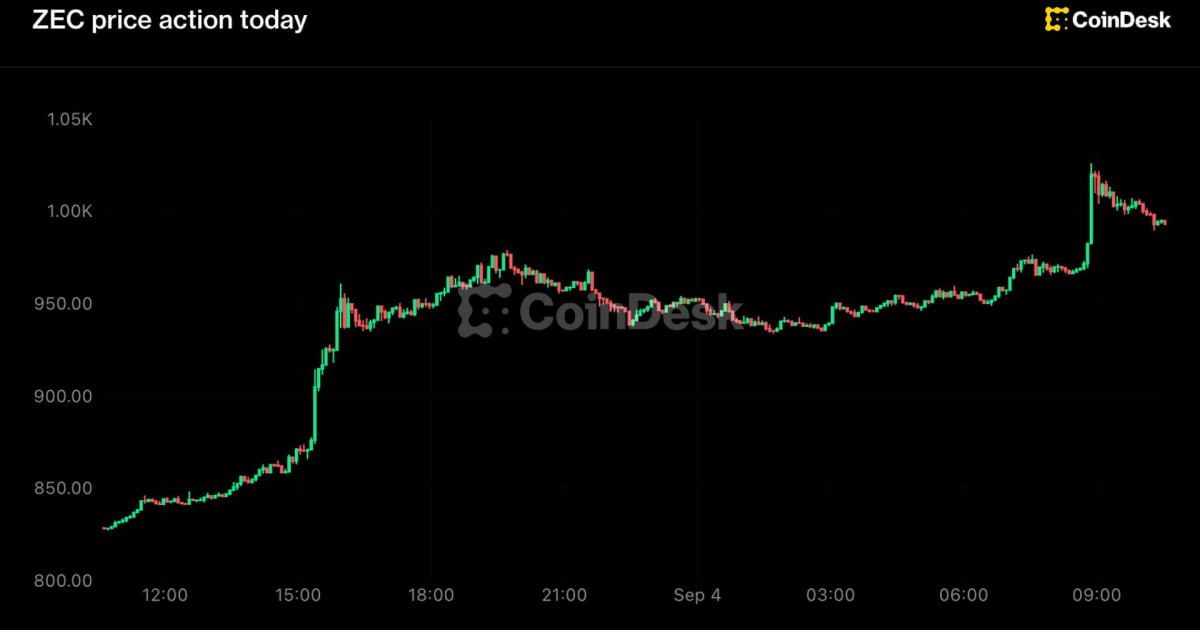
The privacy coin Zcash recently breached the $1,000 mark, igniting a significant short squeeze and wiping out millions for bearish traders. This dramatic price action in a niche cryptocurrency offers crucial insights into evolving investor sentiment across global markets. While seemingly distant, this crypto rally provides a potent signal for Indian equity investors, particularly concerning foreign institutional investment flows and the performance of growth-oriented stocks.
Zcash's Explosive Rally: A Signal for Global Risk Appetite
The digital asset landscape recently witnessed a seismic shift as Zcash (ZEC), a prominent privacy-focused cryptocurrency, shattered the psychological barrier of $1,000. This wasn't merely a price milestone; it was a cataclysmic event for short-sellers, reportedly leading to over $34 million in liquidations. Such a dramatic surge in a high-beta, privacy-centric asset like Zcash is far more than a niche crypto story; it's a powerful barometer of renewed speculative interest and a potential harbinger of capital rotation within the broader financial ecosystem, with indirect yet significant implications for the Indian equity markets.
The immediate cause of Zcash's vertical ascent can be attributed to a confluence of factors: enhanced network adoption, ongoing protocol developments aimed at improving scalability and privacy features, and crucially, a massive short squeeze. A short squeeze occurs when a heavily shorted asset suddenly rises in price, forcing short sellers to buy back shares (or tokens, in this case) to limit their losses, thereby pushing the price even higher. This dynamic creates a self-reinforcing upward spiral, often leading to parabolic price action. The underlying narrative of digital privacy, increasingly relevant in a world grappling with data surveillance, provides a fundamental tailwind, but the immediate catalyst was undoubtedly market mechanics.
Why does this matter now for Indian investors? While direct exposure to Zcash in Indian portfolios is minimal, the magnitude of this rally signals a significant uptick in investor appetite for riskier, high-growth assets globally. Foreign Institutional Investors (FIIs), who play a pivotal role in dictating the trajectory of Indian benchmarks like the Nifty 50 and Sensex, often exhibit a correlation between their risk-on sentiment in global markets and their allocation strategies in emerging markets. When FIIs perceive greater opportunities in speculative digital assets, it often coincides with a broader willingness to invest in high-growth equities, even those with elevated valuations, in markets like India.
How Does Crypto Volatility Influence Indian Stock Market Flows?
The Zcash surge, characteristic of the 'altcoin season' phenomenon, often precedes or coincides with periods of heightened FII inflows into Indian equities, particularly into sectors perceived as growth engines. Historical analysis reveals that during phases of significant crypto market rallies, such as late 2020 to early 2021, India witnessed robust FII buying, especially in IT, financial services, and consumer discretionary sectors. For instance, in Q1 2021, when Bitcoin and altcoins were setting new all-time highs, FIIs poured over $7 billion into Indian equities, contributing to the Nifty's 10% gain. While not a direct causation, the correlation suggests a shared underlying investor psychology: a global hunt for alpha and a greater tolerance for risk.
The capital rotation thesis is crucial here. If a substantial portion of global speculative capital is flowing into digital assets, it implies a reduced allocation to traditional safe havens and an increased willingness to embrace volatility for higher returns. This sentiment often spills over into emerging markets like India, where growth prospects remain attractive. For instance, when global liquidity is abundant and risk appetite is high, FIIs might increase their exposure to Indian IT giants, which offer exposure to global tech trends, or consumer discretionary companies, banking on India's burgeoning middle class. Conversely, during periods of crypto downturns, we often observe FIIs turning net sellers in Indian markets, rotating capital back into perceived safety or developed market assets.
Deep Market Impact Analysis: Connecting Zcash to Indian Equities
The Zcash rally, while an isolated event in the crypto sphere, is a potent indicator of shifting global liquidity and risk perceptions. This renewed speculative fervor in digital assets can have a nuanced, indirect impact on the Indian stock market, primarily through FII sentiment and sector-specific capital allocation. When global investors feel bullish enough to chase parabolic crypto gains, it often translates into a more aggressive stance towards emerging market equities, especially those offering growth narratives.
Consider the broader context: global inflation concerns, central bank monetary policy shifts, and geopolitical uncertainties. In such an environment, the willingness of investors to chase a high-volatility asset like Zcash suggests that the search for yield and capital appreciation is overriding traditional risk-off impulses. This sentiment can manifest in increased FII buying in India, particularly in sectors that have demonstrated robust earnings growth or are poised for future expansion. Historically, periods of heightened global risk appetite have seen FIIs disproportionately invest in Indian technology, financial, and discretionary consumption sectors, viewing them as proxies for India's long-term growth story.
For instance, during the crypto bull run of 2021, the Nifty IT index outperformed the broader Nifty 50 by a significant margin, rising over 60% compared to the Nifty's 24%. This outperformance was partly driven by FIIs seeking exposure to global tech themes through Indian IT majors. While attributing this solely to crypto rallies would be an oversimplification, the co-movement is indicative of a shared underlying 'risk-on' environment. Today, as Zcash surges, it signals a similar potential for renewed FII interest in Indian growth stocks, potentially driving up valuations in already stretched sectors.
Stock-by-Stock Breakdown: Indian Equities to Watch
The Zcash rally, as a proxy for global risk appetite, could indirectly influence specific Indian stocks. Here are 4-6 NSE/BSE listed companies and sectors that may see increased FII interest or sentiment-driven momentum:
- Infosys (NSE: INFY): As a bellwether for the Indian IT sector, Infosys is a prime beneficiary of FII inflows driven by global tech optimism. A 'risk-on' environment, signaled by crypto rallies, often leads FIIs to increase exposure to high-quality Indian IT services companies, which offer stable earnings and global exposure. Infosys, with its robust deal wins and strong digital transformation capabilities, could see increased buying interest. Its current P/E ratio of around 25x, while not cheap, offers relative value compared to global tech peers.
- HDFC Bank (NSE: HDFCBANK): India's largest private sector bank is a staple in FII portfolios. When global sentiment is bullish and capital flows into emerging markets, large-cap financials like HDFC Bank often see increased allocation due to their liquidity, market leadership, and proxy exposure to India's economic growth. A renewed FII appetite could help re-rate the stock, which has seen some consolidation recently. Its Q3 FY24 net profit grew by 33% YoY, demonstrating strong fundamentals.
- Reliance Industries (NSE: RELIANCE): A conglomerate with diverse interests spanning refining, petrochemicals, retail, and digital services (Jio Platforms), Reliance is a broad play on India's growth story. Its digital and retail ventures are particularly attractive to FIIs looking for exposure to high-growth sectors. Increased global risk appetite could see renewed FII interest in Reliance, especially its consumer-facing businesses, which are often valued at a premium. Its O2C segment also benefits from global energy price stability.
- Tata Consultancy Services (NSE: TCS): Another IT giant, TCS, like Infosys, stands to gain from FIIs rotating capital into Indian tech. Its strong execution, diversified client base, and focus on innovation make it a preferred choice for investors seeking stable growth in the technology space. A crypto-fueled risk-on mood could translate into sustained FII buying, supporting its premium valuation. TCS's Q3 FY22 revenue grew 16.3% YoY in constant currency, reflecting strong demand.
- Zomato (NSE: ZOMATO): As a prominent player in the Indian tech startup ecosystem, Zomato represents the high-growth, consumer-tech segment. While more volatile, stocks like Zomato attract speculative capital during periods of heightened risk appetite. If FIIs are chasing growth in crypto, they might also be more willing to invest in high-growth, albeit loss-making, Indian tech companies with significant market potential. This could lead to a re-evaluation of its long-term growth prospects.
- Nykaa (FSN E-Commerce Ventures, NSE: NYKAA): Similar to Zomato, Nykaa is a leading e-commerce beauty and fashion platform, representing India's burgeoning digital consumer market. These new-age tech stocks, often characterized by high growth and significant market share, become more attractive to global investors when risk sentiment is elevated. A rally in speculative assets like Zcash could signal a renewed willingness among FIIs to invest in such high-potential, yet often highly valued, Indian consumer tech companies.
Expert Perspective: Bulls vs. Bears on the Crypto-Equity Link
The connection between a niche crypto rally and traditional equity markets invites diverse interpretations. Bulls would argue that Zcash's surge is a clear signal of robust global liquidity and an insatiable demand for growth assets, irrespective of their perceived risk. "The Zcash event isn't about Zcash itself for equity markets, but about the sheer volume of capital chasing returns in a low-yield world," states a prominent Mumbai-based fund manager. "When people are willing to pay $1,000 for a privacy coin, they're definitely willing to pay a premium for high-quality Indian growth stocks with solid earnings trajectories." They would point to the historical correlation where significant crypto bull runs have often coincided with periods of strong FII inflows into Indian equities, particularly in sectors like IT, financials, and consumer discretionary, which are seen as proxies for India's long-term growth story. This perspective emphasizes the 'trickle-down' effect of global risk appetite, where speculative gains in one asset class embolden investors to seek opportunities across others.
Conversely, bears would caution against drawing direct parallels. They would argue that the crypto market operates largely in its own speculative bubble, driven by retail euphoria and technicals rather than fundamental economic indicators. "Attributing FII flows into Indian blue-chips to a Zcash rally is akin to connecting the dots where none exist," argues a veteran market strategist. "FIIs invest in India based on macro fundamentals, corporate earnings, regulatory stability, and relative valuations, not on the price movements of obscure altcoins." Bears would highlight the inherent volatility and lack of regulation in crypto, suggesting that its rallies are often short-lived and do not reflect sustainable shifts in global capital allocation. They might also point to instances where crypto markets crashed, yet Indian equities remained resilient, or vice-versa, demonstrating a decoupling. The contrarian view suggests that while some individual investors might rotate profits from crypto into equities, the institutional flows are dictated by a much broader and more sophisticated set of criteria.
Actionable Investor Playbook: Navigating the Crypto-Equity Signal
For the discerning Indian investor, the Zcash rally offers a crucial signal, not a direct trade instruction. It suggests an environment where risk-taking is being rewarded, and growth-oriented assets are in favor. Here’s an actionable playbook:
- Monitor FII Flows Closely: Watch daily FII equity flow data from NSDL. Sustained net buying, especially in large-cap IT and financial stocks, would corroborate the 'risk-on' thesis. If FIIs continue to be net buyers, it strengthens the argument for a bullish outlook on Indian growth stocks.
- Re-evaluate Growth vs. Value: In a 'risk-on' environment, growth stocks tend to outperform value. Consider increasing allocation to quality growth companies in sectors like Information Technology (e.g., Infosys, TCS), discretionary consumption (e.g., Titan, Bajaj Finance), and select high-growth financials (e.g., HDFC Bank, ICICI Bank). Look for companies with strong revenue visibility and healthy order books.
- Consider Tactical Exposure to High-Beta Stocks: For investors with a higher risk tolerance, the current sentiment might present an opportunity in high-beta stocks, particularly in the mid-cap and small-cap segments, which tend to amplify broader market movements. However, exercise extreme caution and maintain strict stop-losses.
- Entry Points and Time Horizons: Avoid chasing parabolic moves. Look for pullbacks in fundamentally strong growth stocks as potential entry points. For instance, a 5-7% correction from recent highs in a quality IT stock could offer a better entry. This strategy is geared towards a medium-term (6-12 months) horizon, betting on sustained FII interest and global liquidity.
- Avoid Direct Crypto Exposure Unless Well-Versed: While Zcash's rally is a signal, it doesn't imply that direct investment in cryptocurrencies is suitable for all. The volatility and regulatory uncertainty remain significant. For most Indian investors, leveraging the signal through traditional equity investments is a more prudent approach.
- Watch for Sectoral Rotations: Keep an eye on which sectors FIIs are actively buying or selling. If they are consistently accumulating IT and financial stocks, it reinforces the 'risk-on' narrative. Conversely, a shift towards defensive sectors might signal a cooling of speculative fervor.
Risk Matrix: Navigating the Volatile Landscape
While the Zcash surge signals heightened risk appetite, investors must remain cognizant of the inherent risks:
- Cryptocurrency Volatility (High Probability, High Impact): The very nature of crypto markets means price surges can be fleeting. A sudden correction in Zcash or the broader crypto market could quickly reverse the 'risk-on' sentiment, potentially leading to FII outflows from emerging markets like India. The crypto market is notoriously prone to 'flash crashes' and rapid reversals, often triggered by macro news or large liquidations.
- Regulatory Uncertainty (Medium Probability, High Impact): Global regulatory bodies are still grappling with how to effectively oversee digital assets. Any stringent new regulations or outright bans in major economies could severely impact crypto prices, dampening speculative interest and potentially leading to a broader risk-off sentiment that affects FII flows into India. India itself is still formulating its comprehensive crypto policy.
- Global Liquidity Contraction (Medium Probability, High Impact): Should major central banks, particularly the US Federal Reserve, adopt a more hawkish stance on monetary policy (e.g., faster rate hikes, quantitative tightening), it could lead to a contraction in global liquidity. This would reduce the capital available for speculative assets and emerging markets, potentially triggering FII selling in India.
- Geopolitical Tensions (Low Probability, High Impact): Escalation of geopolitical conflicts globally could trigger a flight to safety, with investors pulling capital from riskier assets, including cryptocurrencies and emerging market equities. Such events are unpredictable but can have a profound and immediate impact on market sentiment and capital flows.
What to Watch Next: Catalysts and Data Releases
To stay ahead of this evolving narrative, investors should monitor several key catalysts and data releases:
- FII/DII Flow Data: Daily and weekly FII/DII equity flow data from NSDL will be critical. Sustained FII buying or a significant reversal will confirm or negate the 'risk-on' thesis.
- Global Central Bank Announcements: Upcoming monetary policy meetings from the US Federal Reserve, European Central Bank, and RBI. Any hawkish surprises could dampen risk appetite. Key dates include FOMC meetings (e.g., March 2024, May 2024), which provide guidance on interest rates and quantitative easing.
- Quarterly Earnings of Indian IT Majors: Results from Infosys, TCS, Wipro, and HCL Tech will indicate the health of the global tech spending environment, directly influencing FII sentiment towards the sector. The next earnings cycle for Q4 FY24 will be crucial.
- Crypto Market Movements: Keep an eye on Bitcoin and Ethereum price action. A sustained rally or significant correction in these bellwether cryptocurrencies will provide further clues about overall speculative sentiment. Watch for Bitcoin halving events (next expected in April 2024), which historically have preceded bull runs.
- US Inflation Data: CPI and PPI releases from the US will influence global interest rate expectations, which in turn affect liquidity and risk appetite. Higher-than-expected inflation could lead to a more hawkish Fed, impacting FII flows.
- Regulatory Developments in Crypto: Any major announcements or legislative actions regarding cryptocurrency regulation from key jurisdictions (e.g., US, EU, India) could have a significant impact on market sentiment.
Run a free AI Stock Screen
Our algorithmic screener scores any NSE/BSE stock on fundamentals, momentum, and risk — free to try, no card needed.
Try the AI Screener →Have questions about this story?
Ask Welth, our finance-focused AI research assistant, for a deeper breakdown — free trial included.
Chat with Welth AI →Disclaimer: This content is generated by WelthWest Research Desk based on publicly available reports and is for informational purposes only. It does not constitute financial advice, investment recommendations, or an offer to buy or sell securities. Always consult a qualified financial advisor before making investment decisions.
