Key Takeaway
The valuation war between Partners Group and Grizzly Research signals a 'reckoning of realism' for private equity-backed assets. For Indian investors, this isn't just a Swiss dispute—it’s a warning shot for domestic IPO pipelines and infrastructure valuations where Partners Group holds massive stakes.
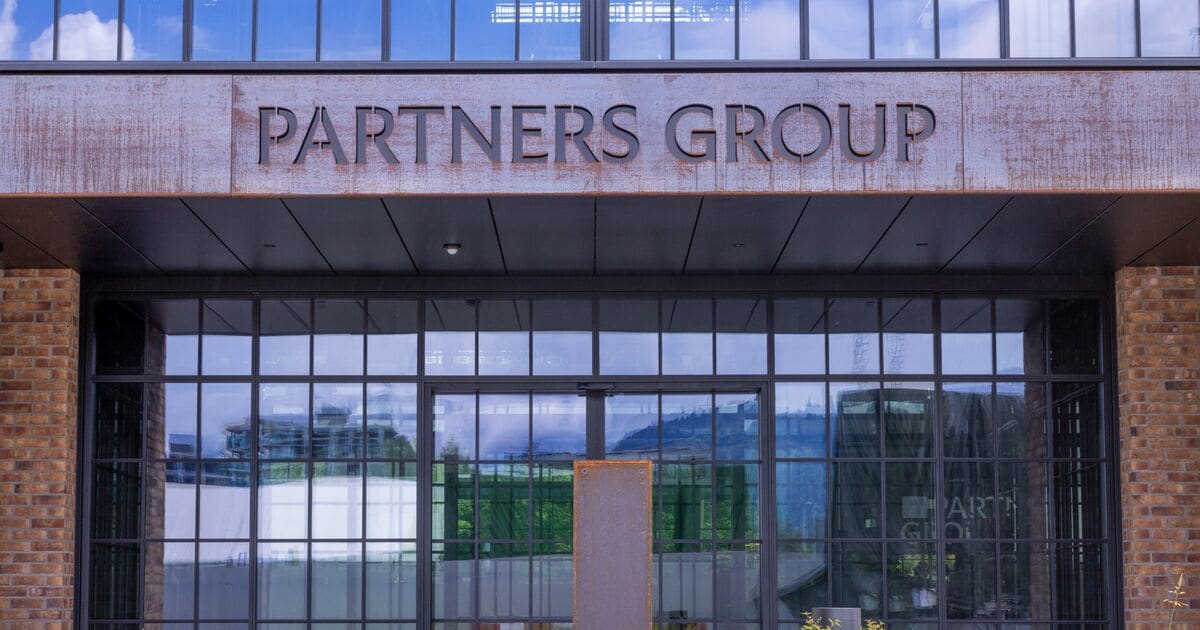
Partners Group co-founder Alfred Gantner has launched a fierce rebuttal against short-seller Grizzly Research, but the damage to the 'Private Equity premium' may be lasting. As a major player in India’s infrastructure and retail sectors, any parent-level volatility at Partners Group threatens liquidity for local subsidiaries and exit valuations for upcoming IPOs. This report analyzes the systemic risks to the Nifty 50 and specific mid-cap stocks tied to the PE ecosystem.
The Great Valuation Schism: Partners Group vs. Grizzly Research
The global private equity (PE) landscape, long considered a bastion of steady, non-volatile returns, is currently facing a trial by fire. The recent offensive by Grizzly Research against Partners Group Holding AG—a Swiss titan with over $150 billion in assets under management (AUM)—has moved beyond a mere corporate spat. It has become a referendum on the transparency of private market valuations. While Partners Group Co-Founder Alfred Gantner has dismissed the short-seller's claims as 'factually incorrect' and 'misleading,' the market’s reaction highlights a growing anxiety: the 'liquidity mirage' in private equity.
Why does this matter now? We are currently in a high-interest-rate environment where the cost of leverage—the lifeblood of PE—has skyrocketed. Grizzly Research’s allegations focus on inflated Net Asset Values (NAV) and hidden leverage. If these claims gain traction, the 'denominator effect' could force global LPs (Limited Partners) to rebalance their portfolios, leading to a sudden withdrawal of capital from emerging markets like India, where Partners Group is a dominant institutional force.
How Will the PE Valuation Crisis Affect the Indian Stock Market?
India remains one of the most attractive destinations for Partners Group, which has historically deployed billions across Indian infrastructure, healthcare, and consumer retail. The 'rebuttal' by Gantner may soothe European shareholders temporarily, but for the Indian market, the concern is contagion risk. When a global parent faces scrutiny, its 'dry powder'—the capital available for new investments—often gets frozen. More importantly, their ability to exit current investments via the NSE and BSE through Initial Public Offerings (IPOs) becomes compromised as investors demand higher 'transparency discounts.'
Historically, when global PE sentiment soured in 2022 following the initial rate hikes by the Fed, the Nifty 50 saw a 10-12% correction in PE-heavy sectors within a single quarter. The current situation with Partners Group could trigger a similar re-rating of Indian firms that rely on global PE participation for valuation benchmarks.
The 'Exit Strategy' Bottleneck
Partners Group is currently eyeing a massive exit from Vishal Mega Mart, one of India’s largest value retailers. With a planned IPO targeting a valuation of $5 billion, any reputational damage to the parent firm could lead to a 'valuation haircut' by Indian institutional investors (DIIs). If the Grizzly Research narrative—that PE firms are 'marking to model' rather than 'marking to market'—takes hold, the retail sector on the BSE could see a cooling of multiples across the board.
Stock-by-Stock Breakdown: Who is in the Crosshairs?
While Partners Group Holding AG is listed in Switzerland, its shadow looms large over several Indian tickers and sectors. Here is how specific stocks could be impacted:
1. KEC International (NSE: KEC)
Connection: Infrastructure Peer Sentiment. Partners Group is heavily invested in Indian power transmission and renewable energy (e.g., Atria Power). KEC International, a leader in the EPC (Engineering, Procurement, and Construction) space, often trades in correlation with the health of private infrastructure funding. If Partners Group slows down its capital expenditure in India, it reduces the overall liquidity in the infra-ecosystem. KEC, currently trading at a P/E of ~45x, could see a compression if the 'infra-growth' story loses its PE backing.
2. Trent Ltd (NSE: TRENT)
Connection: Retail Valuation Benchmarks. As Partners Group prepares the Vishal Mega Mart IPO, Trent (Westside/Zudio) serves as the primary valuation anchor. If the Vishal Mega Mart IPO is delayed or priced lower due to parent-level instability at Partners Group, it could lead to a profit-booking wave in Trent. Investors currently paying a premium for Trent (P/E over 150x) are doing so based on the sector's high exit multiples; a PE crisis threatens that very foundation.
3. Apollo Hospitals Enterprise (NSE: APOLLOHOSP)
Connection: Healthcare PE Multiples. Partners Group has a history of aggressive healthcare investments in Asia. In India, healthcare valuations are often driven by PE-led bidding wars for hospital chains. Any retreat by a major player like Partners Group reduces the 'scarcity premium' for stocks like Apollo Hospitals and Max Healthcare. Watch for a shift in FII (Foreign Institutional Investor) flows in this sector.
4. HDFC Bank (NSE: HDFCBANK)
Connection: The Banking Leverage Link. Large PE firms like Partners Group often utilize credit lines from global banks, which in turn have syndication deals with major Indian lenders. HDFC Bank, as the bellwether of Indian credit, is sensitive to the 'quality of collateral' in the corporate sector. If PE-backed companies face valuation markdowns, the risk profile of their underlying debt increases, potentially impacting the banking sector's NPAs (Non-Performing Assets) in the long run.
5. Sterling and Wilson Renewable Energy (NSE: SWSOLAR)
Connection: Renewable Energy Liquidity. With Partners Group’s significant exposure to Indian renewables, any 'distress' signal could impact the secondary market for renewable energy assets. SWSOLAR, which is sensitive to the flow of global green capital, could face headwinds if PE firms begin prioritizing liquidity over long-gestation greenfield projects.
Expert Perspective: The Bull vs. Bear Case
"The Grizzly report is a classic case of short-sellers attacking the 'illiquidity' of private equity. While the NAVs might be subjective, the cash flows from these Indian assets are real. Investors should focus on Earning Per Share (EPS) growth rather than parent-level noise." — Bullish View
"We are seeing the beginning of a 'Private Equity Winter.' When the largest firms in the world start fighting short-sellers over valuation methodology, it means the easy money is gone. Indian mid-caps with high PE ownership are the most vulnerable to a 'forced liquidation' scenario." — Bearish View
Actionable Investor Playbook
- For Tactical Traders: Monitor the Vishal Mega Mart IPO filing. If the valuation is significantly lower than the whispered $5 billion, it is a signal to trim positions in retail peers like V-Mart Retail (NSE: VMART) and Trent.
- For Long-term Investors: Look for 'PE-independent' companies. Focus on firms with strong internal accruals that do not rely on frequent equity infusions from global PE funds. Reliance Industries (NSE: RELIANCE), despite its size, remains a safer bet as it controls its own capital cycle.
- Entry Points: If the 'PE scare' causes a 10-15% dip in high-quality infra stocks like Larsen & Toubro (NSE: LT), use it as a buying opportunity. The underlying Indian macro story remains stronger than the balance sheet of any single Swiss PE firm.
- Watch the Yields: Keep an eye on 10-year G-Sec yields. If yields rise, the 'valuation gap' that Grizzly Research highlighted becomes even more dangerous for PE-backed firms.
Risk Matrix
- Contagion Risk (High Probability): Reputational damage to Partners Group leads to a slowdown in FII inflows into Indian private markets, delaying the 'exit' cycle for several Indian startups and infra plays.
- Regulatory Scrutiny (Medium Probability): SEBI may increase disclosure requirements for PE-backed IPOs, specifically regarding 'pre-IPO' valuation jumps, leading to longer approval timelines.
- Currency Volatility (Low Probability): A massive capital flight from Swiss-managed funds could put temporary pressure on the INR if they liquidate Indian holdings to meet global margin calls.
What to Watch Next
1. The 'Auditor's Response'
Watch for any statements from Partners Group’s auditors (PwC). If they reaffirm the NAV calculations without caveats, the Grizzly attack will lose its sting. If there are 'qualifications,' expect a massive sell-off in PE-linked sectors.
2. Vishal Mega Mart DRHP Filing
The Draft Red Herring Prospectus (DRHP) for Vishal Mega Mart will be the ultimate 'truth test.' It will reveal the exact valuation at which Partners Group entered and the multiple they are seeking now. This will set the tone for the Indian retail sector for the rest of 2024.
3. RBI’s Stance on Corporate Credit
The Reserve Bank of India (RBI) has been cautious about 'unsecured' and 'complex' lending. Any shift in RBI's commentary regarding bank exposure to PE-backed entities will be a critical data point for the banking sector (NSE: BANKNIFTY).
See None direct (Indirect sentiment impact on PE-heavy sectors)'s AI Score
Our algorithmic screener scores None direct (Indirect sentiment impact on PE-heavy sectors) on fundamentals, momentum, and risk — free to try, no card needed.
Try the AI Screener →Have questions about this story?
Ask Welth, our finance-focused AI research assistant, for a deeper breakdown — free trial included.
Chat with Welth AI →Disclaimer: This content is generated by WelthWest Research Desk based on publicly available reports and is for informational purposes only. It does not constitute financial advice, investment recommendations, or an offer to buy or sell securities. Always consult a qualified financial advisor before making investment decisions.
