Key Takeaway
SK Hynix's exploration of a US NAND factory marks a pivotal moment, accelerating semiconductor reshoring and intensifying competition. Indian technology and electronics manufacturing sectors face both challenges and unprecedented opportunities, necessitating strategic domestic investment.
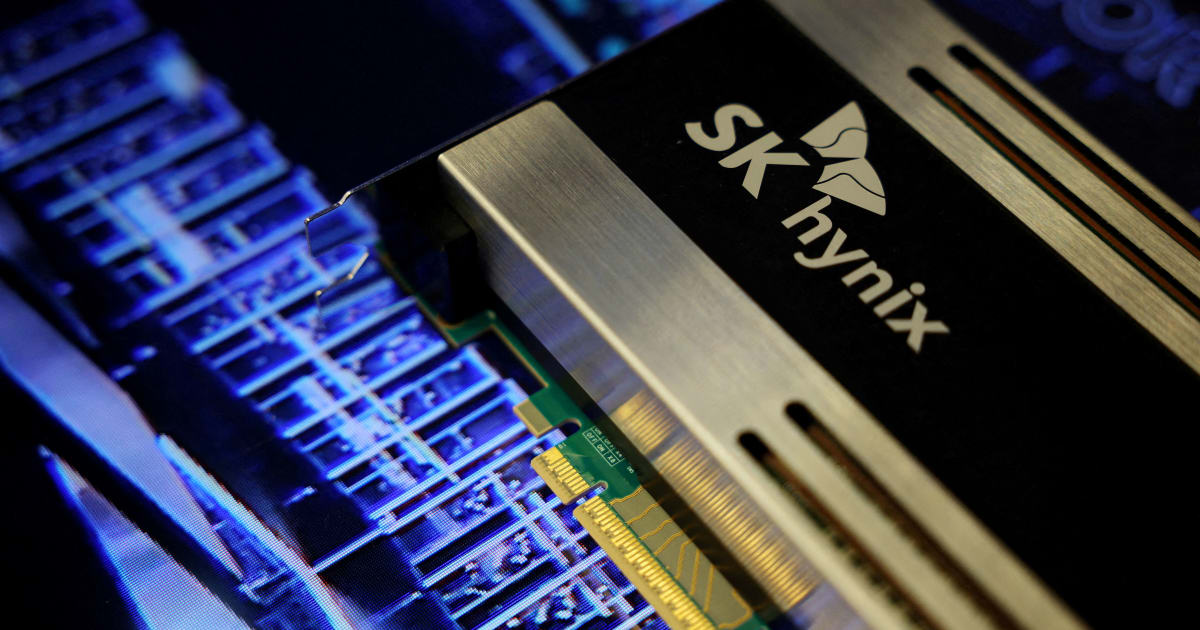
The semiconductor landscape is on the cusp of a profound transformation as SK Hynix considers a US NAND memory chip factory. This move, driven by US reshoring pressures and insatiable AI demand, promises to reshape global supply chains. Our deep dive reveals the intricate market impacts, specific Indian stock implications, and actionable strategies for investors navigating this evolving tech frontier.
SK Hynix US NAND Factory: A Tectonic Shift Reshaping Global Semiconductor Supply Chains & India's Tech Horizon
The global semiconductor industry, a bedrock of modern technology, is bracing for a significant realignment. Recent revelations indicate that SK Hynix, a titan in memory chip manufacturing, through its Solidigm unit, is actively exploring the establishment of a NAND memory chip fabrication plant within the United States. This isn't merely a corporate expansion; it represents a confluence of powerful geopolitical and technological forces – specifically, mounting US pressure for supply chain resilience and the explosive, insatiable demand for memory driven by Artificial Intelligence (AI) data centers. For investors, particularly those eyeing the Indian market, this development is a critical signal, portending shifts in competitive landscapes, pricing dynamics, and the strategic importance of domestic semiconductor capabilities.
The timing of this potential investment is crucial. The US government, through initiatives like the CHIPS Act, has aggressively incentivized domestic semiconductor production, aiming to mitigate vulnerabilities exposed during recent global crises. Concurrently, the proliferation of AI, from large language models to autonomous systems, has created an unprecedented demand for high-bandwidth, high-capacity memory solutions. A US-based NAND factory by a major player like SK Hynix would fundamentally alter the competitive dynamics, potentially reducing reliance on East Asian supply chains and creating new economic hubs. For India, a nation with ambitious 'Make in India' goals and a burgeoning digital economy, this global pivot underscores the urgent need to accelerate its own semiconductor manufacturing ecosystem development.
What Does a US NAND Factory Mean for the Global Semiconductor Market?
The implications of SK Hynix's potential US NAND factory reverberate across the entire semiconductor value chain. Currently, a significant portion of advanced memory chip production is concentrated in a few East Asian nations. A substantial new facility in the US would introduce a new major production node, diversifying geographical risk but also intensifying competition. This shift could lead to several outcomes:
- Increased Global Capacity: While initially aimed at US domestic supply, any new large-scale fab contributes to global NAND capacity. This could, in the long term, put downward pressure on average selling prices (ASPs) for NAND flash, especially if demand growth moderates or if other players also expand significantly.
- Supply Chain De-risking: For US-based technology companies, a domestic NAND source offers greater supply security, potentially reducing lead times and mitigating geopolitical supply disruptions. This could lead to a preference for domestically sourced components, even if marginally more expensive initially.
- Technological Acceleration: New fabs often incorporate cutting-edge manufacturing processes. This could spur further innovation in NAND technology, pushing boundaries in density, speed, and power efficiency, critical for AI workloads.
- Regionalization of Supply Chains: This move signals a broader trend towards regionalized semiconductor supply chains, where geopolitical considerations increasingly influence manufacturing locations alongside pure economic efficiency.
Historically, significant capacity additions have often led to periods of oversupply and price volatility in the memory market. For instance, the dynamic memory (DRAM) market experienced similar cycles in the early 2010s, where aggressive expansion by manufacturers temporarily outpaced demand, leading to price corrections. While AI demand is robust, the scale of investment required for a new fab means a long-term view on supply-demand balance is crucial.
Deep Market Impact Analysis: Connecting to Indian Equities
The reverberations of a strategic shift in global semiconductor manufacturing extend far beyond the immediate players. For the Indian stock market, which is increasingly intertwined with global technology trends and supply chains, the SK Hynix development presents a complex mosaic of opportunities and challenges. While India currently lacks large-scale advanced semiconductor manufacturing, its burgeoning electronics manufacturing sector and significant IT services industry are deeply reliant on global chip supply.
The direct impact on Indian memory chip manufacturers is minimal, given the nascent stage of advanced fabrication in India. However, the indirect effects are substantial. Firstly, the global drive for semiconductor self-sufficiency, exemplified by the US CHIPS Act and now SK Hynix's consideration, amplifies India's own ambitions. The Indian government's Production Linked Incentive (PLI) schemes for semiconductors and electronics manufacturing gain renewed urgency and strategic importance. This could accelerate domestic investment and policy support, potentially attracting global players to India for assembly, testing, marking, and packaging (ATMP) units, or even future fabrication facilities.
Secondly, the AI boom, which is a primary driver for increased NAND demand, directly benefits Indian IT services companies that are at the forefront of AI implementation and development. As global data center infrastructure expands to support AI, demand for related software, cloud services, and specialized hardware components will surge. Indian IT majors are well-positioned to capitalize on this, even if they don't produce the chips themselves. Conversely, if memory chip prices become more volatile due to increased capacity or geopolitical shifts, it could impact the cost structures of Indian electronics manufacturers reliant on imported components.
Consider the broader technology sector's correlation with global semiconductor cycles. During the semiconductor shortage of 2021-2022, when Nifty IT index constituents faced supply chain disruptions, their ability to deliver hardware-dependent solutions was hampered. While the Nifty IT index largely tracks software and services, a robust and stable hardware supply chain is foundational. A more diversified global supply chain could offer greater stability, benefiting the end-users of these chips, including Indian companies in IT hardware, automotive electronics, and consumer electronics manufacturing.
How Will US Semiconductor Reshoring Influence India's Tech Ecosystem?
US semiconductor reshoring, spearheaded by initiatives like the CHIPS Act, is designed to bring critical chip manufacturing back to American soil. SK Hynix's potential investment is a direct response to this policy push. For India, this trend presents a dual perspective:
- Accelerated Domestic Focus: The global emphasis on supply chain resilience compels India to fast-track its own semiconductor manufacturing ambitions. The government's push to establish wafer fabs and ATMP units becomes more critical. This could translate into increased capital expenditure, policy incentives, and skill development programs aimed at making India a more attractive destination for semiconductor investment.
- Competitive Landscape Shifts: As more advanced manufacturing moves to the US, it could intensify competition for talent and resources globally. India needs to ensure its incentive structures and ecosystem development can compete effectively to attract a share of this new investment wave. Conversely, if US production reduces reliance on other Asian hubs, those hubs might seek new markets or partners, potentially opening avenues for collaboration with India.
The Indian electronics manufacturing services (EMS) sector, which has seen significant growth, stands to benefit from a more stable and diversified global chip supply. Companies like Dixon Technologies, for instance, which assemble a wide range of electronic products, require a consistent flow of components. A geographically diversified chip supply could reduce their exposure to single-point failures in the global supply chain, potentially leading to more stable production schedules and cost predictability.
Stock-by-Stock Breakdown: Indian Equities in Focus
While no Indian company directly competes with SK Hynix in advanced NAND manufacturing, several NSE/BSE listed entities stand to be significantly impacted, either directly through policy tailwinds or indirectly through shifts in the global technology ecosystem.
- Vedanta Limited (VEDL.NS): This conglomerate is perhaps the most direct, albeit speculative, beneficiary. Vedanta has publicly committed to establishing a semiconductor manufacturing facility in India, potentially in collaboration with a global partner. The global push for diversified supply chains, exemplified by SK Hynix's US move, strengthens the strategic rationale for India's own semiconductor aspirations. If the government accelerates its support and incentives for domestic chip manufacturing, Vedanta's project could gain significant momentum. However, execution risk remains high. Vedanta's current market capitalization is approximately INR 1.2 trillion, with a trailing P/E ratio around 15x. A concrete breakthrough in its semiconductor venture could unlock substantial long-term value, but it's a multi-year play.
- Dixon Technologies (India) Ltd (DIXON.NS): As India's largest electronics manufacturing services (EMS) provider, Dixon is a crucial node in the hardware supply chain. With a market cap of approximately INR 450 billion and a P/E ratio exceeding 100x (reflecting high growth expectations), Dixon relies heavily on a stable supply of components, including memory chips, for its assembly operations. A more diversified and potentially stable global NAND supply chain could lead to better component availability and cost management for Dixon, boosting its operational efficiency and enabling it to scale production faster to meet growing domestic electronics demand.
- Tata Elxsi Ltd (TATAELXSI.NS): While primarily an engineering R&D services company, Tata Elxsi is deeply embedded in the design and development of embedded systems for automotive, broadcast, and healthcare sectors. The explosion in AI-driven hardware, which necessitates advanced memory, directly translates into increased demand for their design services. As AI data centers expand globally, the need for optimized hardware and software integration will surge, a sweet spot for Tata Elxsi. Their current market cap is around INR 500 billion, with a P/E ratio around 60x. Sustained growth in AI hardware development will provide a strong tailwind.
- Persistent Systems Ltd (PERSISTENT.NS): This mid-tier IT services company has a strong focus on product engineering and digital transformation, with significant exposure to the hi-tech and software industries. The demand for AI-driven solutions and the underlying infrastructure creates opportunities for Persistent to offer services related to cloud infrastructure optimization, data analytics, and developing AI applications. While indirect, the fundamental shift towards AI-centric computing, fueled by robust memory supply, underpins their long-term growth trajectory. Persistent's market cap is approximately INR 600 billion, with a P/E ratio around 50x.
- HCL Technologies Ltd (HCLTECH.NS): A major IT services player, HCL Tech's infrastructure services and engineering and R&D services divisions are particularly relevant. As global data centers expand to house AI workloads, the need for managed services, system integration, and hardware maintenance will grow. HCL Tech, with its global footprint and deep expertise, is well-positioned to capture a share of this market. Any stabilization or predictability in semiconductor supply chains also benefits their hardware-dependent clients. With a market cap exceeding INR 3.5 trillion and a P/E ratio of around 25x, it offers a more stable play on the broader tech theme.
Expert Perspective: Bulls vs. Bears on the Semiconductor Shift
The potential SK Hynix US NAND factory elicits strong, often contrasting, views from market observers. The 'bulls' on this development emphasize the long-term strategic benefits and the unstoppable force of AI demand.
"This move is a testament to the enduring power of geopolitical alignment and technological necessity. The US is committed to rebuilding its semiconductor prowess, and major players like SK Hynix recognize the imperative to diversify. For the long run, this means more stable supply, faster innovation cycles driven by proximity to end-users, and ultimately, a more robust global tech ecosystem. AI demand is not a temporary surge; it's a fundamental shift, ensuring that any new memory capacity will eventually be absorbed, driving further innovation and economic growth in the US and strengthening the global supply chain against future shocks. For India, it’s a wake-up call and an opportunity to accelerate its own ambitions."
Conversely, the 'bears' highlight the significant capital expenditure, potential oversupply risks, and the inherent challenges of establishing advanced manufacturing in higher-cost regions.
"While strategically appealing, the economics of advanced semiconductor manufacturing in the US remain challenging. High labor costs, stringent environmental regulations, and the sheer capital intensity of a new fab (easily running into tens of billions of dollars) present formidable hurdles. There's a real risk of oversupply if too many players expand simultaneously, potentially leading to margin erosion and a prolonged downturn in memory pricing. Furthermore, the global semiconductor industry thrives on specialization and efficiency. Fragmenting production across multiple high-cost regions might introduce new inefficiencies, and the long-term competitive advantage of existing Asian powerhouses isn't easily eroded. India, too, faces similar cost-benefit analyses for its own domestic production."
The truth likely lies somewhere in between. The strategic imperative for reshoring is undeniable, especially for critical components. However, the economic realities of such massive investments will dictate the pace and scale of implementation, and the market will need to carefully balance these factors.
Actionable Investor Playbook: Navigating the New Semiconductor Era
For investors, the SK Hynix development and the broader trend of semiconductor supply chain realignment necessitate a strategic approach. This isn't a short-term trading opportunity but a multi-year theme with profound implications.
What to Buy/Watch:
- Long-term Buy: Companies poised to benefit from India's semiconductor ecosystem development and the AI boom.
- Vedanta (VEDL.NS): A speculative long-term buy if and when concrete progress on its semiconductor fabrication plans materializes. Entry points could be around significant policy announcements or partnership confirmations. This is a high-risk, high-reward proposition with a multi-year horizon (3-5+ years).
- Dixon Technologies (DIXON.NS): A strong 'watch' or 'accumulate on dips' for its role in India's growing electronics manufacturing. Stable component supply benefits its growth. Time horizon: 2-3 years.
- Tata Elxsi (TATAELXSI.NS) & Persistent Systems (PERSISTENT.NS): 'Accumulate' for their strong positioning in AI-driven engineering and software services. Their growth is directly tied to the underlying demand for AI hardware and software, which memory chips enable. Time horizon: 2-4 years.
- HCL Technologies (HCLTECH.NS): A 'core holding' for diversified exposure to IT services and infrastructure, benefiting from overall tech growth and AI adoption. Offers stability. Time horizon: 3-5 years.
What to Sell/Avoid:
- Companies heavily reliant on single-source, geographically concentrated supply chains for critical components, especially if those sources face increasing geopolitical risk. While difficult to identify directly in India, this principle should guide due diligence.
- Avoid short-term speculative plays on memory chip pricing based solely on this news, as the actual fab construction and production ramp-up are years away.
Entry Points: For growth stocks like Dixon, Tata Elxsi, and Persistent, consider accumulating on market corrections or significant dips (e.g., 10-15% from recent highs) to optimize entry. For Vedanta, wait for definitive news on its semiconductor project before taking a significant position.
Time Horizons: This is a long-term investment theme. Expect significant developments and impacts to unfold over 3-5 years, with initial signs emerging in the next 12-18 months.
Risk Matrix: Assessing Potential Headwinds
While the potential for a US NAND factory presents opportunities, several risks could alter the trajectory of this development and its broader market impact.
- Geopolitical Tensions & Trade Policies (High Probability, High Impact): Escalating US-China trade tensions or new export controls could disrupt global semiconductor equipment and materials supply chains, impacting the construction and operational efficiency of any new fab, whether in the US or elsewhere. This could also lead to retaliatory measures affecting end-market demand.
- Economic Viability & Cost Overruns (Medium Probability, High Impact): Building and operating a state-of-the-art memory fab is astronomically expensive. Significant cost overruns, delays in government subsidies, or unexpected operational challenges could make the project less viable than anticipated, potentially leading to scaling back or cancellation.
- Technological Obsolescence & Market Oversupply (Medium Probability, Medium Impact): The memory market is cyclical and highly competitive. Rapid advancements in memory technology (e.g., new types of non-volatile memory) or a global economic slowdown that dampens AI hardware demand could lead to oversupply, depressing prices and impacting profitability for all manufacturers, including new entrants.
- Skilled Labor Shortage (High Probability, Medium Impact): The US semiconductor industry faces a significant shortage of skilled engineers and technicians. Attracting and retaining the necessary talent for a new, advanced fab will be a major challenge, potentially leading to delays and increased operational costs. This risk also applies to India's own semiconductor ambitions.
What to Watch Next: Catalysts & Data Releases
The narrative around SK Hynix's US NAND factory and its broader implications will evolve with several key catalysts and data points:
- SK Hynix Official Announcement: A definitive statement from SK Hynix or Solidigm regarding the investment decision, location, and projected timeline will be the most significant immediate catalyst. (Expected: Q3/Q4 2024).
- US CHIPS Act Funding Announcements: Specific grants or incentives awarded to memory manufacturers under the US CHIPS Act will indicate the level of government support and de-risk such projects. (Ongoing, rolling basis).
- Global Memory Market Reports: Quarterly reports from market research firms (e.g., Gartner, IDC, TrendForce) on NAND flash demand, supply, and pricing trends will provide crucial insights into the market's health and absorption capacity for new supply. (Quarterly releases).
- Indian Government Policy Updates: Any new or enhanced Production Linked Incentive (PLI) schemes or policy frameworks specifically targeting semiconductor manufacturing in India will be critical for domestic players like Vedanta. (Ongoing, budget announcements).
- AI Data Center Expenditure Reports: Data on capital expenditure by hyperscalers (Google, Microsoft, Amazon, Meta) on AI infrastructure will be a key indicator of underlying demand for high-performance memory chips. (Quarterly earnings calls, industry reports).
Investors should meticulously track these developments, as each piece of information will help refine the outlook for the semiconductor sector and its ripple effects across the Indian technology and electronics manufacturing landscape.
See Vedanta (potential beneficiary if India accelerates domestic semiconductor plans)'s AI Score
Our algorithmic screener scores Vedanta (potential beneficiary if India accelerates domestic semiconductor plans) on fundamentals, momentum, and risk — free to try, no card needed.
Try the AI Screener →Have questions about this story?
Ask Welth, our finance-focused AI research assistant, for a deeper breakdown — free trial included.
Chat with Welth AI →Disclaimer: This content is generated by WelthWest Research Desk based on publicly available reports and is for informational purposes only. It does not constitute financial advice, investment recommendations, or an offer to buy or sell securities. Always consult a qualified financial advisor before making investment decisions.