Key Takeaway
The era of 'easy money' rate-cut bets is over as $90+ Brent crude reignites inflation fears. Investors must pivot from rate-sensitive growth stocks to defensive upstream energy and USD-hedged assets as FIIs retreat.
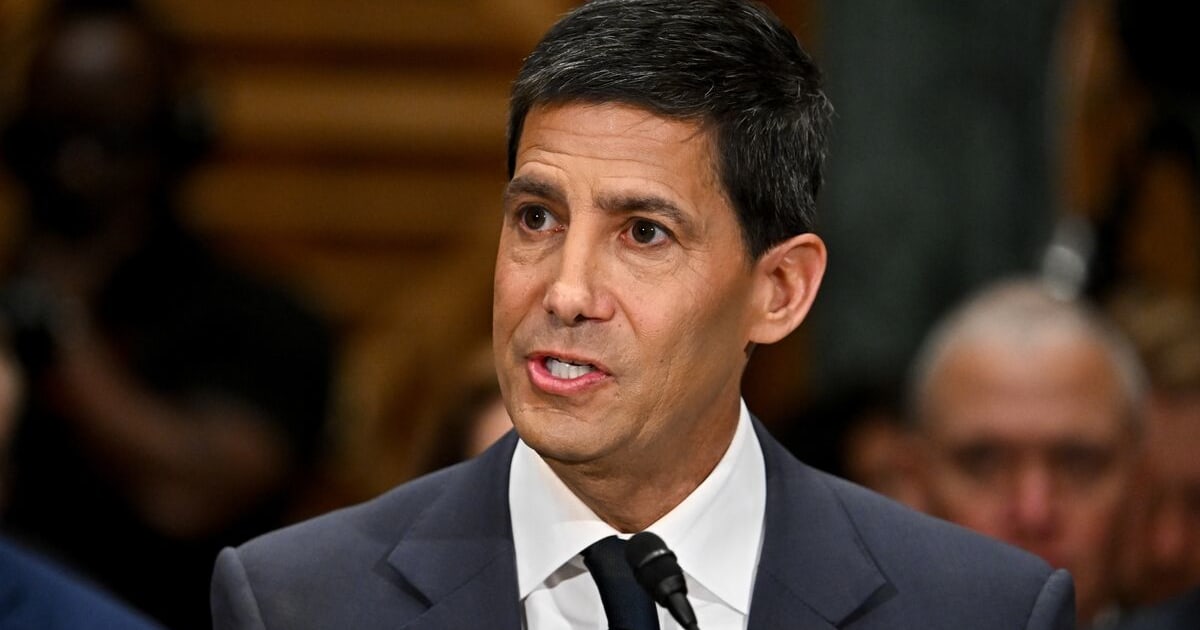
The global 'Warsh Trade'—a market bet on aggressive central bank easing—is disintegrating under the pressure of a 20% year-to-date surge in oil prices. For the Indian market, this creates a 'triple threat' of imported inflation, a weakening Rupee, and a hawkish RBI. This investigative report breaks down the structural shift in the equity risk premium and identifies which NSE stocks will survive the volatility.
The Great Unwinding: Why the 'Warsh Trade' Just Collapsed
For the better part of the last six months, global equity markets were fueled by a singular narrative: the 'Warsh Trade.' This market phenomenon, a portmanteau reflecting the aggressive bet on a 'dovish' pivot by the US Federal Reserve and subsequent easing by the Reserve Bank of India (RBI), assumed that inflation was a conquered beast. Investors priced in five to six rate cuts for 2024, pushing the Nifty 50 to record highs and narrowing the yield spreads on Indian sovereign bonds.
That thesis has now collided with the cold reality of geopolitics and supply-side constraints. As Brent crude surges past the $90 per barrel mark—driven by escalating Middle East tensions and OPEC+ supply discipline—the inflation genie is back out of the bottle. The 'Warsh Trade' isn't just pausing; it is being systematically dismantled. In its place, a 'higher-for-longer' regime is re-asserting its dominance, forcing a massive repricing of risk across emerging markets, with India at the epicenter of this shift.
"The market was positioned for a soft landing and rapid cuts. Oil at $90+ acts as a tax on global growth and a fuel for inflation, making that Goldilocks scenario nearly impossible to maintain," notes the WelthWest Research Desk analysis.
How do rising oil prices affect the Indian stock market today?
India remains one of the world's most sensitive economies to energy costs, importing roughly 85% of its crude oil requirements. Historically, every $10 increase in the price of a barrel of oil expands India’s Current Account Deficit (CAD) by approximately 0.4% to 0.5% of GDP and adds nearly 30-40 basis points to the Consumer Price Index (CPI).
When oil prices rise, the mechanism of pain for the NSE and BSE is three-fold:
- The Currency Trap: Rising oil prices increase the demand for US Dollars by Indian oil marketing companies (OMCs). This puts downward pressure on the INR, which recently flirted with record lows of 83.50+ against the USD. A weak Rupee triggers Foreign Institutional Investor (FII) outflows, as their dollar-denominated returns are eroded.
- The Yield Spike: As inflation expectations rise, the US 10-year Treasury yield has surged back toward the 4.5% mark. This reduces the 'Equity Risk Premium' for Indian stocks, making the Nifty's current P/E ratio of ~22x look expensive compared to risk-free assets.
- Input Cost Inflation: From paints to plastics and aviation turbine fuel (ATF), crude derivatives are the bedrock of India's manufacturing sector. Margin compression is no longer a risk; it is becoming a quarterly certainty for consumer-facing industries.
Historical Parallel: The 2022 Energy Shock
The last time we saw a similar confluence of rising yields and surging energy costs was in the first half of 2022. During that period, the Nifty 50 corrected by nearly 15% from its peak as FIIs pulled out over ₹2 lakh crore from Indian equities. While domestic institutional investors (DIIs) provide a stronger cushion today, the macro-headwinds of $95 oil are a formidable opponent for even the most resilient retail liquidity.
Will the RBI cut interest rates in 2024 given the oil price surge?
The consensus for an August or October rate cut by the RBI is rapidly evaporating. Governor Shaktikanta Das has been vocal about the "Arjuna’s eye" focus on a 4% inflation target. With food inflation already volatile, a spike in fuel and transport costs makes a pre-emptive rate cut a high-risk gamble that the RBI is unlikely to take.
For the banking sector (Bank Nifty), this is a double-edged sword. While delayed rate cuts sustain Net Interest Margins (NIMs) in the short term, the prolonged high-interest-rate environment threatens credit growth in the retail and MSME segments. HDFC Bank (HDFCBANK) and SBI (SBIN) investors are now recalibrating their expectations for loan book expansion in FY25.
Stock-by-Stock Breakdown: Winners and Losers
1. ONGC (NSE: ONGC) - The Upstream Beneficiary
Sentiment: Bullish
As an upstream producer, ONGC is the purest play on rising crude prices. Every $1 increase in realized oil prices adds significantly to their bottom line. With a current P/E ratio hovering around 7.5x, it remains undervalued compared to global peers like ExxonMobil or Shell. Investors should watch for the removal of the windfall tax as a potential catalyst, though the current price realization remains robust even with the levy.
2. Asian Paints (NSE: ASIANPAINT) - The Margin Victim
Sentiment: Bearish
Crude oil and its derivatives account for nearly 40-50% of the raw material costs for paint companies. Asian Paints has historically possessed strong pricing power, but with decorative demand showing signs of cooling and competition intensifying from new entrants like Birla Opus, passing on 15% higher input costs will be a challenge. The stock trades at a premium valuation (P/E ~50x), leaving little room for earnings misses.
3. InterGlobe Aviation (NSE: INDIGO) - Turbulence Ahead
Sentiment: Bearish
Aviation Turbine Fuel (ATF) typically constitutes 40% of an airline's operating expenses. While IndiGo dominates the Indian skies with a 60%+ market share, the surge in oil prices occurs just as global supply chain issues are grounding parts of their fleet. Expect a significant hit to operating margins in the coming two quarters if Brent stays above $90.
4. MRF (NSE: MRF) - Pressure in the Tyre Segment
Sentiment: Bearish
Tyre manufacturing is heavily dependent on carbon black and synthetic rubber, both of which are crude derivatives. MRF, despite its brand equity, faces a squeeze. Unlike the premium passenger vehicle segment, the mass-market two-wheeler and commercial vehicle segments are highly price-sensitive, limiting the company's ability to hike prices without losing volume.
5. HDFC Bank (NSE: HDFCBANK) - The FII Proxy
Sentiment: Neutral to Bearish
HDFC Bank is often the 'ATM' for foreign investors when they need to de-risk from India. As US yields rise and the 'Warsh Trade' fails, FIIs selling the index inevitably hit HDFC Bank the hardest due to its high weightage and institutional ownership. Fundamentally, high rates for longer will delay the bank's anticipated recovery in its Credit-to-Deposit (LDR) ratio.
The Expert Perspective: Bulls vs. Bears
The Bear Case: Bears argue that the Indian market is priced for perfection in an imperfect world. With the Nifty trading at a significant premium to its long-term average and the macro-environment deteriorating (oil, yields, and geopolitical risk), a 10% 'healthy correction' is not just possible—it's necessary to reset valuations.
The Bull Case: Bulls point to India's structural transformation. Tax collections are at record highs, the fiscal deficit is being reined in, and corporate balance sheets are the cleanest they have been in a decade. They argue that India's domestic growth engine is decoupled enough to withstand a temporary oil shock, provided Brent doesn't sustain above $110 for multiple quarters.
Actionable Investor Playbook
In this environment, the 'Buy the Dip' strategy needs to be surgical, not broad-based. Here is how to position your portfolio:
- The Defensive Pivot: Increase exposure to Upstream Energy (ONGC, Oil India) and IT Services (TCS, Infosys). The latter acts as a natural hedge because a weaker Rupee boosts their export earnings, and they are less sensitive to domestic inflation.
- The 'Avoid' Zone: Stay clear of high-PE consumer discretionary stocks and NBFCs with high cost-of-funds sensitivity. Paint, Tyre, and Cement sectors will likely see earnings downgrades in the next two quarters.
- Entry Points: For the Nifty 50, the 21,800–22,000 zone remains a critical psychological and technical support. A break below this could open the doors to 21,200. Long-term investors should look for 'Value' in large-cap banks only when FII selling intensity tapers off.
Risk Matrix: What Could Go Wrong?
1. The Middle East Escalation (Probability: Medium-High)
If the conflict expands to the Strait of Hormuz, Brent could realistically hit $120. This would be a 'Black Swan' for India, potentially forcing the RBI into an emergency rate hike to protect the Rupee.
2. US Fed 'No Landing' Scenario (Probability: Medium)
If US inflation remains sticky, the Fed might not just delay cuts but actually discuss hikes. This would trigger a massive global 'risk-off' trade, leading to a sharp exit of capital from all emerging markets, including India.
3. Monsoon Failure (Probability: Low-Medium)
A combination of high fuel prices and a poor monsoon would create a 'stagflationary' environment for rural India, crushing the FMCG and tractor sectors (e.g., M&M, Escorts).
What to Watch Next
Investors should keep their calendars marked for these key data releases and events:
- OPEC+ Ministerial Meeting: Any deviation from current supply cuts will immediately move the needle on Brent.
- US CPI Print: The single most important data point for the 'Warsh Trade' revival or burial.
- RBI MPC Minutes: Look for shifts in the tone of neutral members; any move toward 'hawkishness' will signal a delay in the rate-cut cycle.
- USD/INR 83.60 Level: A sustained break above this will likely trigger aggressive RBI intervention and potential liquidity tightening in the domestic market.
The collapse of the 'Warsh Trade' is a wake-up call. The easy gains of early 2024 are being clawed back by the reality of a world that is still fighting an inflation war. For the Indian investor, the mantra for the next six months is clear: Preservation over Aggression.
See ONGC's AI Score
Our algorithmic screener scores ONGC on fundamentals, momentum, and risk — free to try, no card needed.
Try the AI Screener →Have questions about this story?
Ask Welth, our finance-focused AI research assistant, for a deeper breakdown — free trial included.
Chat with Welth AI →Disclaimer: This content is generated by WelthWest Research Desk based on publicly available reports and is for informational purposes only. It does not constitute financial advice, investment recommendations, or an offer to buy or sell securities. Always consult a qualified financial advisor before making investment decisions.