Key Takeaway
The 'Higher-for-Longer' US interest rate regime, coupled with a geopolitical risk premium in crude oil, creates a liquidity vacuum for Indian equities, forcing a rotation from high-PE growth stocks to defensive commodities.
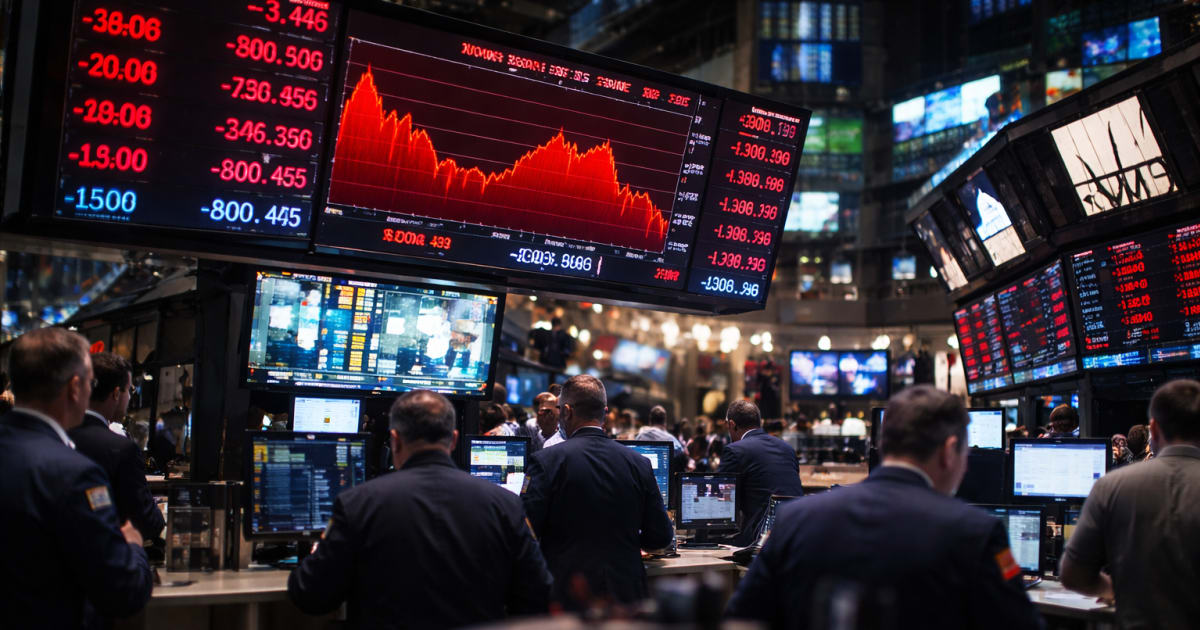
Global markets are reeling as sticky US CPI data pushes Fed rate cut expectations into late 2024, while escalating Middle East tensions threaten to push Brent crude past $95. This dual threat is particularly potent for the NSE Nifty 50, where premium valuations are currently being tested by surging US Treasury yields and a strengthening Dollar Index.
The Perfect Storm: Decoupling the Macro Headwinds
For the past six months, the Indian equity markets operated under a 'Goldilocks' assumption: cooling US inflation, a dovish Federal Reserve, and manageable energy prices. That narrative was shattered this week. The latest US Consumer Price Index (CPI) print arrived at 3.5% year-on-year, surpassing consensus estimates and marking the third consecutive month of 'sticky' inflation. Simultaneously, the geopolitical cauldron in the Middle East has moved from a localized conflict to a regional brinkmanship, threatening the world’s most vital energy transit points.
For the senior financial analyst, this isn't just market noise; it is a fundamental shift in the cost of capital. When US inflation remains hot, the 10-year US Treasury yield—the global benchmark for 'risk-free' returns—spikes. We have seen it climb toward the 4.6% mark. In financial terms, this narrows the 'yield spread' between Indian government bonds and US Treasuries. When the gap narrows, Foreign Institutional Investors (FIIs) find the risk-adjusted returns of emerging markets less attractive, leading to the aggressive sell-offs we are observing on the NSE and BSE.
"The era of easy liquidity is facing a secondary heart attack. Investors who expected six rate cuts in 2024 are now staring at the possibility of zero, or even a 'hawkish hold' that lasts into 2025."
How does US inflation affect Indian stock market liquidity?
The transmission mechanism is simple but brutal: The Dollar Index (DXY). As the Fed delays rate cuts, the USD strengthens against the INR. A weaker Rupee makes Indian imports (like crude oil and electronics) more expensive, effectively exporting US inflation to Indian shores. This forces the Reserve Bank of India (RBI) to maintain high repo rates to defend the currency, even if domestic growth requires a stimulus. For a market like Nifty 50, which trades at a one-year forward P/E of approximately 21x—well above its 10-year average of 18.5x—any contraction in liquidity leads to immediate valuation de-rating.
The Crude Reality: Why $90+ Oil is the 'Danger Zone' for India
India imports nearly 85% of its crude oil requirements. Historically, every $10 increase in the price of a Brent crude barrel expands India’s Current Account Deficit (CAD) by roughly 0.5% of GDP and adds 30 basis points to the headline inflation. With Middle East tensions threatening the Strait of Hormuz, the risk of Brent hitting $100 is no longer a 'tail risk'—it is a live scenario.
In 2022, when the Russia-Ukraine conflict broke out, the Nifty 50 corrected by nearly 15% from its peak as FIIs pulled out over ₹1.4 lakh crore in a single quarter. We are seeing early signs of a similar flight to safety. The 'Fear Gauge' or India VIX has begun to creep up, signaling that the period of low-volatility gains is officially over.
Sectoral Impact: The Winners and The Wounded
The Losers: IT, Banks, and Discretionary
- IT Services: The sector is the most sensitive to US macro-economic shifts. Higher rates mean US enterprises cut back on 'discretionary' digital transformation spending. We expect margins for Tier-1 firms to remain under pressure as deal conversions slow down.
- Banking & Financials (BFSI): This sector carries the heaviest weight in the Nifty 50. High US yields trigger mechanical FII selling in liquid names like HDFC Bank and ICICI Bank. Furthermore, delayed RBI rate cuts mean the 'cost of funds' for banks stays high, squeezing Net Interest Margins (NIMs).
- Automobiles: Rising fuel prices and the potential for higher interest rates on car loans act as a double whammy for the mid-market auto segment.
The Winners: Commodities and Defense
- Oil & Gas Upstream: Companies that produce oil domestically benefit from higher global realizations, provided the government doesn't impose aggressive windfall taxes.
- Gold & Defense: Gold acts as the ultimate hedge against geopolitical instability and currency debasement. Defense stocks continue to see 'order book immunity' as the global shift toward re-armament accelerates.
Stock-by-Stock Breakdown: Navigating the Volatility
1. HDFC Bank (NSE: HDFCBANK)
As the heavyweight of the Indian indices, HDFC Bank is the 'ATM' for FIIs. When global funds need to reduce 'India exposure,' they sell what is most liquid. Currently trading at a price-to-book (P/B) ratio that is historically attractive (approx. 2.5x), the stock remains fundamentally strong but technically weak. The merger integration costs are already a drag; a prolonged high-rate environment in the US will keep this stock range-bound or bearish in the short term.
2. Tata Consultancy Services (NSE: TCS)
TCS is the bellwether for Indian IT. With a P/E ratio hovering around 28x, it is not 'cheap.' The hot US inflation data suggests that the 'rebound in BFSI spending' in North America—which TCS relies on—is being pushed to FY25. Watch for the 3800-3900 support levels; a breach here could signal a deeper sector-wide correction. Peer comparison: Infosys (INFY) and Wipro are likely to face even sharper volatility due to their higher sensitivity to discretionary project pipelines.
3. Reliance Industries (NSE: RELIANCE)
Reliance is a complex play in this environment. Its O2C (Oil-to-Chemicals) business benefits from higher refining margins during energy supply disruptions. However, its massive retail and telecom arms are sensitive to domestic consumption and interest rates. Reliance often acts as a 'defensive' among the heavyweights because of its diversified cash flows, but it isn't immune to a general FII pull-out.
4. ONGC (NSE: ONGC)
The primary beneficiary of the Middle East crisis. Every dollar increase in Brent crude directly adds to ONGC’s bottom line. With a dividend yield of over 4% and a P/E ratio significantly lower than the broader market (around 7x), ONGC is a classic 'value' play during a 'growth' scare. Peer: Oil India (OIL).
5. Bharat Electronics Limited (NSE: BEL)
Defense stocks like BEL are decoupled from US inflation. Their revenue comes from the Indian Ministry of Defense's indigenization drive. In a world of increasing conflict, the 'security premium' on these stocks remains high. However, at current valuations, the 'margin of safety' is thin.
Expert Perspective: The Bull vs. Bear Case
The Bear Case: "The Valuation Trap"
Bears argue that India is the most expensive emerging market. With a 'Buffett Indicator' (Market Cap to GDP) crossing 100%, any shock to liquidity will cause a 'mean reversion.' They point to the 2013 'Taper Tantrum' as a precedent where Indian markets underperformed for a year after US yields spiked.
The Bull Case: "The SIP Fortress"
Bulls argue that the 'India of 2024' is not the 'India of 2013.' Domestic Institutional Investors (DIIs) and retail SIP (Systematic Investment Plan) inflows of over ₹19,000 crore per month provide a massive floor to the market. They believe any dip caused by FIIs is a 'generational buying opportunity' for domestic investors.
Actionable Investor Playbook
- Immediate Move: Increase cash levels to 15-20%. The current environment favors 'buying the dip' rather than 'chasing the rally.'
- Sector Rotation: Move from high-beta IT and Mid-cap financials into 'Defensives' like FMCG (Hindustan Unilever) and Pharma (Sun Pharma), which are less sensitive to global interest rate cycles.
- Hedge with Gold: Allocate 5-10% of the portfolio to Sovereign Gold Bonds (SGBs) or Gold ETFs to counter Rupee depreciation.
- Time Horizon: Tactical investors should look at a 3-6 month window of volatility. Long-term investors should use the correction to accumulate quality 'Blue Chips' at 10-15% discounts from their 52-week highs.
Risk Matrix: What Could Go Wrong?
| Risk Factor | Probability | Impact |
|---|---|---|
| Full-scale Iran-Israel War | Medium | Extreme (Oil > $110) |
| US Fed Hikes Rates (instead of cutting) | Low | High (FII Exodus) |
| Below-normal Monsoon in India | Medium | High (Food Inflation) |
What to Watch Next: The Catalyst Calendar
- US PCE Price Index: The Fed’s preferred inflation gauge. A hot reading here will be the final nail in the coffin for June rate cut hopes.
- RBI Monetary Policy Committee (MPC) Minutes: Look for clues on how concerned the RBI is about the Rupee’s slide.
- Brent Crude Spot Prices: Any sustained move above $92/barrel will trigger a sell-off in Indian Paint and Tire stocks (raw material sensitivity).
- Earnings Season: Management commentary from TCS and HDFC Bank regarding the 'demand outlook' for the second half of the year.
See TCS's AI Score
Our algorithmic screener scores TCS on fundamentals, momentum, and risk — free to try, no card needed.
Try the AI Screener →Have questions about this story?
Ask Welth, our finance-focused AI research assistant, for a deeper breakdown — free trial included.
Chat with Welth AI →Disclaimer: This content is generated by WelthWest Research Desk based on publicly available reports and is for informational purposes only. It does not constitute financial advice, investment recommendations, or an offer to buy or sell securities. Always consult a qualified financial advisor before making investment decisions.