Key Takeaway
Bitcoin's swift reversal from early gains underscores persistent crypto market fragility. For Indian investors, this highlights the speculative nature of digital assets and the limited direct spillover into domestic equities, urging a re-evaluation of risk appetite in a regulatory vacuum.
Bitcoin's recent price action, surging then retracing to $84,000, reignites debates about crypto market stability. This WelthWest deep dive explores the nuanced implications for India, from individual crypto portfolios to the broader Indian equity landscape, dissecting where the risks and opportunities truly lie amidst ongoing regulatory uncertainty.
Bitcoin's $84,000 Reversal: A Wake-Up Call for Indian Crypto Investors Amidst Global Market Swings
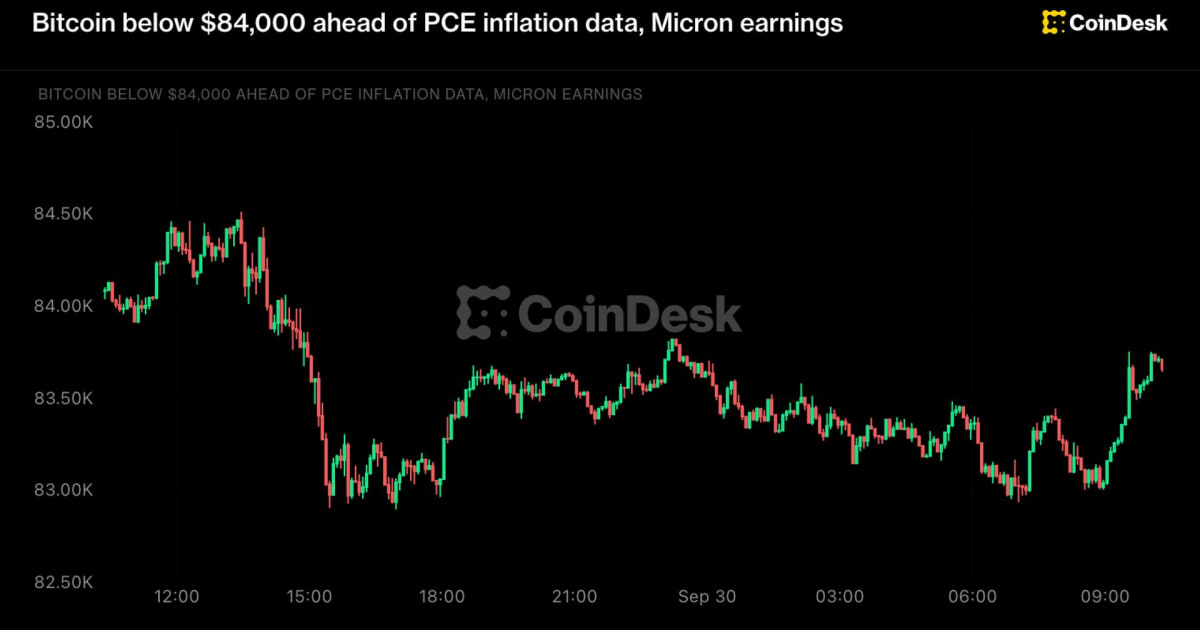
The digital asset landscape, perpetually characterized by its dramatic shifts, once again delivered a potent reminder of its inherent volatility. Bitcoin (BTC), the bellwether cryptocurrency, recently experienced a significant price swing, initially registering substantial early gains only to retrace its steps, settling back around the $84,000 mark. This rapid ascent followed by an equally swift retreat is not merely a data point for crypto enthusiasts; it's a critical signal reverberating across global financial markets, albeit with varying intensity. For India, a nation with a burgeoning yet often misunderstood relationship with digital assets, this pattern carries specific implications for its growing cohort of crypto investors and, indirectly, for broader speculative sentiment within its equity markets.
Why does this matter now? Beyond the immediate financial impact on those holding BTC, Bitcoin's price movements serve as a proxy for risk appetite across a segment of the global investor base. Its performance can influence sentiment towards other speculative assets. In the Indian context, where direct crypto-linked financial products are scarce and regulatory clarity remains elusive, the primary effect is felt by individual domestic investors who have direct exposure to cryptocurrencies. While the direct influence on the broader Indian equity market (Nifty 50, Sensex) remains contained due to current regulatory stances and the absence of publicly listed entities with significant direct crypto exposure, the psychological impact on investors' willingness to engage in other high-risk, high-reward ventures cannot be entirely dismissed.
How Does Bitcoin's Volatility Impact Indian Stock Market Sentiment?
The notion that Bitcoin's gyrations directly dictate the direction of the Indian stock market is largely a misconception. Unlike markets where crypto ETFs or directly exposed public companies are prevalent, India's regulatory environment has fostered a distinct separation. Consequently, a 10% swing in Bitcoin's price is unlikely to trigger a corresponding move in the Nifty 50. However, the indirect effects are more nuanced. The recent volatility, with BTC's market capitalization fluctuating around the $1.6 trillion mark, can influence the risk appetite of a specific demographic of Indian investors – those who dabble in both crypto and equities. A significant drawdown in their crypto portfolios might lead to a more conservative approach towards speculative small-cap or mid-cap Indian stocks, leading to a subtle, sector-specific shift rather than a broad market correction.
Historically, periods of extreme crypto volatility have coincided with increased caution among retail investors globally. For instance, during the crypto winter of 2022, while the Nifty 50 showed remarkable resilience, certain segments of the Indian market, particularly those favored by younger, tech-savvy investors, experienced minor dips as capital might have been reallocated or sidelined. This time, the speed of Bitcoin's reversal is key. The swift retreat from early gains, which saw BTC briefly flirt with higher resistance levels before settling back, suggests that underlying market structure might still be fragile, subject to profit-taking and macroeconomic headwinds. This ephemeral nature can erode confidence in other high-growth, high-valuation narratives, even those within traditional equities.
Sector-level breakdowns reveal a limited direct connection. Indian IT services companies (e.g., Tata Consultancy Services, Infosys) have negligible direct exposure to crypto pricing, with their revenues primarily driven by global tech spending and digital transformation initiatives. Financial services (e.g., HDFC Bank, ICICI Bank) are insulated by the Reserve Bank of India's cautious stance on crypto. However, sectors attracting speculative retail interest, such as certain emerging technology plays or highly volatile small-cap manufacturing stocks, could experience a minor sentiment-driven headwind if a significant portion of their investor base is simultaneously exposed to crypto losses. This impact, however, remains localized and not systemic.
Specific Indian Stocks: Tracing the Indirect Ripple Effects
While direct crypto exposure in Indian listed companies is virtually non-existent, a few sectors and individual stocks might experience extremely indirect, sentiment-driven ripples. It's crucial to emphasize that these are not fundamental impacts but rather potential psychological effects on certain investor segments.
- Intellect Design Arena (NSE: INTELLECT): While primarily a financial technology product company, its exposure to digital transformation in banking and insurance could be seen by some investors as loosely tied to the broader 'digital assets' narrative. A general dampening of speculative sentiment could lead to a minor de-rating, though its fundamental business drivers remain robust. Its P/E ratio, often reflecting growth expectations, might see minor pressure if broader tech sentiment sours.
- Persistent Systems (NSE: PERSISTENT): A mid-cap IT services firm focusing on digital product engineering. Similar to Intellect, any broad-based retreat from tech-related speculative plays, even if indirectly influenced by crypto sentiment, could marginally impact its valuation multiples. Their revenues are tied to enterprise spending, not crypto prices, but investor perception can sometimes be broad-brushed.
- Happiest Minds Technologies (NSE: HAPPSTMNDS): Another prominent IT services company with a strong focus on digital services, cloud, and security. Companies like Happiest Minds, often seen as high-growth tech plays, can sometimes experience short-term price movements influenced by broader tech sector sentiment, which might get a minor headwind from significant crypto volatility. Their revenue growth rates, however, remain strong, driven by secular trends.
- CDSL (NSE: CDSL): As a central securities depository, CDSL benefits from increased trading activity in equities. While not directly linked to crypto, a significant shift of retail capital away from speculative assets (including crypto) and into more traditional, regulated avenues could theoretically benefit equity market infrastructure providers. Conversely, a loss of capital in crypto might temporarily reduce available funds for equity trading for some individuals.
It is paramount to reiterate that the impact on these stocks is highly indirect and speculative, largely driven by shifts in retail investor psychology rather than fundamental business changes. There are no Indian listed entities with direct revenue streams or balance sheet assets significantly tied to Bitcoin's price.
Expert Perspective: Bulls, Bears, and the Indian Crypto Conundrum
The recent Bitcoin reversal ignites a familiar debate among market commentators. Bulls would argue that this is merely a healthy correction within a long-term bullish trend, a necessary 'shakeout' of overleveraged positions. They might point to the increasing institutional interest globally, the impending halving events, and Bitcoin's finite supply as enduring fundamental drivers. For India, a bullish perspective might suggest that as regulatory clarity eventually emerges, domestic institutional participation could unlock significant capital, making current price dips attractive entry points for long-term holders. They might highlight the demographic dividend and India's tech-savvy population as natural adopters once the framework is stable.
Conversely, bears would emphasize the inherent lack of intrinsic value, the regulatory sword of Damocles hanging over the crypto market, and the susceptibility to 'whale' manipulation. The speed of the recent reversal, they would contend, highlights the market's immaturity and susceptibility to rapid corrections, often triggered by macro events or even minor news. For India, bears would stress the continued regulatory uncertainty as a major impediment. The lack of a clear legal framework means Indian investors operate in a gray area, exposed to global volatility without the protective guardrails of a regulated domestic market. They would argue that capital flowing into crypto is speculative capital that could be better deployed in productive domestic assets, and its volatility poses a systemic risk to individual financial stability.
A contrarian view might suggest that the persistent volatility, while a risk, also presents opportunities for sophisticated traders. For India, this perspective acknowledges the regulatory challenges but highlights the ingenuity of domestic platforms in navigating these complexities. It posits that the 'underground' nature of much of the Indian crypto market makes it less susceptible to direct global policy shifts, though individual users remain exposed to price movements.
Actionable Investor Playbook: Navigating Crypto Volatility in India
For Indian investors contemplating their next move amidst Bitcoin's volatility, a structured approach is crucial:
- For Existing Crypto Holders (Buy/Sell/Watch):
- Watch: If you are a long-term holder with a strong conviction in Bitcoin's future, the recent retracement might be a test of conviction. Avoid knee-jerk reactions. Monitor global macroeconomic indicators (e.g., US inflation data, Fed rate hike expectations) as they often influence risk assets.
- Buy: For those looking to average down or initiate a position, consider a staggered buying strategy (Dollar-Cost Averaging - DCA). Instead of a lump sum, invest fixed amounts regularly. This mitigates the risk of buying at a peak. Entry points around significant support levels, if identified through technical analysis, could be considered by advanced traders.
- Sell: If your portfolio allocation to crypto has become disproportionately large due to prior gains, or if you are nearing your risk tolerance limit, consider taking partial profits. Rebalancing your portfolio to align with your original risk profile is prudent, especially given the regulatory uncertainty in India.
- For Equity Investors (Watch):
- For the vast majority of Indian equity investors, the direct impact is negligible. However, it's wise to watch sentiment in highly speculative small-cap or micro-cap segments, as these can sometimes be influenced by broader retail risk appetite.
- Focus on company fundamentals. The Bitcoin narrative should not overshadow thorough due diligence on Indian listed companies.
- Time Horizons: For crypto, a long-term (3-5+ years) horizon is generally recommended to weather volatility. For equities, traditional investing principles apply.
Risk Matrix: Assessing the Landscape for Indian Investors
Understanding the risks associated with crypto exposure, especially for Indian investors, is paramount:
- Regulatory Uncertainty (High Probability, High Impact): The lack of clear, comprehensive cryptocurrency regulation in India remains the single largest risk. A sudden, restrictive policy shift could severely impact domestic crypto platforms and the value of holdings. This risk has a high probability of materializing in some form (either positive or negative) in the medium term and could have a significant impact on investor confidence and asset values.
- Market Volatility (Very High Probability, High Impact): As evidenced by the recent $84,000 reversal, crypto markets are inherently volatile. Prices can swing wildly in short periods, leading to substantial gains or losses. This is a constant, ever-present risk with a very high probability, directly impacting portfolio values.
- Global Macroeconomic Headwinds (Medium Probability, Medium Impact): Factors like rising interest rates globally, persistent inflation, or a broader economic slowdown can lead to a 'risk-off' sentiment, where investors pull capital from speculative assets like crypto. While the probability fluctuates, its impact on crypto prices can be significant.
- Cybersecurity and Platform Risk (Medium Probability, Medium Impact): Despite advancements, exchanges and individual wallets remain targets for hackers. The risk of theft or platform insolvency, especially from unregulated entities, is a persistent concern, though its probability can be mitigated by using reputable platforms and strong security practices.
What to Watch Next: Catalysts on the Horizon
Several key factors will shape the narrative around Bitcoin and its indirect impact on Indian markets in the coming months:
- Indian Regulatory Developments: Any official statements or drafts from the Indian government or the Reserve Bank of India (RBI) regarding cryptocurrency regulation will be the most significant domestic catalyst. Investors should closely monitor parliamentary sessions and policy discussions.
- Global Macroeconomic Data: Upcoming releases of US inflation data (Consumer Price Index - CPI, Producer Price Index - PPI), Federal Reserve monetary policy statements (e.g., FOMC meeting minutes, interest rate decisions), and global GDP growth figures will continue to influence risk asset appetite, including Bitcoin.
- Bitcoin Halving Event: The next Bitcoin halving, an event that reduces the supply of new Bitcoins, is anticipated in early 2024. Historically, halvings have preceded significant price rallies, though past performance is not indicative of future results. This will be a major global catalyst.
- Institutional Adoption & ETF Flows: The performance and inflows into recently launched Bitcoin Spot ETFs in the US will provide crucial insights into institutional demand and could act as a significant price driver or dampener.
- Technological Developments in Crypto: Advances in scalability (e.g., Layer 2 solutions), security, and wider adoption of decentralized finance (DeFi) applications could fundamentally strengthen the crypto ecosystem, attracting new investors globally.
The journey of Bitcoin remains a compelling saga of innovation, speculation, and market dynamics. For Indian investors, understanding its nuances, particularly its limited yet evolving relationship with domestic equities, is key to making informed decisions in this complex financial landscape.
Run a free AI Stock Screen
Our algorithmic screener scores any NSE/BSE stock on fundamentals, momentum, and risk — free to try, no card needed.
Try the AI Screener →Have questions about this story?
Ask Welth, our finance-focused AI research assistant, for a deeper breakdown — free trial included.
Chat with Welth AI →Disclaimer: This content is generated by WelthWest Research Desk based on publicly available reports and is for informational purposes only. It does not constitute financial advice, investment recommendations, or an offer to buy or sell securities. Always consult a qualified financial advisor before making investment decisions.