Key Takeaway
The bond market's pivot toward a hawkish Kevin Warsh-led Fed threatens the 'Goldilocks' scenario for Indian equities, potentially delaying RBI rate cuts and triggering a massive valuation de-rating in high-growth sectors.
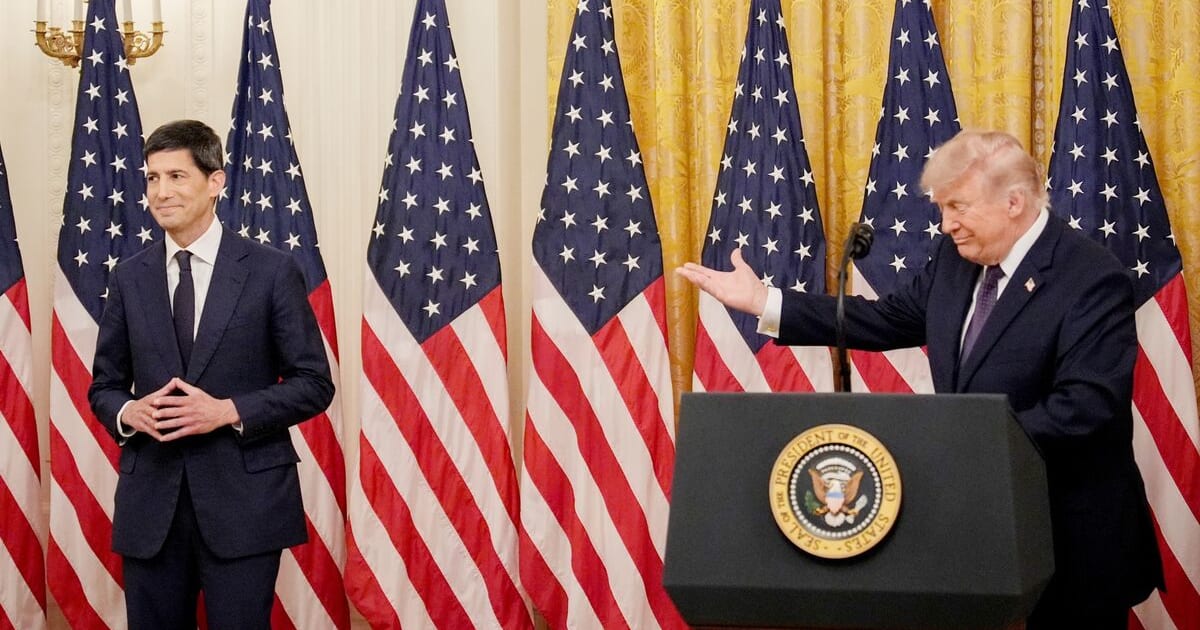
As global bond traders begin pricing in a surprise US Federal Reserve rate hike under potential Chair Kevin Warsh, the Indian equity market faces a liquidity crunch. This shift strengthens the US Dollar, pressures the Rupee, and forces a re-evaluation of FII-heavy stocks like TCS, HDFC Bank, and Bajaj Finance.
The 'Warsh Shock': Why the Bond Market is Re-Pricing Global Risk
For most of 2024, the global consensus was built on a singular pillar: a steady descent in US interest rates. However, the narrative has shifted violently. Bond markets are no longer just debating the size of cuts; they are actively pricing in the possibility of a rate hike under the potential leadership of Kevin Warsh. As a former Fed Governor known for his hawkish stance on inflation and fiscal discipline, Warsh represents a departure from the 'dovish' tilt that has fueled the post-pandemic rally.
When US Treasury yields rise, the global 'risk-free' rate of return increases. For emerging markets like India (NSE: NIFTY), this is a seismic event. The spread between the US 10-year yield and the Indian 10-year G-Sec narrows, making Indian debt less attractive and triggering a 'Risk-Off' sentiment. This isn't just theoretical; historically, whenever the US 10-year yield breaches the 4.5% mark, Foreign Institutional Investors (FIIs) begin a systematic withdrawal from the Indian secondary market to seek the safety of the Greenback.
How will a US Fed rate hike affect Indian bank stocks?
The immediate concern for the Indian banking sector is the 'Liquidity Trap.' If the Fed hikes, the Reserve Bank of India (RBI) loses its window to cut domestic repo rates. Currently, the RBI has maintained a status quo at 6.5%, waiting for the Fed to move first to avoid currency volatility. A Fed hike would likely force the RBI to keep rates 'Higher for Longer' to protect the Rupee (INR), which is already hovering near record lows of 84.40 against the USD.
For banks like HDFC Bank (HDFCBANK:NSE) and ICICI Bank (ICICIBANK:NSE), this creates a dual challenge. First, the cost of funds remains elevated, squeezing Net Interest Margins (NIMs). Second, the anticipated credit growth revival, fueled by cheaper corporate loans, gets pushed further into the future. During the 2013 'Taper Tantrum,' Indian bank stocks saw a 20-25% correction as liquidity dried up—a historical parallel that analysts at WelthWest are watching closely.
The Valuation Compression: Why IT and Midcaps are in the Crosshairs
The Indian IT services sector, led by giants like Tata Consultancy Services (TCS:NSE) and Infosys (INFY:NSE), operates on a Discounted Cash Flow (DCF) valuation model. When the US Fed hikes rates, the 'discount rate' used in these models increases, leading to an automatic compression in P/E multiples. Even if these companies report stable earnings, their stock prices often fall to align with higher global yields.
- TCS (TCS:NSE): Currently trading at a P/E of ~28x, well above its 10-year mean. A hawkish Fed could see this revert to 22-24x.
- Infosys (INFY:NSE): Highly sensitive to US BFSI (Banking, Financial Services, and Insurance) spending. If a Fed hike slows the US economy, the discretionary spending recovery slated for 2025 could vanish.
Similarly, the 'High-Growth Midcap' segment, which has seen astronomical gains in the last 24 months, is vulnerable. These stocks often trade on future earnings expectations. When liquidity tightens, the 'froth' in midcaps is the first to evaporate. We expect a rotation out of high-P/E midcaps into 'Value' stocks with high dividend yields and domestic-focused revenue streams.
Stock-by-Stock Breakdown: Winners and Losers
1. HDFC Bank (HDFCBANK:NSE) - The Proxy for FII Flows
HDFC Bank remains the most widely held stock by FIIs in India. When global mandates shift to 'Reduce EM Exposure,' HDFC Bank becomes the primary liquidity tap. Despite strong internal fundamentals post-merger, the stock faces technical pressure. Support levels to watch: ₹1,450 - ₹1,480. A breach here could signal a deeper institutional exit.
2. Bajaj Finance (BAJFINANCE:NSE) - The NBFC Vulnerability
Non-Banking Financial Companies (NBFCs) rely heavily on wholesale market borrowing. A hawkish Fed prevents the RBI from easing domestic liquidity, keeping borrowing costs high for Bajaj Finance. With a P/E ratio still hovering near 30x, any slowdown in AUM (Assets Under Management) growth due to higher lending rates could trigger a sharp de-rating. Peer comparison: Cholamandalam Investment (CHOLAFIN:NSE) faces similar cost-of-fund risks.
3. DLF Ltd (DLF:NSE) - Real Estate Sensitivity
The Indian real estate sector has been on a tear, but it is highly sensitive to mortgage rates. If the RBI is forced to delay rate cuts, or worse, hike rates to defend the Rupee, the demand for luxury housing—DLF's bread and butter—could cool. While DLF has a strong balance sheet, the sector's high beta makes it a 'Sell' in a rising-rate environment. Watch Godrej Properties (GODREJPROP:NSE) for similar volatility.
4. Wipro (WIPRO:NSE) - The Margin Paradox
While a stronger Dollar helps IT margins (every 1% Rupee depreciation adds ~30-50 bps to EBIT margins), the benefit is often offset by the 'Pricing Pressure' from US clients facing their own interest rate woes. Wipro, currently in a turnaround phase, cannot afford a macro headwind that restricts its ability to sign large deals.
Expert Perspective: The Bull vs. Bear Argument
"The Indian economy is decoupled from the US in terms of growth, but it is inextricably linked in terms of liquidity. You cannot have a bull market in Nifty while the US 10-year yield is at 5%." — Senior Macro Strategist, WelthWest Research.
The Bear Case: Bears argue that the current Nifty valuation (P/E of 23x) does not account for a 5% US Fed Funds Rate. They point to the 2022 cycle where Nifty remained sideways for 18 months as the Fed hiked. A Kevin Warsh-led Fed would be more aggressive than Jerome Powell, potentially leading to a 'Hard Landing' in the US, which would decimate Indian exports.
The Bull Case: Bulls argue that domestic institutional investors (DIIs) and retail SIP flows (now exceeding ₹20,000 crore monthly) provide a 'floor' for the market. They believe India’s structural growth—manifested in GST collections and manufacturing PMI—will allow the market to 'grow into its valuations' even if FIIs exit.
Actionable Investor Playbook: Navigating the Warsh Pivot
Investors should transition from a 'Growth at Any Price' strategy to a 'Quality at Reasonable Price' (QARP) framework. Here are the steps to take:
- Reduce Exposure: Trim positions in high-debt infrastructure firms and NBFCs with high debt-to-equity ratios.
- Accumulate on Dips: Private sector banks like ICICI Bank and Axis Bank are better positioned to handle liquidity tightness than their smaller peers.
- Currency Hedges: Consider increasing exposure to export-oriented sectors like Pharmaceuticals (Sun Pharma:NSE) which benefit from a stronger USD and have less cyclical demand.
- Time Horizon: Prepare for a 6-12 month period of consolidation. Entry points for Nifty should be sought near the 200-day Moving Average (DMA).
Risk Matrix: Assessing the Downside
| Risk Factor | Probability | Impact on Sensex/Nifty |
|---|---|---|
| Geopolitical Spike (Oil >$100) | Moderate | High (Inflationary Spiral) |
| US Recession (Hard Landing) | Low-Moderate | Extreme (Export Collapse) |
| RBI Surprise Hike | Low | Moderate (Bank Margin Squeeze) |
| FII Outflow >$5Bn/month | High | High (Valuation De-rating) |
What to Watch Next: The Catalysts
The story will evolve rapidly based on three key data points. First, the official nomination of the next Fed Chair; if Kevin Warsh is named, expect an immediate 2-3% correction in global equities. Second, the US CPI data releases—any print above 3.2% will solidify the hike narrative. Finally, watch the RBI’s commentary in the upcoming MPC meeting. Any shift from 'Withdrawal of Accommodation' to a more hawkish stance will be the final signal to move to cash.
See TCS's AI Score
Our algorithmic screener scores TCS on fundamentals, momentum, and risk — free to try, no card needed.
Try the AI Screener →Have questions about this story?
Ask Welth, our finance-focused AI research assistant, for a deeper breakdown — free trial included.
Chat with Welth AI →Disclaimer: This content is generated by WelthWest Research Desk based on publicly available reports and is for informational purposes only. It does not constitute financial advice, investment recommendations, or an offer to buy or sell securities. Always consult a qualified financial advisor before making investment decisions.