Key Takeaway
Softer US employment data dramatically reduces Fed hawkishness, fueling global liquidity. This is a significant bullish catalyst for Indian IT, export-oriented firms, and broader FII inflows, strengthening the Rupee and potentially igniting growth stocks.
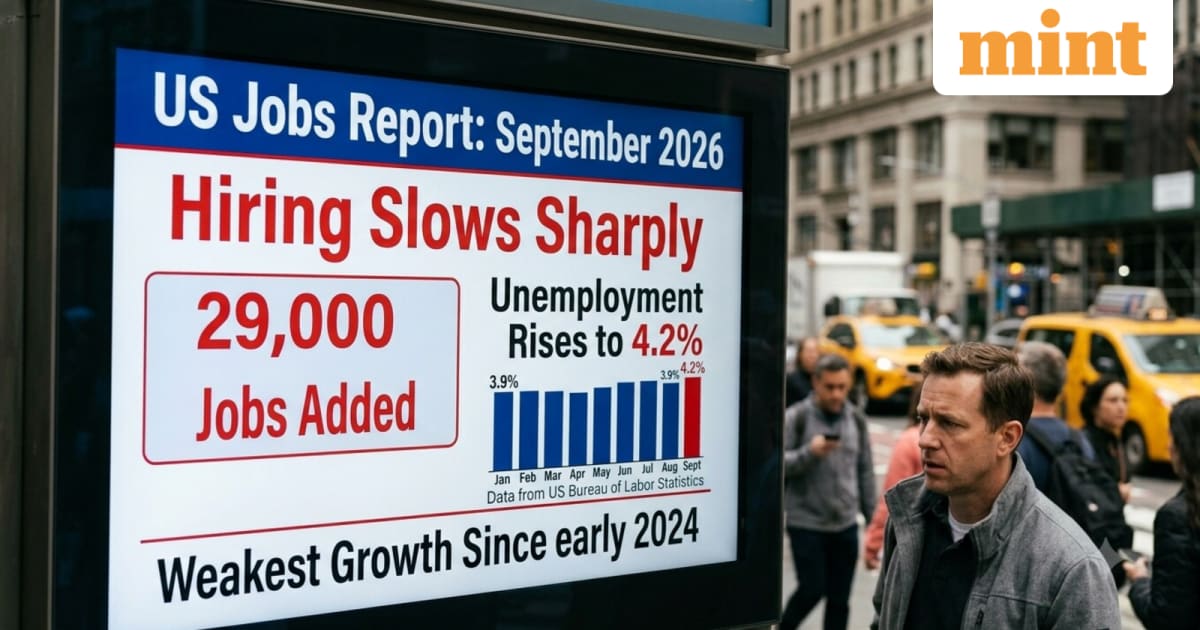
The latest US employment data suggests a cooling labor market, a critical development for global monetary policy. This shift is set to ease pressure on the US Federal Reserve, signaling a potentially less aggressive rate hike path. For India, this translates into a powerful tailwind for export-oriented sectors, particularly IT services, and promises a resurgence in foreign institutional investor (FII) interest.
US Labor Market Cools: A Global Liquidity Inflection Point for Indian Equities
The latest US employment figures have sent a clear signal across global financial markets: the American labor market is finally showing definitive signs of cooling. This development, marked by a moderation in job creation and wage growth, is far more than a mere statistical update; it represents a critical inflection point for the US Federal Reserve's monetary policy trajectory and, by extension, global liquidity conditions. For emerging markets like India, this data release is a potent catalyst, potentially ushering in a new phase of foreign institutional investor (FII) inflows and providing significant tailwinds for key sectors.
Historically, the US Fed's tightening cycles have acted as a gravitational pull on global capital, drawing funds away from riskier emerging markets into dollar-denominated assets. A less hawkish Fed, indicated by softening economic data, reverses this dynamic. The reduced likelihood of aggressive rate hikes diminishes the attractiveness of the dollar, making emerging market assets, particularly equities, comparatively more appealing. This 'dovish pivot' narrative, even if subtle, injects confidence into risk appetite worldwide, directly benefiting FII-dependent economies like India, which has seen net FII outflows in recent periods amidst global uncertainty.
How Will a Less Hawkish Fed Impact Indian Stock Market Dynamics?
The immediate and profound impact of cooling US employment data on the Indian stock market is multifaceted, touching currency, capital flows, and sector-specific performance. A less aggressive Fed stance generally leads to a weaker US Dollar index (DXY) as the interest rate differential narrows. For the Indian Rupee (INR), this translates into strengthening against the dollar, moving from its recent range-bound weakness towards appreciation. A stronger rupee is a double-edged sword, making imports cheaper but exports potentially less competitive. However, the broader benefit of increased FII inflows often outweighs this for the overall market sentiment.
Historical parallels offer valuable context. During periods of perceived Fed dovishness, such as segments of late 2020 and early 2021, the Nifty 50 Index experienced robust FII-driven rallies, with specific sectors like IT and financials benefiting disproportionately. The last time the market anticipated a significant dovish shift from the Fed, in late 2022 following initial signs of inflation moderation, the Nifty surged over 10% in a few months, driven largely by renewed FII buying. This current scenario, with tangible US jobs data supporting the narrative, presents a more concrete foundation for sustained FII interest.
The primary beneficiaries within the Indian equity landscape will be sectors that thrive on global liquidity and export demand. The Indian IT services sector, with its significant revenue exposure to North America and Europe, stands to gain immensely. A stronger global growth outlook, coupled with a more stable currency environment, enhances their order book visibility and profitability. Beyond IT, other export-oriented manufacturing and service sectors, which have faced headwinds from a strong dollar and slowing global demand, will also see improved prospects. Growth stocks, generally more sensitive to interest rate expectations, will find renewed favor as the 'discount rate' applied to future earnings moderates.
Indian IT Stocks Poised for Rebound: A Deep Dive into Key Players
The Indian IT services sector, a bellwether for export-led growth, is particularly well-positioned to capitalize on this shift in global monetary policy. These companies derive a substantial portion of their revenue in USD, making them highly sensitive to both the Rupee-Dollar exchange rate and the broader US economic sentiment. A stronger rupee, while marginally impacting reported USD revenues when converted back to INR, is often offset by improved client spending and enhanced confidence in the global economic outlook. Moreover, reduced interest rate pressure in the US can lead to higher investment in technology by their global clients, boosting demand for IT services.
- Tata Consultancy Services (TCS) (NSE: TCS): As India's largest IT services exporter with a market capitalization exceeding $150 billion, TCS is a prime beneficiary. Its broad client base across diverse industries makes it resilient. A less hawkish Fed implies greater spending confidence from its global enterprise clients, especially in financial services and retail. TCS's strong execution capabilities and robust deal wins, even in challenging environments, position it to capture an increased share of a rebounding IT spend. Investors should watch its P/E ratio, currently around 30x, for potential expansion as growth prospects improve.
- Infosys (NSE: INFY): A global leader in next-gen digital services and consulting, Infosys, with its approximately $75 billion market cap, stands to gain significantly. Its focus on digital transformation, cloud adoption, and AI integration aligns perfectly with renewed enterprise spending. A stable global macroeconomic environment, spurred by a dovish Fed, directly translates into more project opportunities and better pricing power for Infosys, which has a strong presence in the North American market.
- Wipro (NSE: WIPRO): Wipro, a prominent player in IT consulting and services, with a market cap around $30 billion, will also experience tailwinds. While smaller than TCS and Infosys, its strategic acquisitions and focus on high-growth areas like cybersecurity and engineering services make it sensitive to global IT budget expansions. Any improvement in global risk sentiment typically bodes well for companies like Wipro that are actively pursuing large transformation deals.
- HCL Technologies (NSE: HCLTECH): Known for its strong engineering and R&D services, HCLTech (market cap ~$40 billion) is another key beneficiary. A substantial portion of its revenue comes from Europe and North America. As global businesses seek to optimize operations and innovate, demand for HCLTech's specialized services is expected to rise. The company's consistent dividend payout also makes it attractive in a stable FII inflow environment.
- Tech Mahindra (NSE: TECHM): Specializing in telecom and enterprise solutions, Tech Mahindra (market cap ~$15 billion) will see improved prospects as global telecom operators and enterprises increase their technology spending. The easing of global interest rate pressures could unlock capital for infrastructure upgrades and digital initiatives, directly benefiting Tech Mahindra's core offerings.
- Reliance Industries (NSE: RELIANCE): While not a pure-play IT exporter, Reliance Industries (NSE: RELIANCE) (market cap ~$200 billion) is a significant beneficiary of broader market sentiment and FII inflows. Its diverse portfolio, including a rapidly expanding digital arm (Jio Platforms) and retail, makes it a bellwether for the Indian economy. Increased FII liquidity tends to flow into large-cap, high-quality names like RIL, driving overall market buoyancy. Moreover, its refining and petrochemicals business benefits indirectly from a stronger rupee, which lowers import costs for crude oil.
Bulls vs. Bears: Contrasting Perspectives on the Fed's Next Move
The market consensus, while leaning bullish on the back of cooling US jobs data, is not without its contrarian viewpoints. Bulls argue that the current data provides the Fed with ample justification to pause or even signal an end to its tightening cycle. They point to the disinflationary trends emerging globally, coupled with signs of economic moderation, as sufficient evidence that the Fed's aggressive actions have successfully curbed inflation without triggering a deep recession. For bulls, this sets the stage for a 'soft landing' scenario, where growth continues, albeit at a slower pace, and inflation recedes, creating an ideal environment for equities, particularly growth-oriented sectors and emerging markets.
Bears, however, remain cautious. Their primary argument centers on the stickiness of core inflation and the potential for a 're-acceleration' if the Fed eases too soon. They highlight that while headline inflation has cooled, underlying services inflation and wage growth may still pose risks. Bears would contend that one or two data points do not constitute a sustained trend and that the Fed, burned by its initial 'transitory' inflation call, will err on the side of caution, maintaining a hawkish bias until unequivocally convinced that inflation is on a sustainable path back to 2%. They might also point to the resilience of consumer spending or the potential for supply-side shocks (e.g., energy prices) to reignite inflationary pressures, forcing the Fed to resume hikes and re-introduce market volatility. For Indian markets, bears would warn that any renewed hawkishness could quickly reverse FII inflows and strengthen the dollar, putting pressure back on export-oriented sectors.
Actionable Investor Playbook: Navigating the New Landscape
For investors seeking to capitalize on this shift in global monetary policy, a strategic approach is essential. The current environment favors a selective accumulation of quality growth stocks, particularly within the Indian IT services sector, and a watchful stance on broader market-cap segments that benefit from FII liquidity.
- Buy/Accumulate: Focus on established Indian IT leaders (TCS, Infosys, HCLTech) that demonstrate strong deal pipelines and robust margins. Consider mid-cap IT players with niche specializations (e.g., persistent systems, L&T Technology Services) for higher growth potential. Export-oriented manufacturing companies with strong global market share (e.g., auto ancillaries, specialty chemicals) could also see renewed interest. Entry points could be considered on any minor pullbacks, with a time horizon of 6-12 months to capture the full impact of sustained FII inflows.
- Watch: Keep an eye on FII flow data. Sustained net inflows will be a key confirmation signal. Also, monitor the INR/USD exchange rate; a gradual appreciation of the Rupee signals confidence. Broader market indices like Nifty 50 and Nifty IT will reflect the overall sentiment. Banks and financial services, while not direct beneficiaries of IT exports, often benefit from increased FII liquidity and a stronger domestic economy, making them an indirect watch.
- Consider Reducing Exposure: While less direct, some dollar-denominated assets might see relative underperformance as the dollar weakens. Investors heavily skewed towards domestic cyclicals that rely solely on domestic consumption might see slower relative growth compared to export-oriented peers in the short term, though India's domestic consumption story remains strong over the long term.
A balanced portfolio approach is crucial. While IT and exports are poised for growth, maintaining exposure to high-quality domestic cyclicals and defensives can provide stability against unforeseen global shocks. Investors should look for companies with strong balance sheets, consistent earnings growth, and reasonable valuations.
Risk Matrix: Navigating Potential Headwinds
While the immediate outlook is bullish, several risks could derail or mitigate the positive impact of cooling US employment data. A comprehensive understanding of these risks is vital for informed investment decisions.
- Future Inflation Data Reversal (Probability: Medium): Despite recent cooling, inflation remains a key concern. A resurgence in US inflation, driven by factors like persistent wage growth, supply chain disruptions, or energy price spikes, could force the Fed to revert to a hawkish stance. This would quickly reverse FII flows and put renewed pressure on the Rupee and Indian equities.
- Geopolitical Escalation (Probability: Medium): Unforeseen geopolitical events, such as a major conflict or significant trade war, could introduce widespread market volatility, overriding any positive sentiment from monetary policy. Such events typically lead to a flight to safety, strengthening the dollar and dampening risk appetite for emerging markets.
- Global Economic Slowdown Deeper Than Expected (Probability: Low-Medium): While a 'soft landing' is the current hope, there's still a risk of a more severe global economic slowdown or recession. Even with a dovish Fed, a significant contraction in global demand would negatively impact export-oriented Indian companies, regardless of FII flows.
- Domestic Policy or Event Risk (Probability: Low): While less likely to override global macro trends, significant domestic policy changes, political instability, or unexpected economic data in India could also influence investor sentiment and FII flows, though typically to a lesser extent than major global shifts.
What to Watch Next: Catalysts for the Next Market Move
The narrative around US monetary policy and its global implications is dynamic. Investors should closely monitor several upcoming data releases and events for further cues:
- US Consumer Price Index (CPI) Data: The upcoming CPI reports (typically released mid-month) will be critical. Any signs of re-accelerating inflation will challenge the dovish narrative and could prompt a reassessment from the Fed.
- Federal Reserve Open Market Committee (FOMC) Meetings: The Fed's official statements and projections (Dot Plot) from upcoming FOMC meetings are paramount. Any hints regarding future rate path, particularly explicit forward guidance, will move markets significantly.
- Q3/Q4 Earnings Season for Indian IT: The upcoming earnings reports from major Indian IT firms will provide insights into their deal pipelines, client spending patterns, and margin outlook, validating or challenging the bullish sentiment.
- Global Purchasing Managers' Index (PMI) Data: PMI releases from major economies (US, Eurozone, China) will offer a real-time gauge of manufacturing and services activity, indicating the health of global demand.
- FII Flow Data: Daily and weekly FII inflow/outflow data for Indian equities will serve as a direct measure of foreign investor confidence and capital allocation. Consistent net inflows would be a strong bullish signal.
This cooling in US employment data is a significant development, offering a powerful tailwind for Indian equities, particularly the IT and export sectors. However, a nuanced understanding of market dynamics and potential risks is essential for investors to navigate this evolving global economic landscape successfully.
See TCS's AI Score
Our algorithmic screener scores TCS on fundamentals, momentum, and risk — free to try, no card needed.
Try the AI Screener →Have questions about this story?
Ask Welth, our finance-focused AI research assistant, for a deeper breakdown — free trial included.
Chat with Welth AI →Disclaimer: This content is generated by WelthWest Research Desk based on publicly available reports and is for informational purposes only. It does not constitute financial advice, investment recommendations, or an offer to buy or sell securities. Always consult a qualified financial advisor before making investment decisions.